
C5-M Anti-Corrosion BESS Containers: Solving EV Charging's Hidden Cost & Safety Problem
Quick Navigation
- The Silent Killer: Corrosion at Your EV Charging Hub
- It's Not Just the Battery: The System-Level Cost Surprise
- What is C5-M? Your Container's Superhero Certification
- Seen on Site: A Tale of Two Containers
- Choosing Right: A Practical Comparison for Your Project
The Silent Killer: Corrosion at Your EV Charging Hub
Honestly, when most folks think about deploying battery storage for an EV fast-charging station, the conversation starts and ends with the lithium-ion cells themselves - energy density, cycle life, warranty. I get it. But having been on-site from coastal California to industrial Germany, I've seen firsthand the component that quietly derails projects and eats into profits: the storage container itself.
Let's talk about the real environment of a charging hub. It's not a lab. You've got constant temperature swings, road salt spray in winter, humid sea air, or pollution in urban areas. A standard, off-the-shelf steel container might look robust on day one, but that aggressive atmosphere works 24/7. I've opened up 3-year-old enclosures where the interior frame shows worrying rust, electrical conduits are compromised, and mounting points are weakened. This isn't just a cosmetic issue; it's a direct threat to system uptime, safety, and your total cost of ownership. According to a NREL report on BESS durability, environmental stressors like corrosion are a leading contributor to long-term performance degradation and unexpected O&M costs.
It's Not Just the Battery: The System-Level Cost Surprise
Here's where the pain gets real. Say your battery warranty is 10 years. If the container housing it fails structurally or its corrosion leads to a humidity breach that trips safety sensors at year 6, you're facing a massive, unplanned capital outlay. We're talking about a full system shutdown, costly repairs or replacement, and lost revenue from charging downtime. The Levelized Cost of Energy Storage (LCOE) for your project just took a huge hit.
More critically, it's a safety aggravation. Corrosion can damage electrical grounding paths, compromise fire suppression system fittings, and weaken the integrity of the thermal management system's ducts and vents. In a high-power application like EV charging, where batteries are cycled hard and fast (we're talking high C-rates), robust thermal management is non-negotiable. If corrosion blocks airflow or damages cooling loops, heat builds up. That doesn't just reduce efficiency - it accelerates cell aging and introduces risk.

The Standards Gap
Many projects specify UL 9540 for the overall energy storage system and UL 1973 for the batteries, which is fantastic. But the container's corrosion resistance? That's often an afterthought, a line item buried in specs. For harsh environments, standard industrial paint (like a typical C3 classification) simply won't cut it for a 15-20 year asset life. You need a system designed for the long haul.
What is C5-M? Your Container's Superhero Certification
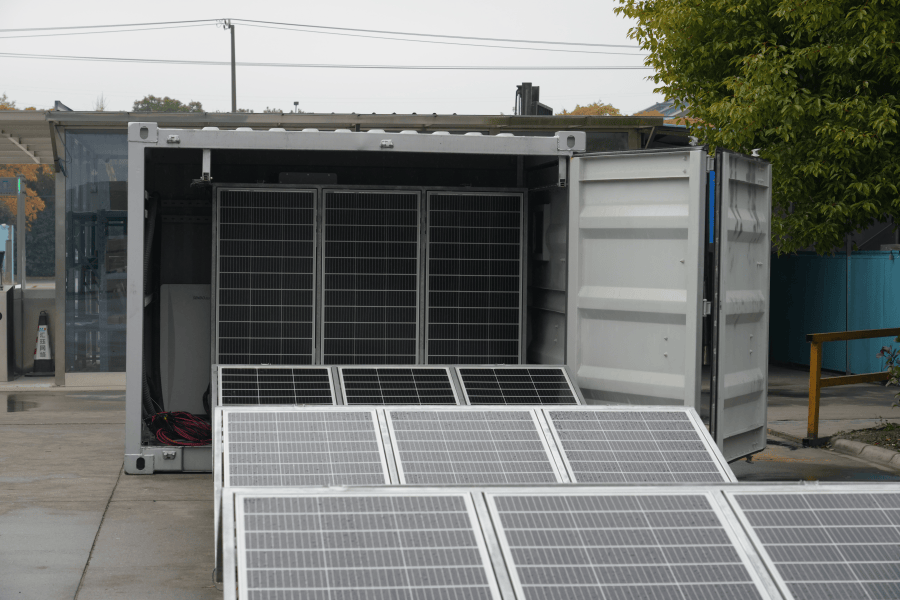
This is where the Comparison of C5-M Anti-corrosion Lithium Battery Storage Container for EV Charging Stations becomes your most important due diligence. C5-M isn't a brand; it's a severe corrosion resistance classification defined under the ISO 12944 standard. It's the benchmark for structures exposed to highly aggressive atmospheres, like coastal and industrial areas.
In simple terms, a C5-M certified container is built differently:
- Steel Preparation: The steel is meticulously blasted to a near-perfect clean surface profile.
- Coating System: It uses a multi-layer, high-performance coating system - often epoxy zinc primers, epoxy intermediate coats, and polyurethane topcoats - applied at a specified total thickness (often >320 microns).
- Sealing: All seams, joints, and penetrations are sealed to prevent moisture ingress.
- Materials: Hardware, hinges, and fasteners are often stainless steel or similarly protected.
At Highjoule, when we build for a coastal EV charging project in Florida or a year-round station in Norway, our C5-M spec isn't an option; it's the baseline. It ensures the enclosure protecting your million-dollar battery investment is as durable as the cells inside. This directly protects your LCOE by eliminating a major source of premature failure.
Seen on Site: A Tale of Two Containers
Let me give you a real example from a portfolio we manage. A client had two nearly identical BESS units for depot charging, one deployed in Ohio (using a standard container) and one on the Gulf Coast of Texas (using our Highjoule C5-M spec unit). Both were installed within 6 months of each other.
After four years, the Ohio unit needed its first touch-up paint and minor seal repairs on door gaskets during routine maintenance. The Texas unit? After facing salt air, intense sun, and high humidity, its enclosure showed no signs of base metal corrosion, no coating breakdown. The only cost was a standard wash-down. The integrity of the thermal management system - critical for managing heat from the high C-rate charging cycles - was completely intact. The client's O&M team now mandates the C5-M spec for all new sites, having seen the lifecycle cost difference on their own balance sheet.
Choosing Right: A Practical Comparison for Your Project
So, when you're evaluating containers, move beyond just "steel box." Make it a formal comparison point. Here's a simple framework we use with our clients:
| Consideration | Standard Industrial Container | C5-M Anti-Corrosion Container |
|---|---|---|
| Coating Specification | Typically meets C3 (industrial) or lower ISO 12944 classification. | Certified for C5-M (highly aggressive industrial/marine) per ISO 12944. |
| Long-Term Cost (LCOE Impact) | Higher risk of unplanned repairs/replacement, increasing effective LCOE. | Higher upfront cost, but protects LCOE by ensuring enclosure lifespan matches battery lifespan. |
| Safety & System Integrity | Corrosion can compromise grounding, seals, and thermal management pathways over time. | Preserves critical safety system integrity and thermal management efficiency for the system's life. |
| Warranty & Compliance | May have limited or no warranty on corrosion. Meets basic structural codes. | Will have a long-term anti-corrosion warranty (e.g., 15 years). Demonstrates higher due diligence for IEC/IEEE standards on durability. |
| Ideal Use Case | Mild, inland climates with minimal pollutant or salt exposure. | Coastal areas, cold climates with road salt, industrial zones, or any harsh environment. Essential for critical infrastructure like public EV charging. |
The bottom line? For mission-critical, revenue-generating assets like EV charging station storage, the container is a vital component, not a commodity. Specifying a C5-M anti-corrosion solution from the start is one of the smartest risk-mitigation and cost-optimization decisions you can make. It's the difference between hoping your system lasts and knowing it will.
What's the specific environment challenge you're facing for your next charging hub deployment?
Tags: UL Standard BESS Europe US Market Anti-corrosion Container EV Charging Station Lithium Battery Storage
Author
James Zhang
20+ years agricultural energy storage engineer / Highjoule CTO