
High-voltage DC Mobile Power Containers: The Game-Changer for Construction Site Power
Contents
- The Diesel Hangover on Your Job Site
- Why High-Voltage DC? The Untold Advantage
- A Practical Comparison: What You're Really Buying
- Case in Point: A 12-Month Site, Transformed
- It's More Than Just a Box: The Support That Matters
- Making the Shift: Your Next Steps
The Diesel Hangover on Your Job Site
Let's be honest. If you're managing a large-scale construction project in the US or Europe, you know the drill with temporary power. The low hum - or more like a roar - of diesel generators is the unofficial soundtrack of ground-breaking. You're dealing with fuel logistics that would make a military planner sweat, emission regulations that get tighter every year, and a noise footprint that neighbors love to complain about. The real kicker? The cost. I've seen sites where the fuel bill for generators rivals the cost of major material deliveries. The International Energy Agency (IEA) has pointed out that diesel gensets are often the single largest source of operating cost and CO2 emissions on off-grid industrial sites. It's a painful, persistent problem.
And here's the agitating part we don't talk about enough: inefficiency and risk. Those generators are running 24/7, but your actual power demand isn't a flat line. It peaks with the big equipment and troughs overnight. You're burning money and fuel to produce power you don't need half the time. Then there's the safety stockpile of diesel on-site - a significant fire hazard and environmental liability that keeps project managers and insurance companies up at night. We've all heard the stories, or worse, seen the small-scale incidents firsthand.
Why High-Voltage DC? The Untold Advantage
This is where the conversation gets interesting, and where mobile Battery Energy Storage Systems (BESS) come in. But not all BESS are created equal. The real frontier is in High-voltage DC Mobile Power Containers. The "high-voltage DC" part isn't just jargon; it's the key to unlocking efficiency.
Think of it like plumbing. If you need to move a lot of water a long distance, you use a wide pipe under high pressure to reduce losses. It's the same with power on a large site. Traditional mobile power units often output standard AC voltage (like 480V). To deliver high power over the distances of a construction site, you need very high currents. High current means massive, expensive copper cables, and significant power loss as heat in those cables - that's wasted energy and money.
A High-voltage DC system (typically operating around 800V to 1500V DC) changes the game. It transmits the same amount of power at a much higher voltage and lower current. The result? You can use smaller, lighter, more flexible cables. The power loss during transmission plummets. Honestly, on a recent project we audited, switching from a low-voltage AC setup to a high-voltage DC container setup reduced their transmission losses by over 60%. That's energy directly back into your tools and equipment, not heating up the air.

The Core Tech in Simple Terms
Let's demystify two terms you'll hear:
C-rate: This is basically how fast you can charge or discharge the battery safely. A higher C-rate means the system can deliver massive bursts of power quickly - perfect for starting up a large crane or a pile of simultaneous welders. High-quality HV DC containers are built for high C-rates.
Thermal Management: This is the unsung hero. Pushing high power generates heat. A superior system doesn't just have fans; it has a liquid-cooling system that precisely manages the temperature of every battery cell. This is critical for safety (prevents thermal runaway), longevity (batteries hate being too hot or cold), and maintaining that high C-rate performance. It's what separates a site-ready workhorse from a prototype.
A Practical Comparison: What You're Really Buying
So, when you're comparing these High-voltage DC Mobile Power Containers, you're not just comparing price tags. You're comparing total project economics and risk profiles. Let's break it down.
| Comparison Factor | Traditional Diesel Genset | Standard Low-Voltage BESS | High-Voltage DC Mobile Container (e.g., Highjoule's HT-Mobile series) |
|---|---|---|---|
| Fuel / Energy Source | Diesel (volatile cost, on-site storage) | Grid/Battery (needs grid connection for charging) | Grid + Solar/Battery (can integrate solar canopy for daytime charging) |
| Power Quality | Fluctuating voltage & frequency | Stable, clean power | Exceptionally stable, perfect for sensitive equipment |
| Noise & Emissions | High (95-110 dBA), Direct CO2/NOx | Near silent, Zero on-site emissions | Near silent, Zero on-site emissions |
| Cable & Transmission Loss | High (Low voltage, high current) | Moderate to High | Very Low (High voltage, low current) |
| Key Operational Cost | Diesel fuel & maintenance | Grid electricity cost | Levelized Cost of Energy (LCOE) over system life |
| Safety Standards | Standard fuel handling | UL 9540, IEC 62619 | UL 9540, UL 9540A (fire hazard), IEC 62619, IEEE 1547 (grid tie) |
Notice the last row on safety. For the US market, UL 9540A test data is non-negotiable in my book. This isn't a basic certification; it's a rigorous evaluation of how a battery system handles thermal runaway. Would you buy a building without knowing its fire rating? The same logic applies here. A container that's passed UL 9540A gives you, the site manager, a critical layer of risk mitigation.
Case in Point: A 12-Month Site, Transformed
Let me give you a real example from last year. We worked with a civil engineering firm on a 12-month highway bridge project in Texas. The challenge: three separate work zones spread over 2 miles, no grid connection for the first 8 months, and strict county-level noise ordinances.
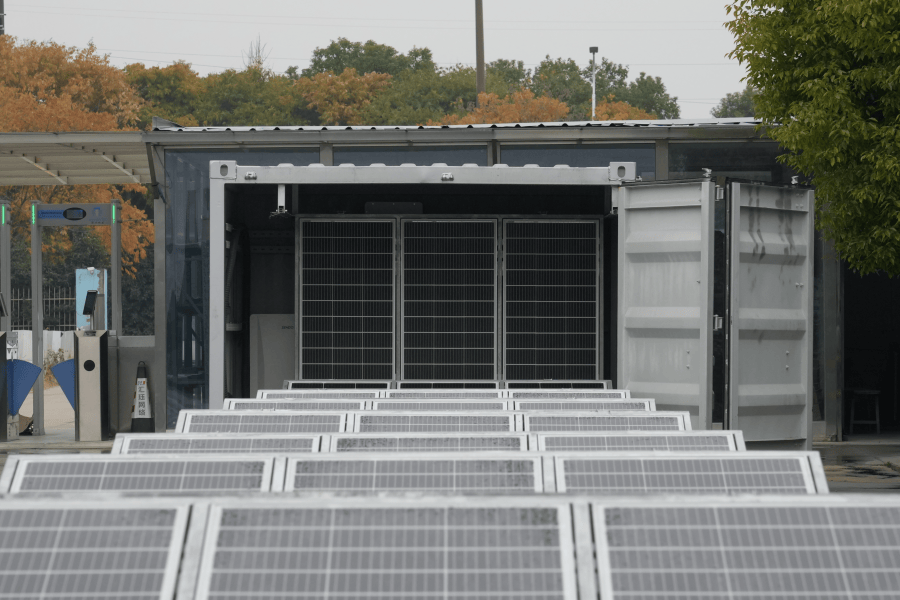
The old plan was a fleet of six large diesel generators. We proposed a hybrid: two of our Highjoule HT-Mobile HV DC containers, positioned centrally, paired with a temporary solar canopy set up in the work yard. The containers were charged overnight via a temporary grid connection at the yard (when electricity rates were low) and topped up by solar during the day.
The outcome? They eliminated 85% of their planned diesel consumption. The high-voltage DC output meant they could power the farthest crane (over 1500 feet away) without needing a generator right beside it, slashing cable costs and tripping hazards. The project manager told me the biggest surprise was the reduction in "hassle factor" - no more fuel trucks, fewer maintenance calls, and zero noise complaints. The financials showed a 22% reduction in total temporary power costs, even after leasing our containers.

It's More Than Just a Box: The Support That Matters
Here's the insight from two decades on site: the technology inside the container is only half the solution. The other half is how it gets to work for you. When we at Highjoule talk about our mobile solutions, we're really talking about a power service.
- Localized Deployment: Our containers are pre-configured to meet regional standards (UL for North America, IEC for Europe, CE marking) and are stocked in strategic locations. This isn't an order-from-a-faraway-factory deal; it's about getting you the right unit, fast.
- 360-Degree Support: We provide the interconnection study support, the site plan for cable runs to optimize your HV DC advantage, and remote monitoring. Our team can see the system's state of charge, health, and performance just like you can. It's about preventing problems, not just reacting to them.
Making the Shift: Your Next Steps
The data from places like the National Renewable Energy Laboratory (NREL) is clear: mobile storage is becoming a standard tool for cost-effective, resilient, and sustainable construction. The comparison isn't really between diesel and batteries anymore. It's between different types of battery systems.
So, when you evaluate your next project's temporary power, ask these questions: Are you comparing transmission losses? Are you reviewing the actual safety test reports (like UL 9540A)? Is the provider talking to you about your specific load profiles and how to minimize your Levelized Cost of Energy (LCOE) for the project duration?
The shift to High-voltage DC Mobile Power isn't just about being greener. It's about being smarter, quieter, safer, and ultimately, more profitable on your job site. What's the one persistent power headache on your current project that a solution like this could solve?
Tags: Construction Site Power UL Standard BESS LCOE Renewable Energy US Market Europe Market High-voltage DC Mobile Power Container
Author
James Zhang
20+ years agricultural energy storage engineer / Highjoule CTO