
High-Voltage DC BESS for High-Altitude Solar: A Game-Changer for Efficiency & ROI
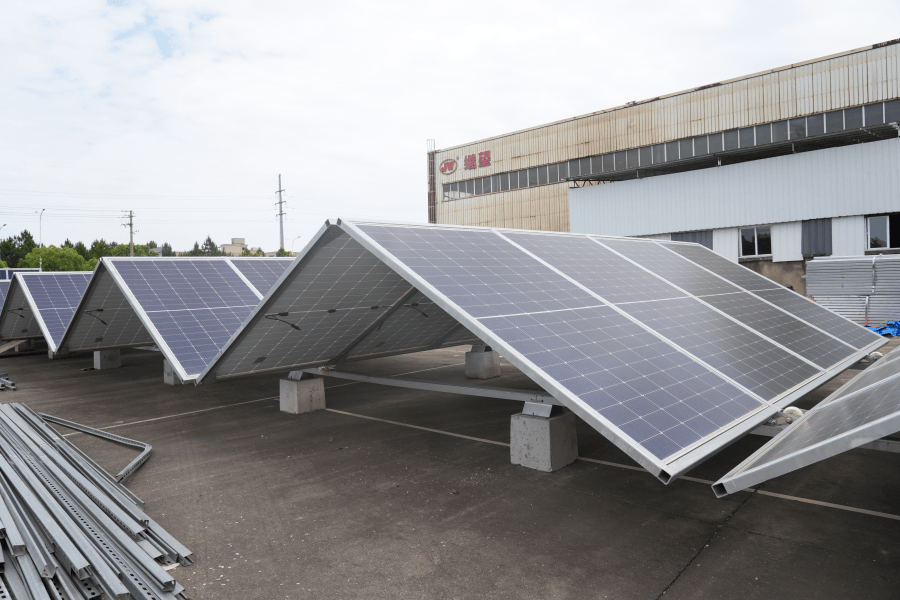
High-Altitude Solar's Hidden Challenge: Why Your Storage System Might Be Letting You Down
Hey there. Let's grab a virtual coffee. Over my 20-plus years on sites from the Alps to the Rockies, I've seen a pattern. We get excited about high-altitude solar C the irradiance is fantastic, the land is often available. But honestly, I've seen firsthand on site where the project economics get quietly eroded, not by the panels, but by the storage system tying it all together. The conventional approach, especially in complex, high-elevation environments, can introduce surprising inefficiencies that hit your bottom line. Today, I want to break down a specific, smarter approach: the high-voltage DC-coupled photovoltaic storage system, and why it's particularly compelling for those challenging high-altitude regions.
Table of Contents
- The High-Altitude Efficiency Squeeze: More Sun, Less Profit?
- The Hidden Costs: Where Your Energy (and Money) Disappears
- A Streamlined Path: The High-Voltage DC-Coupled Architecture
- On the Ground: A Real-World Comparison in Mountainous Terrain
- Beyond the Spec Sheet: Thermal and Longevity Insights
The High-Altitude Efficiency Squeeze: More Sun, Less Profit?
Here's the phenomenon. In Europe and North America, we're pushing solar into higher altitudes C think mining operations in the Chilean Andes, ski resorts in the Alps, or remote communities in the Rocky Mountains. The solar resource is a no-brainer. According to the National Renewable Energy Laboratory (NREL), solar irradiance can be significantly higher at elevation. But the infrastructure challenge is real. Lower air pressure affects cooling. Wide temperature swings strain components. And every percentage point of efficiency loss in energy conversion between your solar array and your battery storage directly inflates your Levelized Cost of Energy (LCOE).
The traditional, most common setup? An AC-coupled system. Your solar panels feed through a string inverter to the AC grid, and a separate, grid-tied battery system does its own AC-DC-AC conversion dance. It's flexible, but it adds layers of conversion losses. At high altitude, where every kilowatt-hour is precious, this architecture can feel like trying to fill a bucket with a leaky hose.
The Hidden Costs: Where Your Energy (and Money) Disappears
Let's agitate that pain point a bit. I was on a project site in Colorado at about 2,800 meters. The team was puzzled; the battery system's state-of-charge wasn't aligning with the expected solar yield. We traced it back to cumulative conversion losses. In a typical AC-coupled system, you can lose 2-3% in the solar inverter, another 2-3% in the battery's inverter going from DC to AC and back to DC for storage. That's 4-6% of your beautifully captured high-altitude photons gone before they even hit the battery cells.
Now, amplify that over a 20-year asset life. That's a massive amount of lost revenue. Furthermore, these multiple power conversion stages mean more components C more inverters, transformers, switchgear. More points of potential failure, more complex thermal management needs, and a larger physical footprint. In remote or rugged high-altitude sites, maintenance and space are not trivial cost factors.
A Streamlined Path: The High-Voltage DC-Coupled Architecture
So, what's the solution we're comparing here? It's a more direct route: the high-voltage DC-coupled system. In this setup, the high-voltage DC output from your solar array is directly fed to a DC-DC converter that conditions it for the battery. The battery then feeds a single, centralized inverter to connect to the AC grid or microgrid. It cuts out one full conversion stage.
This isn't just theory. At Highjoule, when we design for high-altitude deployments, we lean into this architecture for its inherent advantages. The efficiency gain is the headline C we routinely see round-trip efficiency improvements of 3-5% compared to standard AC-coupled setups in these environments. That directly lowers LCOE. But just as crucial is the thermal management benefit. Fewer, larger power electronic units allow for a more centralized and robust cooling strategy, which is a lifesaver in thin air where convective cooling is less effective. Our containerized BESS solutions, for instance, use a closed-loop liquid cooling system specifically engineered for such environments, keeping the battery at its optimal temperature range and dramatically extending its life.
And for our US and EU clients, compliance is baked in from the start. A streamlined system with fewer major components simplifies the pathway to UL 9540 and IEC 62485 certifications, which are non-negotiable for insurance and grid interconnection. It's about designing a system that's not only high-performing but also inherently simpler to validate and safer to operate.
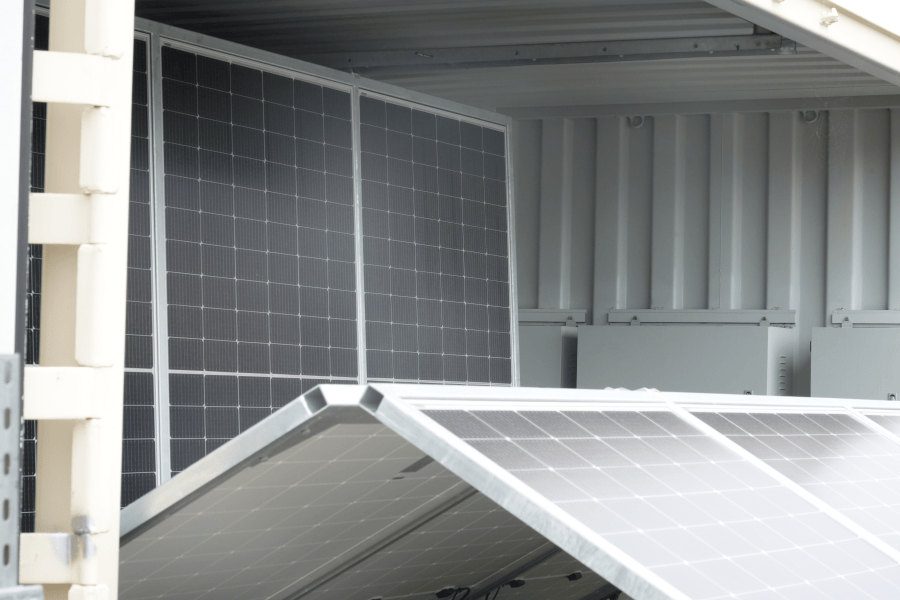
On the Ground: A Real-World Comparison in Mountainous Terrain
Let me give you a concrete, anonymized case from a project we supported in Central Europe. A utility client had two similar sites in Alpine regions, both around 1,900 meters. One used a conventional AC-coupled BESS. The other, a newer installation, opted for a high-voltage DC-coupled system like the ones we specialize in.
The challenge for both was identical: store excess midday solar for the evening peak, provide grid stability, and do it reliably with minimal OPEX in a location with difficult winter access.
After the first full year of operation, the data spoke volumes. The DC-coupled site reported:
- 4.2% higher measured energy throughput from the same solar capacity.
- 15% lower auxiliary power consumption (fans, cooling, etc.) due to the more efficient power path and centralized thermal system.
- Simplified maintenance reports C fewer individual inverters to monitor and service.
The client's project manager told me the operational simplicity was a "hidden win." The system's performance was more predictable, and the efficiency gain directly translated into a better return on investment, making the finance team happy. This real-world comparison of high-voltage DC photovoltaic storage system for high-altitude regions proved the concept beyond any spec sheet.
Beyond the Spec Sheet: Thermal and Longevity Insights
Here's my expert take, drawn from tearing down systems and analyzing field data. When we talk about high-voltage DC systems at altitude, the discussion must go beyond just voltage. It's about system-level harmony.
First, C-rate. This is basically the speed of charging/discharging. In a DC-coupled system, with more efficient energy transfer, you can often operate at a slightly lower C-rate for the same power output. Why does this matter? A lower C-rate generates less internal heat in the battery cells. Combined with advanced liquid cooling, this is the golden ticket for longevity in high-altitude temperature swings. Less stress, longer life.
Second, think about LCOE holistically. Yes, the capex of a DC-coupled system might be marginally different. But when you factor in the higher energy yield (more revenue), lower operational losses (less cost), and extended battery life (delayed replacement capex), the total cost of ownership picture flips dramatically in its favor for demanding locations.
This is where our philosophy at Highjoule comes in. We don't just sell a battery container. We model the entire energy flow for your specific site conditions C altitude, temperature profile, solar irradiance C to right-size every component. This ensures the system operates in its sweet spot for decades, not just at peak rating on a test bench. It's this granular, site-aware engineering that turns a good storage concept into a resilient and profitable asset.
So, as you evaluate storage for your next high-altitude project, look past the basic kW/kWh specs. Ask your provider: How does your architecture specifically mitigate high-altitude efficiency losses? What is your thermal strategy for -20C to +35C swings at low pressure? Can you show me the data from a similar site? The right system won't just store energy; it will preserve the full value of your high-altitude solar investment.
Tags: LCOE Optimization Renewable Energy Integration UL IEC Standards Energy Storage Systems High-voltage DC BESS High-altitude Solar
Author
James Zhang
20+ years agricultural energy storage engineer / Highjoule CTO