
20ft High Cube Lithium Battery Storage Container Cost for Farm Irrigation | 2024 Guide
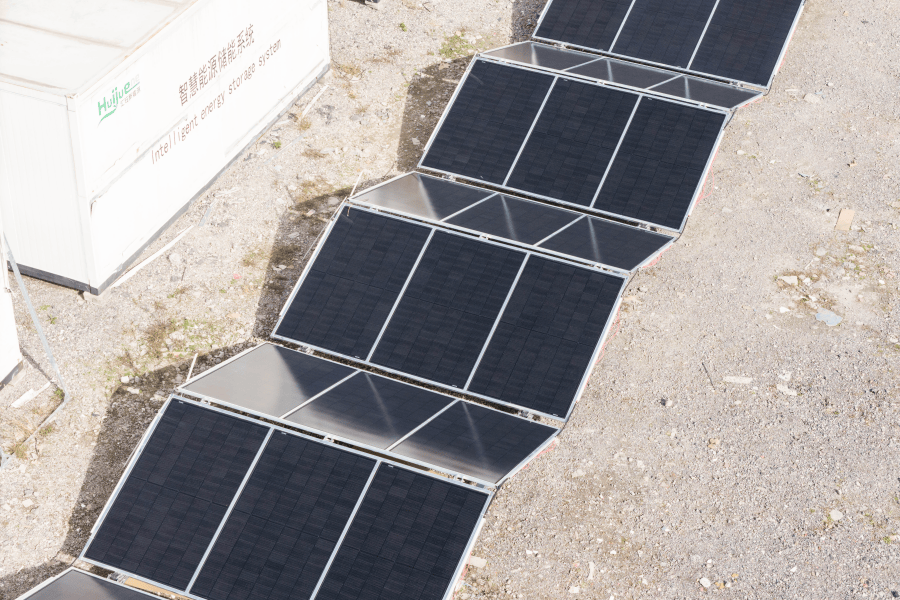
Let's Talk Real Numbers: The Cost of Powering Your Farm with a 20ft Battery Container
Hey there. If you're reading this, you're probably a farm owner, an agribusiness manager, or an engineer tired of vague quotes and "it depends" answers. You've got a field to irrigate, pumps to run, and a bottom line to protect. And you're asking the right question: How much does it really cost for a 20ft High Cube Lithium Battery Storage Container for agricultural irrigation?
Honestly, I've been on enough sites from California's Central Valley to the wheat fields of Germany to know that the sticker price you get in an initial PDF is just the beginning of the conversation. The real cost - and the real value - is in what that container does for your operation over the next 10-15 years. Let's grab a coffee and break it down, not as a salesperson, but as an engineer who's seen the mud, the wiring, and the relief on a farmer's face when the pumps kick on at sunset.
Table of Contents
- The Real Problem: It's Not Just About Kilowatt-Hours
- Breaking Down The Cost: More Than a Metal Box
- The Game Changer: How LCOE Tells the True Story
- A Case from the Field: Solar + Storage in Nebraska
- What You're Really Buying: Safety, Brains, and Longevity
- Your Next Steps: Asking the Right Questions
The Real Problem: It's Not Just About Kilowatt-Hours
The pain point for modern agriculture isn't a secret. Grid power for high-horsepower irrigation pumps is expensive, especially during peak demand periods. According to the National Renewable Energy Laboratory (NREL), the agricultural sector faces unique challenges with intermittent, high-power demands that strain both the local grid and the farm's budget. I've seen utility demand charges turn a profitable season into a break-even one.
But here's what they don't always tell you: slapping some batteries next to a solar array without understanding the duty cycle of your pumps is a fast track to disappointment. An irrigation system doesn't draw power like a factory. It has massive surge currents during pump start-up, then sustained high load for hours. If your battery system's C-rate (basically, how fast it can safely charge and discharge) isn't matched to that, you'll degrade the batteries in no time or, worse, trip safety systems right when you need water the most.
Breaking Down The Cost: More Than a Metal Box
So, to your question. A pre-integrated 20ft High Cube containerized BESS for a robust farm irrigation application in the US or EU market typically ranges from $250,000 to $500,000+. Why the huge range? It's like asking the cost of a tractor - it depends on the horsepower, the attachments, and the technology inside.
Here's what makes up that number:
- The Battery Cells & Modules (50-60% of cost): This is the heart. Are you using LFP (Lithium Iron Phosphate)? It's the industry standard now for safety and cycle life, especially under the hot sun. The total usable energy capacity (e.g., 1 MWh, 2 MWh) is the biggest cost driver.
- Power Conversion System - PCS (15-20%): This is the brain that converts DC battery power to AC for your pumps. Its size (in kW) must handle your peak pump load plus that inrush current I mentioned.
- Thermal Management (10-15%): This is non-negotiable. Lithium batteries hate extreme temperatures. A proper HVAC system keeps them at 20-25C for longevity. I've seen systems fail because this was an afterthought.
- Container & Integration (10%): The 20ft High Cube shell, fire suppression (like Aerosol or FM-200), switchgear, and all the wiring done in a certified factory (not in your field).
- Software & Controls (5-10%): The "smarts." This software schedules charging from solar/grid, manages discharge to avoid demand charges, and provides remote monitoring. It's where the ROI is unlocked.
- Soft Costs (Varies Widely): Permitting, interconnection studies, shipping, civil works (a level concrete pad), and installation. In the EU, IEC 62933 standards govern safety, while in the US, UL 9540 is the gold standard for system-level certification. Don't skip these - they're your insurance policy.
The Game Changer: How LCOE Tells the True Story
This is where we shift from "cost" to "investment." The savvy farmers and agri-businesses I work with now ask about Levelized Cost of Energy (LCOE). It sounds fancy, but it's simple: the total lifetime cost of your energy storage system divided by the total energy it will deliver over its life.
A cheaper system with poor thermal management might have a lower upfront cost but a higher LCOE because it degrades faster. A system like the ones we engineer at Highjoule, with meticulous attention to cell balancing and temperature control, might cost a bit more upfront but delivers a significantly lower LCOE. You're buying more total usable megawatt-hours over 15 years. That's the number that impacts your operating budget.
A Case from the Field: Solar + Storage in Nebraska
Let me give you a real, anonymized example. A 1,200-acre corn and soybean farm in Nebraska had a 500 kW irrigation load. Their peak demand charges were crippling, and grid power was unreliable during summer storms. They deployed a 20ft High Cube container with 1.2 MWh of LFP storage, paired with an existing 400 kW solar canopy.

The Challenge: Manage a 6-hour nightly irrigation cycle, shave peak demand by 90%, and provide backup during grid outages.
The Solution: The system was programmed to charge from solar excess during the day and the grid at super-off-peak rates (2-5 AM). It would then discharge during the evening peak period and through the irrigation run. The thermal system was oversized for the Nebraska heat, and the PCS was rated for the high inrush current.
The Outcome: They achieved payback in under 7 years purely on demand charge savings and grid arbitrage. The owner told me the "peace of mind" during storm season was worth as much as the savings. The system was UL 9540 certified, which streamlined the fire marshal approval.
What You're Really Buying: Safety, Brains, and Longevity
When you evaluate a quote, you're not buying a commodity. You're buying three things:
- Safety by Design: This means certified systems (UL/IEC), passive fire protection between modules, and gas detection. It's not a place to cut corners.
- Operational Intelligence: Can the software integrate with your irrigation scheduler? Can it be updated to future rate structures? At Highjoule, we spend as much time configuring the energy management system as we do on the hardware.
- A Local Partner: Who will be there for the 10-year service visit? Who can remotely diagnose an alarm at 10 PM? The logistics of local support and warranty fulfillment are a hidden part of the cost equation you must clarify upfront.
Your Next Steps: Asking the Right Questions
So, before you get another quote, arm yourself with this:
- What is the exact C-rate (continuous and peak) of the system?
- Can I see the thermal management design and the expected cell temperature range for my climate?
- What is the projected cycle life (at my specific depth of discharge) and the degradation warranty? (e.g., 70% capacity after 10 years).
- Is the entire system UL 9540 or IEC 62933 certified, not just the components?
- Can you provide a detailed LCOE projection based on my specific utility rate tariff?
The right provider won't hesitate to answer these. They'll welcome them. Because the goal isn't just to sell you a container. It's to ensure that when the next growing season hits, and the grid price spikes, your pumps keep running on clean, affordable, reliable power you control. That's the real value we're all after, isn't it?
What's the single biggest energy cost driver on your farm right now - is it peak demand, unreliable power, or something else?
Tags: UL Standard BESS LCOE Renewable Energy US Europe Market Farm Irrigation Agricultural Energy Storage
Author
James Zhang
20+ years agricultural energy storage engineer / Highjoule CTO