
High-voltage DC Pre-integrated PV Containers: The Game Changer for Construction Site Power
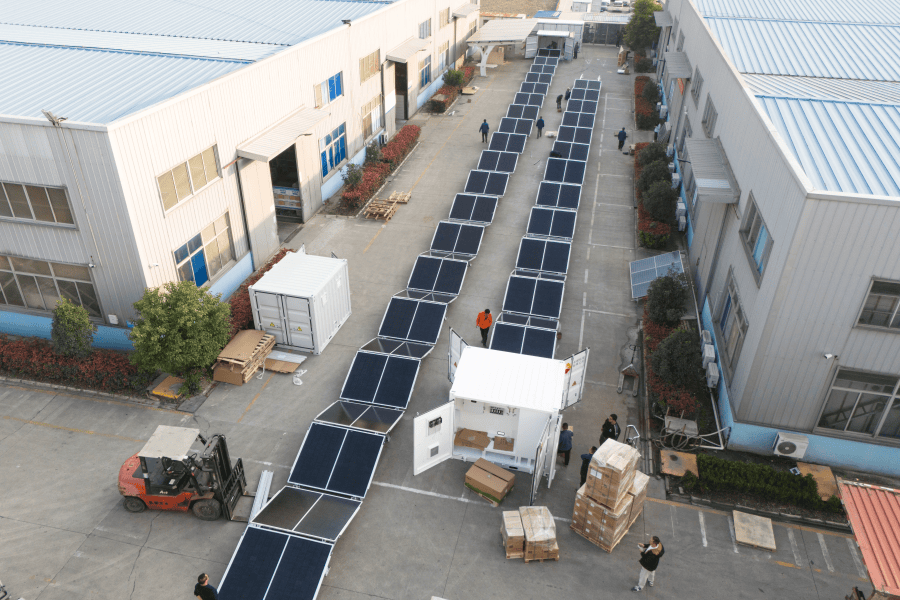
Table of Contents
- The Silent Cost Killer on Your Job Site
- The Real Problem Isn't Just Diesel, It's Complexity
- Enter the Pre-Integrated Power Plant in a Box
- Case in Point: A 12-Month Project in Texas Hill Country
- Expert Corner: Why DC Coupling & Thermal Design Matter
- Making the Choice: What to Look For
The Silent Cost Killer on Your Job Site
Let's be honest. When you're managing a multi-million dollar construction project, temporary power is often an afterthought. You rent the diesel gensets, you run the cables, you pay the fuel bills. It's a line item, a necessary evil. But after two decades on sites from California to Bavaria, I've seen this firsthand: that "line item" is one of the most unpredictable, inefficient, and frankly, frustrating cost centers you have. We're not just talking about fuel anymore. We're talking about logistics, noise compliance fines, carbon taxes that are only getting stiffer, and the sheer operational headache of keeping a fleet of generators running 24/7.
The Real Problem Isn't Just Diesel, It's Complexity
The move to hybrid systems C combining solar, battery storage, and a smaller backup generator C is smart. But here's the aggravation we often see: many projects piece these systems together on-site. You get a PV array from one vendor, a BESS container from another, an inverter skid from a third. You become the system integrator, coordinating a dozen different crews and wrestling with a spaghetti bowl of AC and DC cabling. The Levelized Cost of Energy (LCOE), which should be falling with solar, stays high due to integration soft costs and inefficiencies. According to the National Renewable Energy Lab (NREL), balance-of-system and soft costs can account for up to 50% of the total cost of a solar-plus-storage installation. On a dynamic construction site, that complexity is a recipe for delays and safety risks.
The Three-Pronged Pain Point
- Cost Volatility: Diesel prices swing. Your budget shouldn't have to.
- Integration Hell: Every on-site connection is a potential point of failure, requiring more labor and specialized electricians.
- Lost Opportunity: That big, flat, empty site is perfect for solar. But a temporary, non-optimized system might only capture 60-70% of the potential energy, leaving free fuel on the table.
Enter the Pre-Integrated Power Plant in a Box
This is where the conversation around Comparison of High-voltage DC Pre-integrated PV Container for Construction Site Power gets real. We're not comparing widgets; we're comparing philosophies. A true pre-integrated solution, like the systems we've engineered at Highjoule, arrives on your site as a single, permitted container. The PV inverters, the battery racks, the thermal management system, the safety controls C they're all factory-wired, tested, and certified to standards like UL 9540 and IEC 62933. Honestly, it's the difference between building a car from parts in your driveway and driving a certified, warrantied truck off the lot.

Case in Point: A 12-Month Project in Texas Hill Country
Let me give you a real example. We deployed a 1.5 MW/3 MWh high-voltage DC pre-integrated system for a remote water treatment plant construction in Texas. The challenge? Zero grid connection for 12 months, strict noise ordinances (ruling out 24/7 gensets), and a client terrified of diesel price spikes.
The solution was a turnkey container paired with a ground-mount solar array. Because the PV and storage were DC-coupled inside the container, system efficiency jumped. The client saw a 40% reduction in diesel runtime compared to a standard AC-coupled setup they'd used previously. The biggest win? The site manager told me his crew spent zero time "babysitting the power system." It just worked. That's the value of pre-integration C it turns energy into a reliable utility, not a daily management crisis.
Expert Corner: Why DC Coupling & Thermal Design Matter
When you're comparing these containers, don't just look at the price tag. Look under the hood. Two things are critical:
- High-voltage DC Coupling: This isn't just jargon. It means the solar DC power feeds directly into the battery's DC bus, with fewer conversion steps. You lose less energy as heat. For a site running 18 hours a day, those few percentage points of efficiency add up to thousands in saved diesel.
- Thermal Management: This is where I've seen cheap systems fail. A battery's lifespan and safety are tied to its temperature. A container in the Arizona sun is an oven. Our systems use a dedicated, N+1 redundant cooling system designed for ambient extremes. It's not an afterthought; it's core to the C-rate (charge/discharge rate) stability and long-term health of the asset.
Think of it this way: you wouldn't buy a high-performance engine without a matching cooling system. Why would you do it with a battery that's mission-critical for your project?
Making the Choice: What to Look For
So, when you're evaluating options for your next project, move beyond the spec sheet. Ask the hard questions:
- Is the system shipped as a single, UL-certified unit, or is it a "kit"?
- What's the LCOE over my project timeline, including estimated fuel savings and maintenance?
- How is the thermal system designed for my specific climate? Can you show me the data from a similar deployment?
- What's the local service and maintenance footprint? (At Highjoule, for instance, we partner with local electrical contractors in every region we operate for rapid response).
The right high-voltage DC pre-integrated container isn't just a power source. It's a risk mitigation tool, a budget stabilizer, and a silent partner that lets your team focus on building. The question isn't really "Can we afford it?" After seeing the numbers play out on site, time and again, the real question becomes, "Can we afford not to?"
What's the single biggest pain point you're facing with temporary power on your current project?
Tags: Construction Site Power UL Standard BESS Energy Storage PV Container
Author
James Zhang
20+ years agricultural energy storage engineer / Highjoule CTO