
IP54 Outdoor Lithium Battery Storage for Remote Microgrids: A Practical Guide
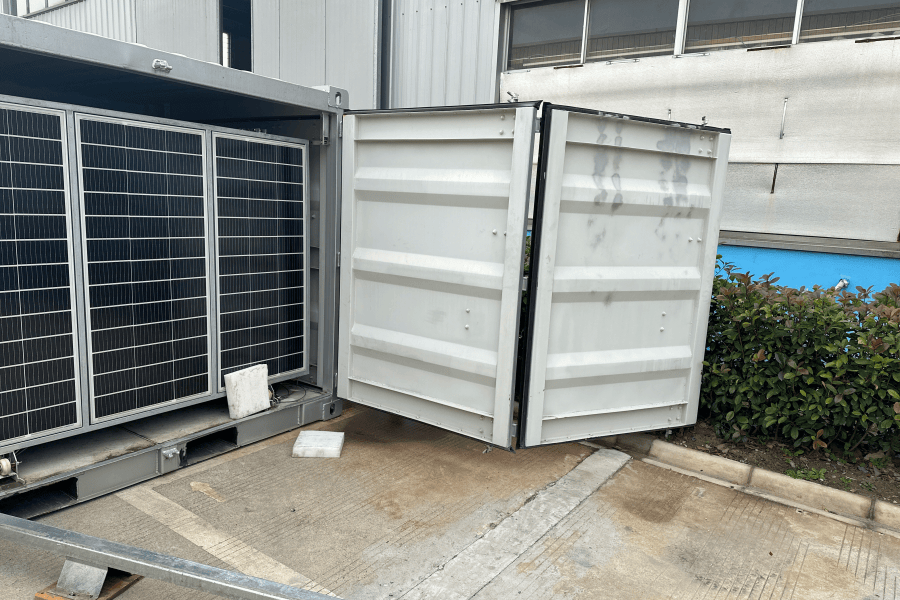
Table of Contents
- The Remote Island Challenge: More Than Just a Pretty View
- Why "Outdoor Rated" Isn't Enough: The Agitation of Compromise
- The IP54 Container: Your All-Weather, All-Terrain Energy Workhorse
- A Real-World Look: What Matters in Your Container Comparison
- Beyond the Box: The Highjoule Perspective on Lasting Value
The Remote Island Challenge: More Than Just a Pretty View
Let's be honest, when we talk about deploying battery storage on a remote island or an off-grid industrial site, the postcard-perfect scenery hides a brutal reality for equipment. I've been on-site for installations from the Scottish Isles to communities in the Hawaiian archipelago. The excitement of powering a place independently fades real quick when you're facing salt spray that eats through metal, humidity that invites condensation into every component, and temperature swings that would stress-test any battery chemistry.
The core problem isn't just finding a battery. It's finding a system that can survive. According to the National Renewable Energy Laboratory (NREL), the levelized cost of storage (LCOS) for remote microgrids is highly sensitive to two things: replacement frequency and maintenance costs. A standard indoor cabinet, even in a shed, just doesn't cut it. You need a fortress.
Why "Outdoor Rated" Isn't Enough: The Agitation of Compromise
Here's where I've seen projects get into trouble. A developer might opt for a "sheltered" outdoor setup or a modified shipping container to save on upfront CapEx. I've seen this firsthand on site. What happens? Year one, maybe some rust spots. Year two, the cooling system struggles during a heatwave because the ambient air intake is clogged with salt and sand, leading to thermal runaway risks. Year three, you're looking at a major overhaul or complete replacement.
This compromise amplifies every risk. Safety becomes a constant worry (and a liability). Efficiency drops as the battery management system (BMS) throttles performance to manage temperature. Honestly, your total cost of ownership skyrockets. You didn't want a diesel genset for its noise and fumes, but now you're relying on it more because your "outdoor" BESS is offline for maintenance during a storm.
The IP54 Container: Your All-Weather, All-Terrain Energy Workhorse
This is why the specific comparison of IP54 Outdoor Lithium Battery Storage Container becomes the central, non-negotiable solution. Let's break down what IP54 really means for you, beyond the spec sheet. "IP" stands for Ingress Protection. The "5" means it's dust-protected - not totally dust-tight, but enough that dust ingress won't interfere with operation. The "4" is the key for islands: it means protection against water splashing from any direction.
In practice, an IP54-rated container is a pre-engineered, self-contained unit. It's designed from the ground up to house lithium-ion batteries outdoors. We're talking about integrated thermal management that actively cools and heats with sealed, filtered air exchanges. We're talking about corrosion-resistant coatings on steel. It's a plug-and-play power asset that you can drop on a concrete pad and connect, knowing it meets recognized standards like IEC 62933 and UL 9540 for overall system safety.

A Real-World Look: What Matters in Your Container Comparison
So, you're comparing specs between vendors. Look beyond the headline kWh and MW ratings. Based on our deployments, like the one we completed for a fishery microgrid in coastal Alaska, here's what you should scrutinize:
- Thermal Management C-Rate Match: Ask, "Can the cooling system handle the maximum continuous C-rate discharge I need?" A 2C discharge generates a lot of heat quickly. If the HVAC can't shed that load, the BMS will derate your power, leaving you short.
- LCOE (Levelized Cost of Energy) Drivers: The biggest factors for LCOE in remote settings are cycle life and round-trip efficiency. A better thermal system directly preserves cycle life. A high-quality IP54 seal prevents humidity-related degradation on busbars and connections, maintaining efficiency.
- The "Serviceability" Test: How do you access components? I prefer containers with a separate, filtered maintenance compartment. This allows a technician to work on inverters or switchgear without exposing the battery room to corrosive ambient air.
Let me give you a concrete case. We worked on a project in the Greek islands where the initial proposal used a lower-cost, non-rated enclosure. Our team pushed for an IP54 solution. The upfront cost was maybe 15% higher. But the projected maintenance visits dropped from quarterly to annually, and the expected system lifespan increased from 7 to 15 years. The math on total cost became a no-brainer for the asset owner.
Beyond the Box: The Highjoule Perspective on Lasting Value
At Highjoule, after two decades in the field, we view the container as the first layer of a long-term partnership. Our IP54 units are built not just to the letter of UL and IEC standards, but to the spirit of them - for the harsh conditions we know they'll face. The safety design is baked in: passive fire suppression, gas venting, and compartmentalization that goes beyond code because we've seen what "just enough" looks like after a decade.
Our focus is on optimizing your LCOE from day one. That means providing a container that doesn't just survive, but thrives, minimizing degradation and maximizing availability. And because we have local service hubs in both Europe and North America, we're not just selling you a box; we're ensuring it performs for its entire lifespan.
So, when you're comparing your options for that critical remote microgrid, what's the one site condition you're most concerned about - the salt air, the dust, or the temperature extremes? Let's talk about how the right enclosure turns that concern into a solved problem.
Tags: UL Standard BESS Lithium Battery Container Remote Microgrids IP54 Outdoor Battery Storage
Author
James Zhang
20+ years agricultural energy storage engineer / Highjoule CTO