
Why LFP Energy Storage Containers Are Winning in Rural Electrification and What It Means for US & EU Projects
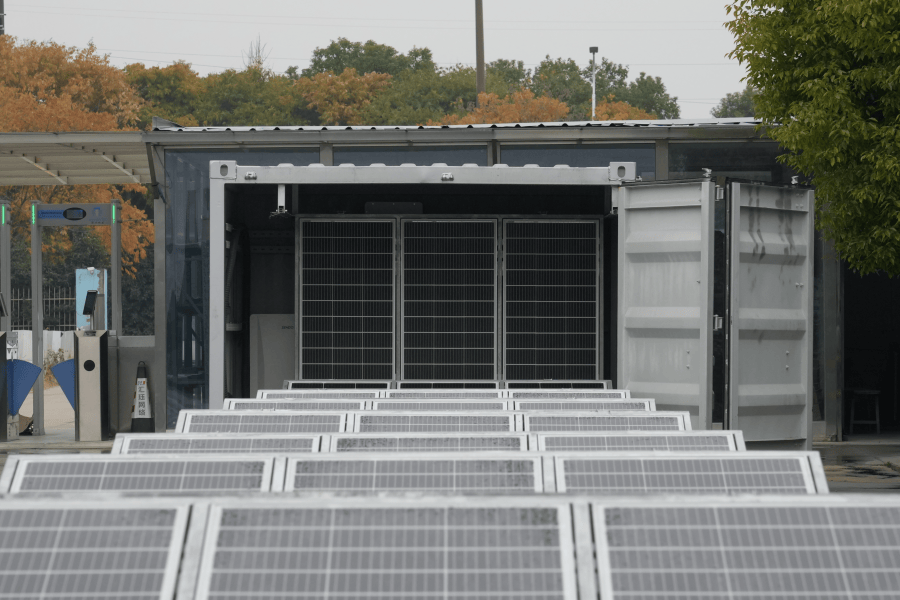
Table of Contents
- The Quiet Revolution in Remote Power
- The Real Cost of "Power When You Need It"
- Safety: The Non-Negotiable in Energy Storage
- The LFP Container Advantage: Lessons from the Field
- Case in Point: A German Industrial Microgrid's Pivot
- It's More Than Just the Battery Cell
- What This Means for Your Next Energy Storage Project
The Quiet Revolution in Remote Power
Honestly, some of the most exciting work in energy storage isn't happening in the tech hubs of California or Germany. It's happening in places like the remote islands and mountainous regions of the Philippines. I've seen this firsthand on site. The challenge there is brutal: provide reliable, 24/7 power to communities where grid extension is economically impossible. The solution that's emerging as the clear winner? Containerized Lithium Iron Phosphate (LFP) battery energy storage systems (BESS). Now, you might wonder why a project in Southeast Asia matters for a commercial facility in Ohio or a renewable park in Spain. The core challenges - extreme reliability, harsh environments, tight budgets, and absolute safety - are often more intense in these "off-grid" settings. The technologies and designs that succeed there have passed the ultimate stress test. And that's where we find incredibly valuable insights for our own deployments.
The Real Cost of "Power When You Need It"
In the US and EU, we talk a lot about Levelized Cost of Storage (LCOS). It's a crucial metric. But in rural electrification, the calculus is even starker. According to the International Renewable Energy Agency (IRENA), mini-grids with solar PV and battery storage can be the least-cost solution for electrification for a vast number of the unelectrified population globally. The financial model simply cannot tolerate frequent replacements or high maintenance. The system must last. This mirrors a growing pain point I see in commercial & industrial (C&I) sectors here: the need for a storage asset that delivers a predictable, low cost of ownership over 15+ years, not just a low upfront capital cost. A battery that needs replacing in 8 years blows any project finance model out of the water.
Safety: The Non-Negile. The container itself isn't just a box; it's a first line of defense. At Highjoule, our BESS containers go beyond basic IP ratings. We design for passive safety - spacing between modules, robust thermal runaway venting channels that direct any potential event away from critical components, and fire suppression systems that are UL 9540A listed. This holistic "container-level" safety philosophy, tested in environments from humid tropics to arid deserts, gives us - and more importantly, our clients - immense confidence.

Case in Point: A German Industrial Microgrid's Pivot
Let me bring this home with a European project. A manufacturing plant in North Rhine-Westphalia wanted to island itself from grid instability and peak charges. Their initial design specified a high-energy-density NMC chemistry. But during the risk assessment phase, the local fire safety authority had stringent new requirements for indoor installations. The cost of meeting those with the required safety systems and insurance premiums made the project economics shaky.
We proposed a switch to a pre-fabricated, outdoor LFP container solution. Because the LFP chemistry's inherent stability was recognized, the permitting process with the authorities was smoother. The container was delivered as a turnkey unit - pre-tested, pre-commissioned - and placed on a concrete pad outside the plant. It connected seamlessly to their solar array and critical load panel. The client got their resilience and peak shaving capabilities without the indoor safety headache. The total installed cost was competitive, but the real win was in the operational certainty and reduced regulatory risk. That's the LFP container advantage in action.
It's More Than Just the Battery Cell
Focusing only on the LFP vs. NMC debate misses half the story. The containerization is what unlocks the value. A well-engineered container integrates everything:
- Thermal Management: This isn't just about cooling. It's about consistency. In the Philippines, ambient temps swing. In Texas, they soar. An effective system (liquid cooling is becoming standard for large C&I systems) keeps every cell within a tight, happy temperature range, dramatically extending life. We're talking about the difference between a 6,000-cycle life and a 10,000+ cycle life.
- Power Conversion (PCS): The C-rate - how fast you can charge or discharge the battery - is dictated here. For backup power, you might need a high C-rate. For daily solar shifting, a lower C-rate is more economical. The beauty of a containerized solution is that this is sized and optimized as a single system.
- Grid Compliance & Controls: This is where UL, IEC, and IEEE standards come alive. The container's brain needs to speak the local grid's language - whether it's frequency regulation in the EU or ride-through requirements in California. A solution designed for a Philippine microgrid has this built in; for the US/EU market, we swap in the specific grid codes required.
What This Means for Your Next Energy Storage Project
So, when you're evaluating storage options, don't just look at the spec sheet's energy density. Ask the harder questions born from those real-world, remote deployments:
- Total Lifetime Cost: What is the projected LCOS over 15 years, including all expected degradation and maintenance?
- Safety Documentation: Can the provider show full UL 9540 and UL 9540A test reports for the entire container system, not just the cells?
- Deployment Certainty: Is the solution pre-assembled and pre-tested to cut my commissioning time and on-site risk?
- Localization: Does the provider have the expertise to adapt the core container platform to my local grid codes and interconnection standards?
At Highjoule, we've taken the rugged, bankable design principles proven in the world's most demanding electrification projects and refined them for the nuanced needs of the US and European markets. The goal isn't to sell you a container of batteries. It's to deliver a predictable, safe, and profitable power asset for the long haul. What's the one reliability or cost challenge in your energy plan that keeps you up at night?
Tags: Energy Storage Container UL Standard BESS LCOE Europe US Market Renewable Energy LFP Battery Rural Electrification
Author
James Zhang
20+ years agricultural energy storage engineer / Highjoule CTO