
High-voltage DC Solar Container Safety: A Critical Guide for Data Center Backup Power
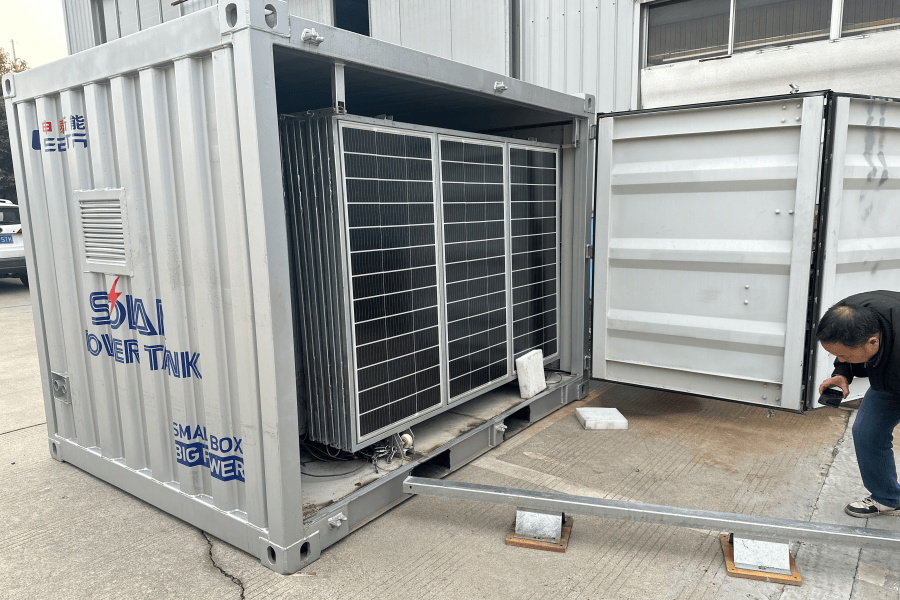
When the Grid Fails: Why Your Data Center's Backup Power Needs a New Safety Playbook
Hey there. Let's grab a coffee and talk about something that keeps facility managers and CTOs up at night: keeping the data humming when the lights go out. For years, the diesel generator was the undisputed king of backup power. But as we push towards a greener, more resilient grid - especially for power-hungry data centers - battery energy storage systems (BESS), particularly high-voltage DC solar containers, are stepping into the spotlight. Honestly, this shift isn't just about swapping one power source for another. It's about navigating a whole new world of electrical safety that many of us, frankly, learned on the fly. I've seen this firsthand on site: what works for a low-voltage residential setup can introduce real, tangible risks at the scale and voltage needed for a mission-critical data center.
Quick Navigation
- The Silent Shift in Backup Power
- Beyond the Buzzword: The Real Safety Gaps in High-Voltage DC
- The Regulation Framework: Your Blueprint for Safety
- A Case in Point: From Theory to a Texas Data Center Floor
- The Expert Take: It's More Than Just a Box
- Building Your Backup with Confidence
The Silent Shift in Backup Power
The phenomenon is clear across the U.S. and Europe. Data centers, driven by corporate sustainability goals and the sheer economics of levelized cost of energy (LCOE), are integrating solar-plus-storage at an unprecedented rate. The International Energy Agency (IEA) notes that data center electricity consumption could double by 2026, with on-site generation and storage becoming a critical hedge against grid volatility. The containerized, high-voltage DC BESS is a favorite here - it's pre-assembled, scalable, and efficient. But here's the kicker: this isn't a plug-and-play appliance. It's a complex, high-energy power plant in a box, and its safety dynamics are fundamentally different.
Beyond the Buzzword: The Real Safety Gaps in High-Voltage DC
So, what's the real problem? It's a gap in understanding. We're applying AC-era safety mindsets to a DC world, and at much higher voltages. The Safety Regulations for High-voltage DC Solar Container for Data Center Backup Power aren't just bureaucratic red tape; they are the collective wisdom to prevent catastrophic failures.
Let me agitate that point with what I've seen. A standard AC circuit breaker might not safely interrupt a high-voltage DC arc, which is notoriously persistent and can cause devastating fires. Thermal management isn't just about comfort; a poorly managed container in Arizona or Spain can see cell degradation accelerate, or worse, thermal runaway. One compromised cell can cascade through a module faster than fire suppression systems can react. The cost isn't just a damaged asset; it's downtime for a multi-million dollar data center and irreparable reputational harm. The industry is learning, sometimes the hard way, that compliance with UL 9540 (Energy Storage Systems) and IEC 62933 isn't optional - it's the baseline for insurability and operational licensing, especially under strict European and North American codes.
The Regulation Framework: Your Blueprint for Safety
This is where the solution comes into clear focus. Treating these regulations as your blueprint is the smartest move you can make. Think of them not as constraints, but as a pre-validated safety architecture. Key pillars include:
- Cell to System Integrity: It starts with cell selection and goes all the way to the container's fire rating. Regulations mandate rigorous testing for battery modules (think UL 1973) and the entire system's ability to contain faults.
- DC Arc Fault Protection: Specialized protection devices that can detect and interrupt a DC arc are mandatory. This is non-negotiable for high-voltage strings.
- Comprehensive Thermal Management: This goes beyond air conditioning. It's about designing for the worst-case ambient temperature and ensuring uniform cell temperature to prevent hotspots. The C-rate (charge/discharge rate) of the battery directly impacts heat generation - a high C-rate backup scenario needs a robust cooling solution.
- Physical & Environmental Safeguards: From seismic bracing in California to IP54-rated enclosures for dust and moisture, the container must be built for its specific environment.
At Highjoule, we've built our product philosophy around this blueprint. Our containers are engineered from the ground up to not just meet but exceed UL and IEC standards, because we know that's what delivers the lowest long-term LCOE - avoiding downtime and replacement costs is the ultimate financial optimization.
A Case in Point: From Theory to a Texas Data Center Floor
Let me bring this to life with a project we completed last year for a hyperscale data center operator in Texas. Their challenge was classic: they needed to supplement their backup generators with a fast-responding, solar-integrated BESS to cover short-term grid dips and participate in demand response. The site faced extreme heat and had strict local fire codes.
The safety regulations for the high-voltage DC solar container were the cornerstone of our design dialogue. We didn't just provide a box; we co-engineered the solution:
- We implemented a multi-zone, liquid-cooled thermal system to maintain optimal cell temperature even during 110F (43C) days, directly addressing thermal runaway risks.
- Every DC string was protected with certified arc-fault detection interrupters (AFDIs).
- The entire container, including our battery racks, was seismically rated and housed in a unit with a 2-hour fire wall rating.
The result? A system that passed inspection on the first try, secured favorable insurance rates, and has provided flawless backup for over 12 months. The client sleeps better knowing their safety is baked in, not bolted on.

The Expert Take: It's More Than Just a Box
Here's my blunt, from-the-trenches insight: the most sophisticated battery cell is only as good as the system that houses and manages it. When evaluating a high-voltage DC solar container for data center backup power, you must look at the integrated safety ecosystem.
Ask your vendor: How does the BMS (Battery Management System) communicate with the fire suppression and thermal controls? Is it a single, integrated system or a patchwork? What's the real-world round-trip efficiency when the safety systems are active? A few percentage points lost here directly hit your LCOE. At Highjoule, our engineering team - people who've been on site for decades - obsesses over these integrations. We design for the actual duty cycle of a data center backup: long periods of standby punctuated by sudden, high-power discharges. That requires a different design philosophy than a cycling solar-smoothing application.
Building Your Backup with Confidence
The journey to a safer, more resilient data center backup is complex, but it doesn't have to be risky. By placing safety regulations for high-voltage DC solar containers at the center of your procurement and deployment strategy, you're investing in certainty. You're not just buying a battery; you're buying risk mitigation, operational continuity, and peace of mind.
The question for your next planning meeting isn't just "What's the capacity?" It's "Show me how your system is designed to fail safely." How would your current plan hold up to that test?
Tags: UL Standard BESS Data Center Backup High-voltage DC Solar Container Safety
Author
James Zhang
20+ years agricultural energy storage engineer / Highjoule CTO