
Rapid Deployment Solar Containers for Agricultural Irrigation: A Practical Guide
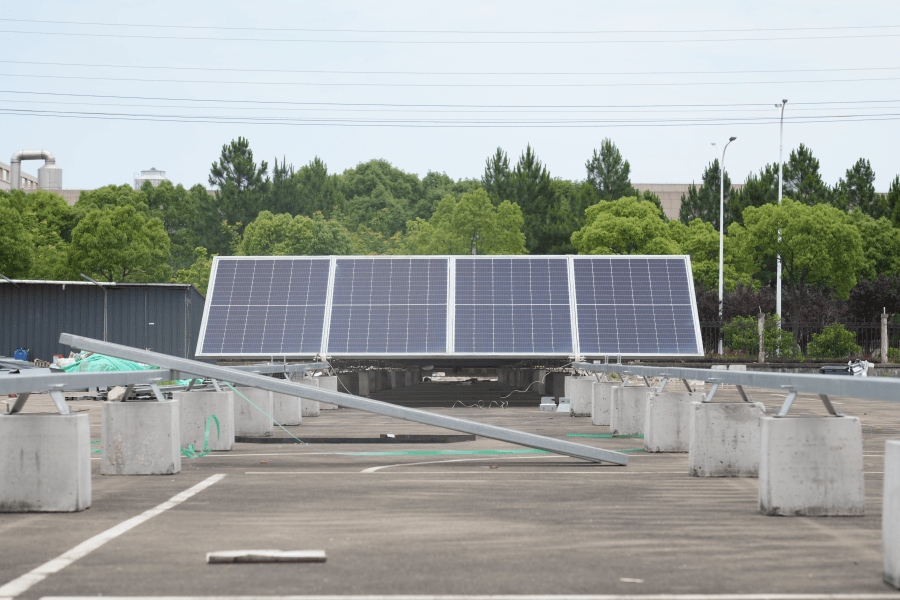
Table of Contents
- The Water-Energy Nexus: A Farm's Biggest Headache
- Why Traditional Solar + Storage Often Struggles On-Site
- Enter the Rapid Deployment Solar Container: More Than Just a Box
- What to Really Compare: A Field Engineer's Checklist
- Case in Point: A California Vineyard's Dry Spell Solution
- Looking Beyond the Spec Sheet: The Long-Term View
The Water-Energy Nexus: A Farm's Biggest Headache
Honestly, after two decades on sites from California's Central Valley to the farmlands of Germany, one thing is crystal clear: farmers are some of the most ingenious energy managers out there. They have to be. When your entire season - and livelihood - depends on pumping water at the right time, grid reliability and energy costs aren't just line items on a bill; they're existential threats. I've seen firsthand a farmer in Texas staring at a sky-high demand charge because his irrigation pumps kicked in during peak hours. The math just doesn't work.
The push for solar irrigation is strong, and for good reason. The International Energy Agency (IEA) notes the massive potential for solar in agriculture. But here's the rub I've witnessed time and again: a standard solar-plus-storage setup for a remote farm isn't like installing a system on a warehouse roof. You're dealing with limited space, a need for minimal ongoing maintenance, and often, a requirement to get the system up and running before the next growing season - or even the next watering cycle. Time is literally money, and crop yields wait for no one.
Why Traditional Solar + Storage Often Struggles On-Site
Let's agitate that pain point a bit. A traditional BESS (Battery Energy Storage System) deployment for agriculture can be a logistical puzzle. You've got separate components - solar inverters, battery racks, HVAC units, switchgear - all needing individual assembly, wiring, and integration on-site. This means multiple specialized trades, longer construction timelines, and more exposure to weather delays. Every extra day of commissioning is a day you're not generating your own power or hedging against grid volatility.
Then there's the safety and standards piece. For our markets in North America and Europe, this isn't optional. You need systems that are built from the ground up to meet UL 9540 for energy storage, IEEE 1547 for grid interconnection, and relevant IEC standards. Piecemeal systems can sometimes lead to integration gaps that keep me, as an engineer, up at night thinking about thermal management and system safety.

Enter the Rapid Deployment Solar Container: More Than Just a Box
This is where the comparison of rapid deployment solar containers for agricultural irrigation gets really interesting. We're not talking about just stuffing equipment into a shipping container. The real solution is a pre-engineered, pre-integrated, and pre-tested power plant in a box. Think of it like this: instead of building a car from parts in your field, you drive a fully assembled, tested, and warranted truck right onto your property. The difference in deployment time is staggering - often weeks instead of months.
At Highjoule, when we design these containers, the agricultural use-case is front of mind. It means designing for the high, intermittent power draws of large irrigation pumps (that's where understanding C-rate - the speed of battery charge/discharge - is crucial) and ensuring the thermal management system can handle a dusty Kansas summer or a humid Florida afternoon without breaking a sweat. All the complex integration and safety interlocks are done for you, in our facility, under controlled conditions.
What to Really Compare: A Field Engineer's Checklist
So, when you're evaluating options, move beyond just "price per kWh." Here's what matters on the ground:
- Deployment Speed & Plug-and-Play: How many man-hours are needed for on-site commissioning? A true rapid-deployment unit should be connected and operational in days.
- Built-in Compliance: Does the entire container system carry the necessary UL/IEC certifications as a unified product, or are you left to certify the assembly yourself?
- Robust Thermal Design: Ask about the cooling system's redundancy and its performance at 45C (113F). Batteries are like people; they perform poorly and age fast when overheated.
- Serviceability: Can critical components be easily accessed and replaced by a local technician? Modular design is key here.
Case in Point: A California Vineyard's Dry Spell Solution
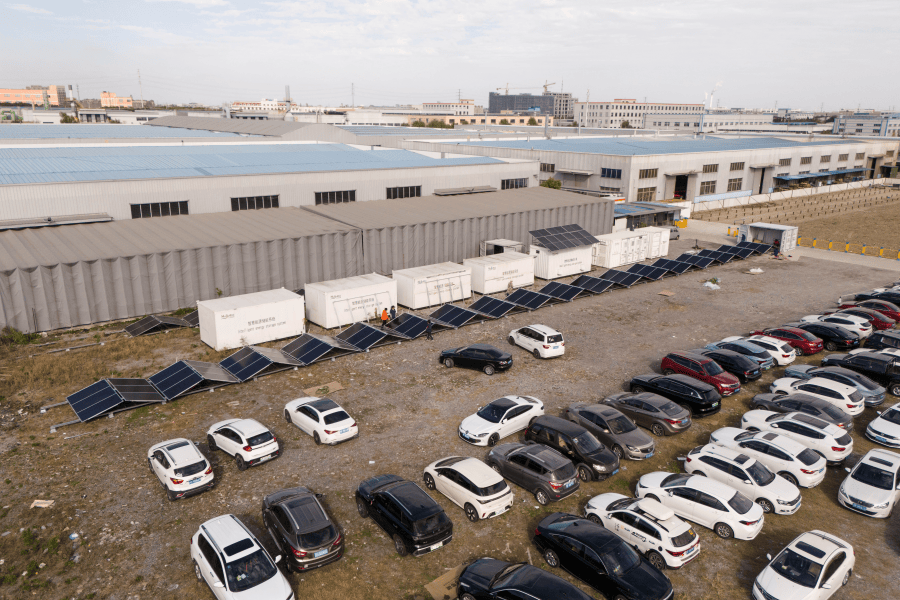
Let me give you a real example. A vineyard in Sonoma County faced unreliable grid power during critical fire-prevention shutoffs and needed to ensure drip irrigation could run to save their vines. They needed a resilient microgrid, fast. A traditional build would have taken 5-6 months. We delivered a Highjoule Solar Container with integrated storage and generator connectivity.
The unit arrived on a flatbed, was placed on a simple gravel pad, and was connected to their existing water pump control system. We had it energized and optimized within a week. The container's built-in energy management software was programmed to prioritize solar, use the battery to avoid peak tariffs, and only use the generator as a last resort. The result? Water security, lower operating costs (LCOE), and peace of mind. That's the power of a pre-fabricated solution done right.
Looking Beyond the Spec Sheet: The Long-Term View
The true value of a well-designed solar container isn't just in the quick install. It's in the decades of operation that follow. Your comparison should factor in the total cost of ownership. A system with superior thermal management and high-cycle life batteries might have a higher upfront cost but a significantly lower Levelized Cost of Energy (LCOE) over 15 years. That's the kind of math that makes a CFO and a farm manager happy.
My advice? When you look at different rapid deployment solutions, partner with a provider that thinks about the whole lifecycle. Ask about their local service and maintenance network. At Highjoule, for instance, our containers are built with standardized, swappable components and come with remote monitoring, so most issues can be diagnosed and often fixed by guiding local staff over the phone. That's how you turn a capital purchase into a reliable, long-term partner for your agricultural operation.
So, what's the biggest operational bottleneck your farm or agricultural business is facing right now - is it grid reliability, demand charges, or simply getting a resilient system in place before the season turns?
Tags: UL Standard BESS LCOE Solar Container Agricultural Irrigation Renewable Energy Microgrid
Author
James Zhang
20+ years agricultural energy storage engineer / Highjoule CTO