
Rapid Deployment Solar Containers for Eco-Resorts: A Practical Guide
Contents
- The Real Problem: It's Not Just About Power
- Why This Hurts Your Bottom Line and Reputation
- The Modern Solution: The All-in-One Power Hub
- A Case in Point: Off-Grid Luxury in the Rockies
- The Tech Made Simple: What Really Matters Inside the Box
- Making the Right Choice: Your Checklist
The Real Problem: It's Not Just About Power
Let's be honest. If you're developing or managing an eco-resort, you're juggling a hundred things. Sustainability is a core promise to your guests, but the reality of getting reliable, clean power in often-remote locations can keep you up at night. The problem isn't a lack of solar panels; it's what happens when the sun goes down, or during that week of peak occupancy when demand spikes.
I've been on-site for these deployments. The traditional approach - custom engineering, separate components (inverters here, battery racks there, a shed for controls) - is a headache. It's time-consuming, expensive, and frankly, a bit of a gamble on interoperability. According to the National Renewable Energy Laboratory (NREL), soft costs like engineering, permitting, and installation can eat up nearly 50% of a distributed energy project's budget. For a resort, time is revenue. A prolonged construction phase is a direct hit to your opening season or guest experience.
Why This Hurts Your Bottom Line and Reputation
Let me agitate that a bit, based on what I've seen firsthand. That complex, piecemeal system doesn't just cost more upfront. It's harder to get permitted, especially in North America and Europe where standards like UL 9540 for energy storage systems and IEC 62443 for cybersecurity are non-negotiable for insurers and local authorities. A delay in approval can cascade into missed deadlines.
Then there's the operational risk. Inconsistent component quality can lead to one part failing and taking the whole system offline. I recall a project in the Mediterranean where a thermal management issue in a poorly integrated battery cabinet caused constant derating - the system couldn't deliver promised power during the evening dinner rush. The resort had to fall back on diesel generators, which, as you can imagine, didn't align well with their "green luxury" branding. The real cost? Guest dissatisfaction and a bruised reputation.
The Modern Solution: The All-in-One Power Hub
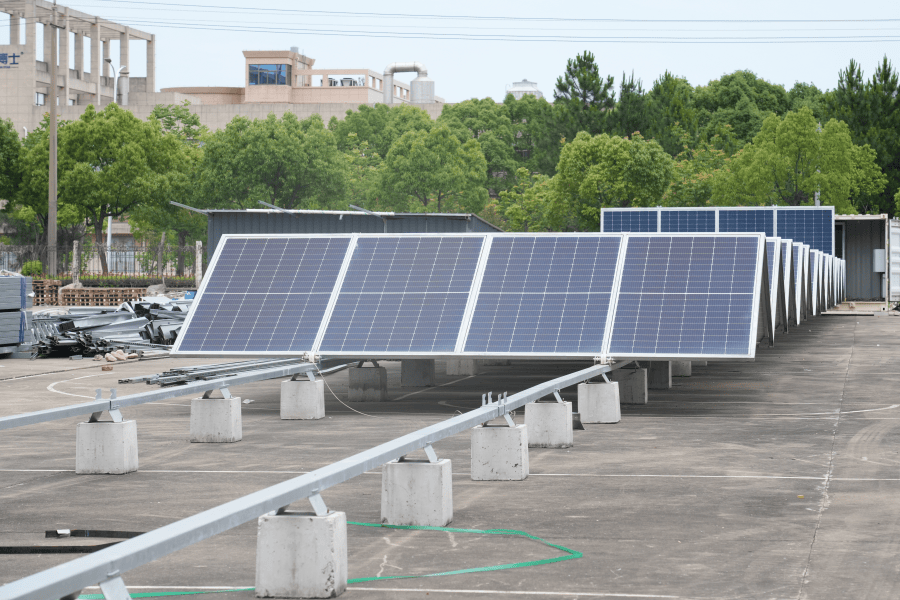
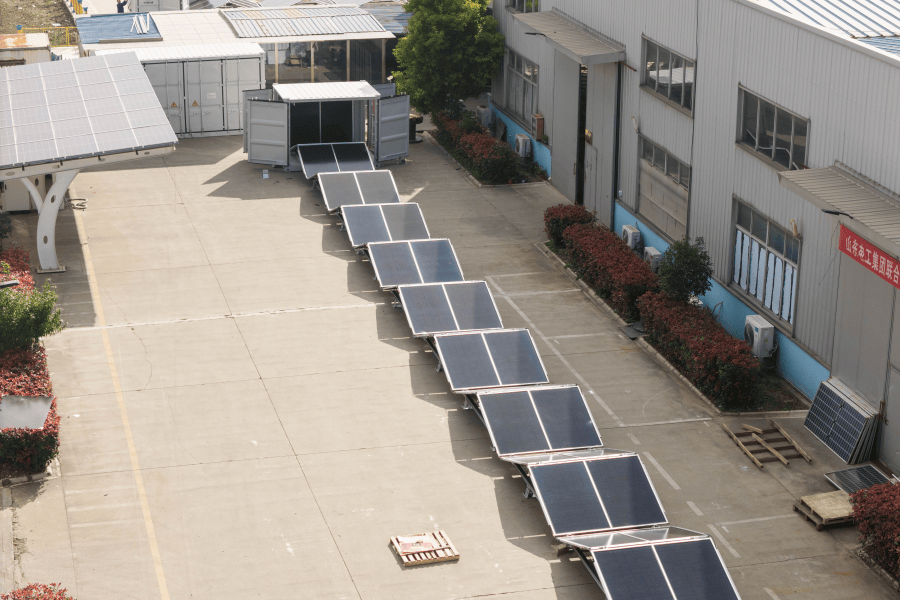
This is where the rapid deployment solar container, or what we in the industry call a pre-fabricated, containerized BESS, changes the game. Think of it not as a box of batteries, but as a fully integrated, pre-tested power plant in a shipping container. It arrives on a truck with the solar inverters, battery management system, cooling, fire suppression, and controls all already talking to each other perfectly. It's a solution born from solving the very problems I just described.
The core value is in the "rapid deployment" and "pre-comparison" aspects. Instead of comparing dozens of disparate components and hoping they work together, you're comparing a few complete, warrantied solutions. You're shifting the complexity from your site to the manufacturer's factory floor, where testing and quality control are far more rigorous. For a company like Highjoule, this means every unit we ship is not only built to UL and IEC standards but is stress-tested as a complete system before it leaves our door. It turns a 6-9 month engineering and construction saga into a 4-6 week site prep and commissioning process.

A Case in Point: Off-Grid Luxury in the Rockies
Let me give you a real example. We worked with an ultra-luxury eco-resort in the Colorado Rockies. Their challenge was absolute: zero grid connection, a demand for 24/7 flawless power, and a strict mandate to minimize generator use. Their initial plan involved a complex build-out of a separate battery room.
We proposed a comparison between a traditional setup and our containerized solution. The choice became clear. We delivered two 40-foot Highjoule PowerCube containers. Each was pre-integrated with 500 kWh of storage, bi-directional inverters, and a system designed for -30C winters. Because they were pre-certified units, local inspectors were familiar with the compliance pathway. They were placed on pre-cast foundations, connected to the solar field and the resort's main distribution panel, and were online in under 8 weeks. The resort now runs on >90% renewable energy, and the containers' sophisticated energy management system automatically blends in the backup generator only when absolutely necessary, slashing fuel costs and noise.
The Tech Made Simple: What Really Matters Inside the Box
When you're comparing these containers, forget the jargon. Focus on a few key things that translate directly to performance and cost:
- Battery Chemistry & C-rate: Most will use Lithium Iron Phosphate (LFP) C safer and longer-lasting. The "C-rate" is simply how fast it can charge or discharge. A 1C rate means a 100 kWh battery can deliver 100 kW of power. For a resort with sudden load spikes (everyone turning on AC at once), you need a high enough C-rate to handle that without straining the system.
- Thermal Management: This is critical. Batteries hate extreme temperatures. I've opened units with poor cooling where performance plummets on a hot day. Look for a dedicated, redundant cooling system - it's the difference between a system that lasts 15 years and one that degrades in 8.
- Levelized Cost of Storage (LCOS): This is your true total cost. A cheaper unit with lower efficiency or a shorter lifespan will have a higher LCOS. The container approach, with its integrated high-efficiency components and lower installation cost, is designed to optimize LCOS from day one.
Our design philosophy at Highjoule is to over-engineer on the basics: safety and thermal management. Because if those fail, nothing else matters.
Making the Right Choice: Your Checklist
So, when you're evaluating a rapid deployment solar container, what questions should you ask? Here's my on-site engineer's checklist:
- Is the entire system pre-assembled and tested as a single unit?
- Can you show me the full UL 9540/9540A certification for the assembled system, not just the parts?
- What is the round-trip efficiency (the % of energy you put in that you can actually use)? Anything below 92% is leaving money on the table.
- How is thermal management handled, and what is the operating temperature range?
- What is the expected degradation and warranty over 10 years?
- Does the energy management system have simple, actionable software for my team to monitor and control it?
The goal is to move from being a construction manager to an energy service operator. The right containerized solution lets you do that. It's not just a product; it's a shift towards predictable, reliable, and truly sustainable power. That's what allows an eco-resort to deliver on its promise without the constant worry about what's happening in the utility room.
What's the biggest energy reliability headache you're facing at your property right now?
Tags: UL Standard BESS Rapid Deployment Energy Storage Solar Container Eco-Resort
Author
James Zhang
20+ years agricultural energy storage engineer / Highjoule CTO