
Environmental Impact of 20ft High Cube Lithium Battery Storage Container for Industrial Parks
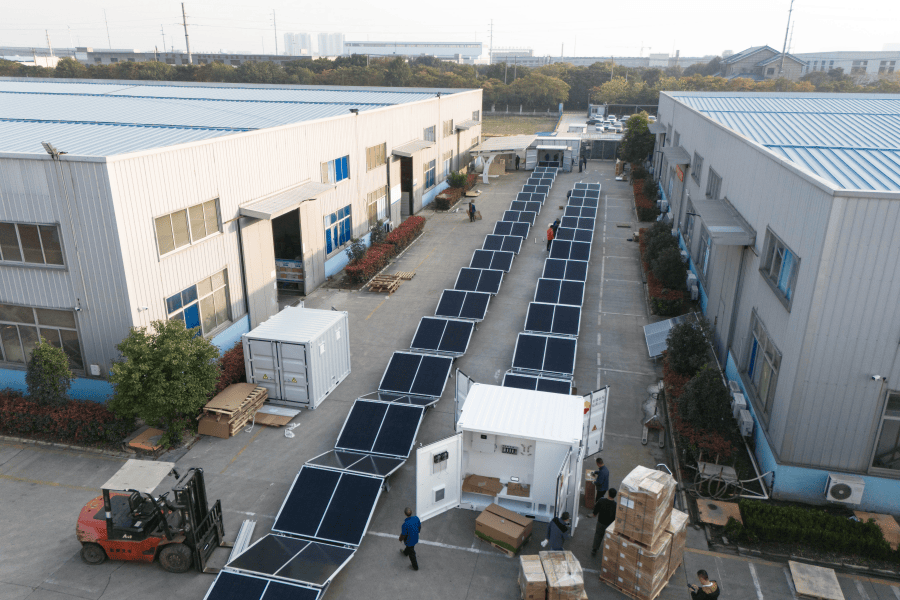
Table of Contents
- The Real Problem: It's Not Just About "Going Green"
- The Cost vs. Impact Tug-of-War
- Why a 20ft High Cube Container Changes the Game
- What's Inside the Box: Tech That Makes the Difference
- A Real-World Case: From Challenge to Blueprint
- Making the Right Choice for Your Park
The Real Problem: It's Not Just About "Going Green"
Let's be honest. When most industrial park managers in the US or Europe think about adding battery storage, the first thing that comes to mind isn't the "environmental impact." It's the bottom line. Can it cut my peak demand charges? Will it keep my production line running during a grid outage? But here's the thing I've seen firsthand on site after site: that narrow focus is exactly what leads to subpar projects, unexpected costs, and yes, a missed opportunity for genuine, measurable sustainability.
The real pain point is the disconnect. You're pressured to show ESG progress, but you're evaluated on operational uptime and cost per kWh. You hear about the benefits of lithium-ion storage, but you also hear horror stories about thermal runaway, complex permitting, and containers that become expensive lawn ornaments because the integration was botched. The environmental question gets reduced to a checkbox: "Yes, we have a BESS." But what's the actual impact?
The Cost vs. Impact Tug-of-War
This is where the aggravation truly sets in. Traditional thinking pits cost against environmental benefit. A cheaper system might use less refined thermal management, leading to faster degradation (meaning you'll replace the batteries sooner, creating more waste). Or it might not be optimized for the specific duty cycle of your machinery, so it's not displacing as much dirty grid power as it could.
The International Renewable Energy Agency (IRENA) has highlighted that smart system design is critical for maximizing both the economic and environmental returns of storage. A poorly sized or managed system simply won't deliver on its carbon reduction potential. You end up with a capital expense that looks good on a CSR report but doesn't move the needle on your facility's actual carbon footprint or your energy bill. That's a failure in my book.

Why a 20ft High Cube Container Changes the Game
This is where the standardized, yet highly optimized, 20ft High Cube Lithium Battery Storage Container enters as a practical solution. It's not a magic bullet, but it's the closest thing we have to a standardized, scalable building block for industrial energy resilience. The "environmental impact" of this solution is multifaceted and deeply positive when done right.
First, the footprint. A single 20ft container can house 2-4 MWh of storage. That's a massive amount of energy in a predictable, small area of your park. You're not paving over acres; you're utilizing marginal or existing space efficiently. Second, manufacturing and deployment. Pre-fabricated in a controlled factory environment, these containers minimize on-site construction waste, noise, and disruption. They're shipped, placed on a simple foundation, and connected. It's a cleaner process from start to finish.
The Lifecycle View: From LCOE to End-of-Life
To understand the true environmental impact, you have to talk about LCOE (Levelized Cost of Energy Storage). Honestly, this boring-sounding metric is the key. It calculates the total cost of owning and operating the system over its lifetime, divided by the total energy it dispatches. A lower LCOE isn't just good economics; it's a proxy for efficiency and longevity. A system that lasts 15 years instead of 10 has a lower LCOE and defers the environmental cost of recycling and manufacturing a new one.
A high-quality 20ft container achieves a low LCOE through:
- Superior Thermal Management: Consistent, active cooling (not just fans) keeps cells at their ideal temperature. This reduces degradation, extending life. It's like comparing an engine with a proper radiator to one without.
- Smart C-Rate Management: The C-rate is basically how fast you charge or discharge the battery. Aggressive, fast cycles (high C-rate) cause more stress. Our systems are programmed for the optimal C-rate for the application, balancing response speed with battery health. This isn't just a software toggle; it's designed into the power conversion and control systems from the ground up.
What's Inside the Box: Tech That Makes the Difference
When we at Highjoule design a container solution for a park in Texas or North Rhine-Westphalia, compliance isn't an afterthought - it's the foundation. Every component, from the cell-level fuses to the container-level fire suppression, is selected and integrated to meet UL 9540 and IEC 62933 standards. This isn't just about passing inspection. These standards represent decades of safety engineering. A system built to these specs is inherently safer, which prevents catastrophic failures that are not only dangerous but environmentally disastrous.
The real environmental win comes from integration. A container talking seamlessly to your onsite solar, your building management system, and the grid can perform "energy arbitrage" - charging when grid power is cheap and clean (often midday with solar abundance), and discharging during expensive, carbon-intensive peak hours. According to the National Renewable Energy Laboratory (NREL), this grid-support function is crucial for enabling higher penetrations of renewables overall.
A Real-World Case: From Challenge to Blueprint
Let me give you a non-proprietary example from a food processing plant in the Benelux region. Their challenge was threefold: volatile energy costs, strict carbon reduction targets, and a need for flawless power quality for refrigeration.
A standalone solar array helped, but its output didn't match their evening production peaks. They needed a bridge. We deployed a 20ft High Cube container (3.2 MWh) alongside their solar carport. The system was programmed with a dual objective: maximize self-consumption of solar and aggressively shave peak demand from the grid.
The impact? In the first year, they cut peak demand charges by over 40% and increased their renewable self-consumption from 30% to over 70%. From an environmental perspective, that's a direct reduction in grid-based fossil fuel consumption. The container's advanced management system ensures the batteries are cycled within their most efficient range, projecting a lifespan that will take them well beyond their payback period. The park manager told me the container became the "beating heart" of their energy strategy - reliable, predictable, and clean.

Making the Right Choice for Your Park
So, when you evaluate the Environmental Impact of a 20ft High Cube Lithium Battery Storage Container for Industrial Parks, don't just think of it as a black box that stores electricity. Think of it as an intelligent, high-efficiency engine for your energy ecosystem. Its positive impact is unlocked by:
- Quality and Safety Design (UL/IEC): Long life, safe operation, no nasty surprises.
- Advanced Thermal & Cycle Management: Maximizing throughput over the longest possible lifetime.
- Deep Integration Capability: Making your other assets (solar, generators) more effective and greener.
The best systems, like the ones we've deployed from California to Bavaria, are those you can almost forget about. They just work, day in and day out, quietly lowering costs and carbon. The question isn't really about whether a container solution has an environmental impact. It's about whether you'll choose one designed to make that impact powerfully positive for the next 15+ years. What's the one energy cost or reliability issue in your park that keeps you up at night?
Tags: UL Standard BESS LCOE Europe US Market Industrial Energy Storage Renewable Energy
Author
James Zhang
20+ years agricultural energy storage engineer / Highjoule CTO