
Environmental Impact of Air-cooled Hybrid Solar-Diesel Systems for Farms
Table of Contents
- The Diesel Dilemma on Modern Farms
- The Hybrid Hype and Its Hidden Environmental Cost
- Why Thermal Management is the Silent Game-Changer
- A Better Path: Optimizing Hybrids with Smart Storage
- Real-World Impact: A Case from California's Central Valley
- Making It Work for Your Operation
The Diesel Dilemma on Modern Farms
Let's be honest. If you're running a large-scale agricultural operation in the US Midwest or across parts of Europe, you have a complicated relationship with diesel. For irrigation, especially in remote fields or areas with unreliable grid power, diesel generators have been the "get-it-done" backbone for decades. They're powerful, they're on-demand, and frankly, we all know how to work with them. But sitting down with a farmer after a long season, that cup of coffee tastes a bit different when you start talking about fuel costs and that constant, low rumble in the background that isn't just noise - it's pure cost and emissions.
The problem isn't just the price at the pump. It's the operational lock-in. You size your generator for peak demand - maybe that two-week window where every crop needs water simultaneously. The rest of the time, that expensive asset is running inefficiently at partial load, which is terrible for its lifespan and even worse for its emissions profile. According to the International Energy Agency (IEA), diesel generators in off-grid and limited-grid applications can be a significant source of localized CO2 and particulate matter emissions. We're talking about the very land we're trying to cultivate.
The Hybrid Hype and Its Hidden Environmental Impact
So, the move to solar-diesel hybrid systems feels like a no-brainer, right? Slap on some PV panels, let the sun handle the daytime load, and fire up the diesel only when needed. On paper, the Environmental Impact of Air-cooled Hybrid Solar-Diesel System for Agricultural Irrigation looks stellar: reduced fuel consumption, lower running hours on the gen-set, and a cleaner conscience. And in many cases, it is a big step forward. I've seen sites cut fuel use by 40-60% in the sunny season, which is fantastic.
But here's what I've seen firsthand on site, and what often gets glossed over in the sales brochure: the "air-cooled" part of the equation, and the lack of storage. A basic hybrid system without a battery is at the mercy of the clouds. A passing cloud bank can cause a power dip that the generator must scramble to meet, leading to more frequent, inefficient starts and stops. This cycling is hard on the engine and increases nitrogen oxide (NOx) emissions - a key pollutant. Furthermore, that precious solar energy that exceeds the immediate pump load? Without a battery to capture it, it's simply clipped and wasted. You're not maximizing the environmental or economic return on your solar investment.

Why Thermal Management is the Silent Game-Changer
This leads me to a critical, nerdy-but-essential point: thermal management. In an air-cooled battery system - which is common for its simplicity and lower upfront cost - the batteries are cooled by ambient air. In a dusty farm environment or during a peak summer heatwave, that ambient air might be 40C (104F) or more. Batteries, like diesel engines, hate operating at high temperatures. It stresses them, accelerates degradation, and in a worst-case scenario, raises safety concerns.
When we talk about a system's true environmental footprint, we have to think about its entire lifecycle. A battery that degrades 30% faster because it was constantly thermally stressed needs to be replaced sooner. That means more manufacturing, more shipping, more recycling - all adding to the embodied carbon. The initial "green" choice can have a hidden long-term toll. This is where adhering to strict UL and IEC standards for thermal propagation and system safety isn't just a regulatory box to tick; it's a direct contributor to long-term, lower-impact performance.
A Better Path: Optimizing Hybrids with Smart Storage
The solution isn't to abandon the hybrid model. It's to evolve it. By integrating a properly engineered Battery Energy Storage System (BESS) into the mix, you transform a simple solar-diesel hybrid into a resilient, optimized microgrid. Here's how it flips the script on environmental impact:
- The Diesel Becomes a Last Resort: The BESS acts as a buffer. It soaks up excess solar, provides instant power during cloud transients, and handles short-term peaks. The generator only kicks in for prolonged heavy loads or when the battery is depleted. This means fewer running hours, longer periods of silence, and fuel savings that can push beyond 70%.
- Maximizing Your Solar ROI: Every kilowatt-hour your panels produce that you don't have to immediately use goes into the battery, not into thin air. This directly increases your renewable penetration and displaces more diesel.
- Stability for a Healthier Grid (or Gen-set): A modern BESS provides voltage and frequency support. This means your pumps run smoother and your generator, when it does run, operates at a stable, efficient point, reducing its emissions per kWh produced.
At Highjoule, when we design a system for an agricultural client, we're not just selling a battery container. We're modeling your specific irrigation load profiles, your solar yield, and even your local dust conditions to specify a system with the right C-rate (that's the speed at which a battery can charge/discharge safely) and, crucially, an advanced thermal management system. Our focus is on lowering the real Levelized Cost of Energy (LCOE) for your operation, which automatically aligns with minimizing long-term environmental impact. A system that lasts longer and performs better simply does more good.
Real-World Impact: A Case from California's Central Valley
Let me give you a concrete example from our project portfolio. We worked with a 500-acre almond orchard in California's San Joaquin Valley. The challenge was classic: high diesel costs for irrigation, a desire to use solar, and concerns about grid stability during fire-prevention shutoffs.
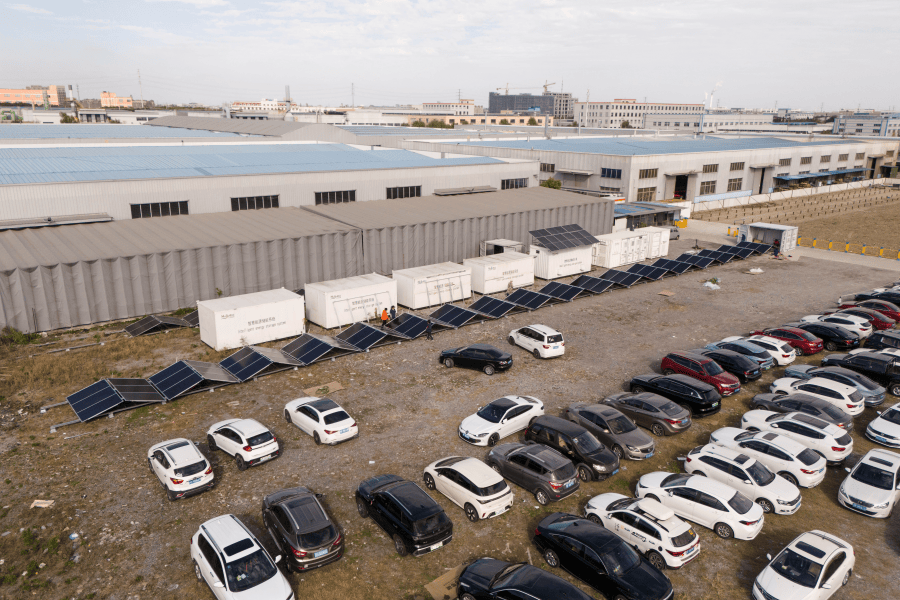
The old setup: A large diesel generator running intermittently, often at low load. The new setup: A 250 kW solar array + a 500 kWh Highjoule BESS + the existing diesel gen-set as backup. The BESS we deployed uses a liquid-cooled architecture, which is a bit more upfront but is a beast in that 45C valley heat. It keeps the battery cells at an optimal 25C, ensuring performance and longevity.
The result? The generator now runs less than 200 hours a year, down from over 1,500. Fuel consumption dropped by roughly 85%. But just as importantly, the operator has peace of mind. During Public Safety Power Shutoff (PSPS) events, the solar-plus-storage system keeps critical irrigation running for the full sunlit day and beyond. The environmental impact calculation here isn't just about carbon; it's about water security and crop resilience in a changing climate.
Making It Work for Your Operation
So, what's the takeaway if you're evaluating your options? The Environmental Impact of Air-cooled Hybrid Solar-Diesel System for Agricultural Irrigation can be positive, but it has a ceiling. To truly minimize your footprint and your costs, you need to think about the third element: intelligent storage.
Ask your provider not just about the upfront cost per kilowatt-hour, but about the thermal management design. Does it comply with UL 9540 for energy storage systems? How does it handle the dirt and heat of your specific location? What's the projected cycle life and degradation under your duty cycle? Honestly, the difference between a good and a great system lies in these details.
The goal is to make diesel the silent, rarely-seen partner, not the workhorse. With the right design, your farm's energy system can become as sustainable as the food you grow. What's the one irrigation pump or remote asset on your land that keeps you tied to the fuel truck, and what would it mean to cut that cord?
Tags: BESS Energy Storage Agricultural Irrigation Solar-Diesel Hybrid Environmental Impact
Author
James Zhang
20+ years agricultural energy storage engineer / Highjoule CTO