
High-voltage DC Pre-integrated PV Container for Military Base Energy Security
Contents
- The Silent Vulnerability: When the Grid Goes Down
- Why Traditional "Bolt-On" Solutions Fall Short on Site
- A New Paradigm: The Pre-Integrated, High-Voltage DC Container
- Case Study: Securing Forward Operations in a Remote European Theater
- The Technical Edge, Explained Over Coffee
- Beyond the Box: Why Localized Expertise & Standards Matter
The Silent Vulnerability: When the Grid Goes Down
Let's be honest. For most commercial facilities, a grid outage is a costly disruption. For a military base, it's a critical failure in mission readiness. I've been on-site during exercises where the simulated loss of primary power instantly shifted the entire focus from operations to basic survival. The dependency on diesel generators is a known burden C the fuel logistics, the noise signature, the maintenance cycles, and let's not forget the carbon footprint that now factors into strategic planning. According to a NREL analysis, Department of Defense installations are among the largest energy consumers in the U.S., and their energy resilience is directly tied to national security. The push for renewables is not just about being green; it's about being secure, silent, and self-sufficient.
Why Traditional "Bolt-On" Solutions Fall Short on Site
So, the answer is solar plus storage, right? Often, yes. But here's the rub I've seen firsthand: the classic approach of installing a field of PV panels and connecting them to a separate, AC-coupled battery system is fraught with complexity in a military context. You're dealing with multiple vendors, extended construction timelines, and a spider web of AC/DC conversions that sap efficiency. Every conversion step (DC from solar to AC for the grid, then back to DC for the battery, then back to AC for the load) represents a loss, typically 2-3% per conversion. That adds up. More components mean more points of failure, a larger physical footprint, and a commissioning process that can feel endless. In a setting where space is often at a premium and reliability is non-negotiable, this model shows its cracks.

The Agitation: Cost, Complexity, and Compromised Security
Think about the lifecycle cost. A fragmented system means higher upfront engineering costs, more man-hours on-site (which is a security concern in itself), and a maintenance nightmare with multiple service contracts. The Levelized Cost of Energy (LCOE) C the total cost to build and operate an asset over its life C gets bloated by all this inefficiency. Furthermore, systems that aren't built from the ground up for high-voltage DC integration often can't handle the high C-rate discharge needed for critical "black start" events or to power pulsed loads common in defense applications. You end up with a system that checks the "renewables" box but doesn't truly meet the mission's core need for resilient, on-demand power.
A New Paradigm: The Pre-Integrated, High-Voltage DC Container
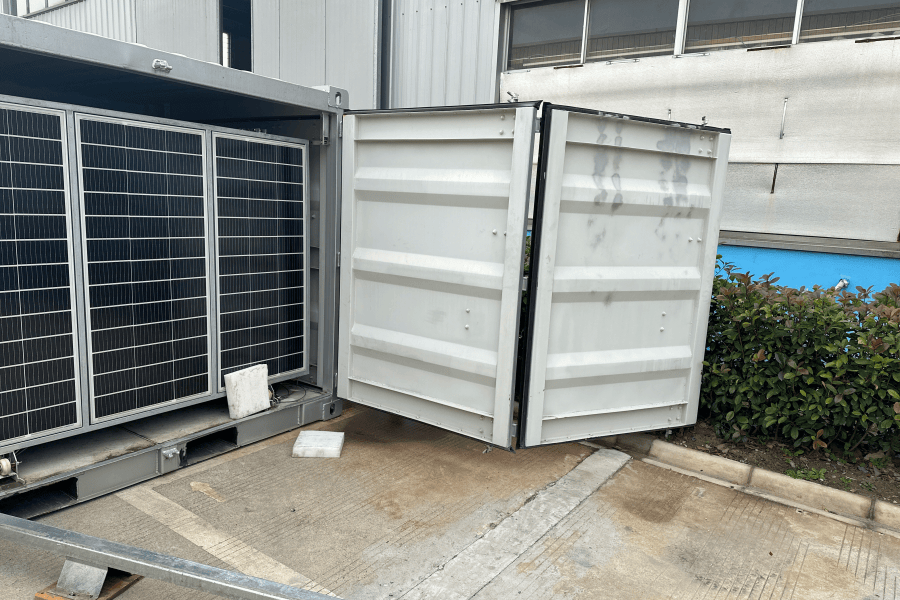
This is where the game changes. Instead of building a system piece-by-piece in the field, what if the entire power plant C the PV inverters, the battery management system, the thermal management, and the safety controls C arrived in a single, secure, tested container? A container where the solar array connects via high-voltage DC directly to the battery bank, minimizing conversion losses and maximizing efficiency. This isn't a theoretical concept; it's the evolution we've been driving at Highjoule for critical infrastructure projects. The core value is simplicity: one unit, one connection, one integrated system tested to rigorous standards before it ever leaves the factory.
Case Study: Securing Forward Operations in a Remote European Theater
I can't disclose the exact coordinates, but I can walk you through a real deployment. The challenge was a forward-operating base in Northern Europe requiring a resilient, low-observable microgrid. The site had limited permanent infrastructure, harsh weather, and a strict mandate to reduce fuel resupply convoys C a vulnerable logistical link.
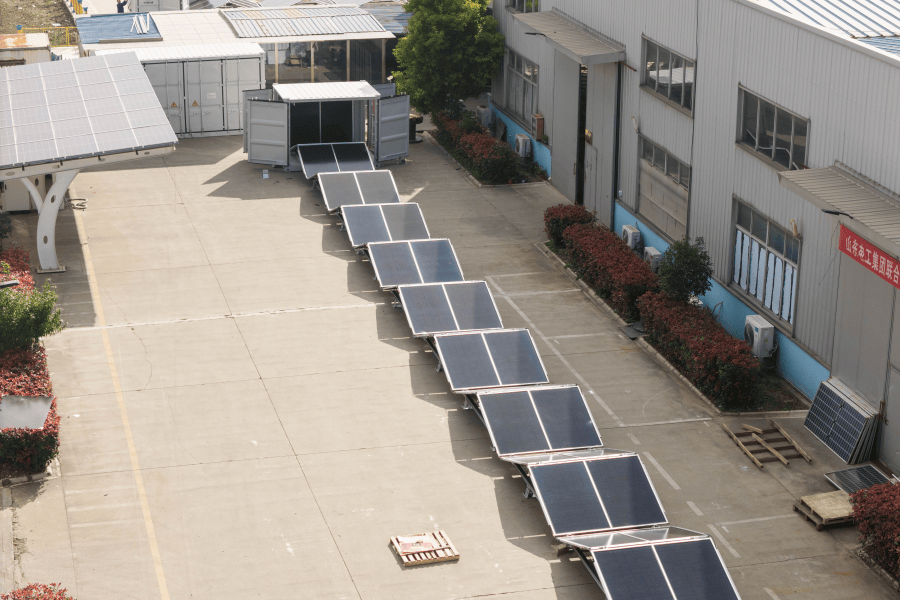
The solution was a Highjoule pre-integrated, high-voltage DC container paired with a ground-mounted solar array. Here's how it worked on the ground:
- Deployment: The container was shipped, dropped into place, and connected. Commissioning time was cut by roughly 70% compared to a traditional build. The base's existing diesel generators were integrated as a backup, not the primary source.
- DC Coupling Efficiency: By keeping the solar and battery on a shared high-voltage DC bus, we achieved a round-trip efficiency north of 94%. More sun captured meant less diesel burned.
- Silent Running: During daylight operations, the microgrid powered critical loads with zero acoustic signature and no exhaust plume.
The result was a dramatic reduction in generator runtime, slashing fuel consumption and associated risks. The commander gained a predictable, silent source of power, and the energy security posture of the site was fundamentally transformed.
The Technical Edge, Explained Over Coffee
Okay, let's break down the "why" behind the performance, without the textbook jargon.
High-Voltage DC & C-Rate: Think of voltage like water pressure. Higher pressure (voltage) lets you move more power (water) through smaller wires. Our systems often operate at 1000V+ DC, which reduces costly copper and energy losses. Now, C-rate is how fast you can pull energy from the battery. A 1C rate means discharging the full battery in one hour. For a base needing to start large motors or handle surge loads, you might need a 2C or 3C capability. A pre-integrated DC system is designed from the cell level up to safely deliver these high power bursts, which an afterthought AC system often struggles with.
Thermal Management: This is the unsung hero. Batteries perform best, and last longest, within a tight temperature range. I've seen systems fail because their cooling was an afterthought. Our containers use a dedicated, N+1 redundant cooling system designed for the specific chemistry (like LiFePO4) and the local climate - whether it's the desert heat or Arctic cold. This precise control directly extends the system's life and keeps it safe.
LCOE - The Real Metric: When we talk to base commanders or facility managers, we focus on LCOE. A pre-integrated container has a higher upfront unit cost? Sometimes. But when you factor in the drastically lower installation cost, the higher efficiency (more energy per sun hour), the longer lifespan from better thermal management, and the simplified O&M, the total cost of ownership over 20 years is where we win. You're buying a predictable energy outcome, not just a box of components.
Beyond the Box: Why Localized Expertise & Standards Matter
Shipping a container anywhere is one thing. Making sure it's legal, safe, and operable for decades in that specific location is another. This is where our 20+ years of global deployment is non-negotiable. A system for a U.S. base isn't just UL 9540 certified; its design accounts for NEC requirements, local fire codes, and even seismic ratings if needed. For the EU, it's built to IEC 62933, with CE marking and full compliance with local grid codes. We handle the maze of compliance so the client doesn't have to.
Honestly, the product is half the solution. The other half is having engineers who understand both the technology and the operational reality of a secure facility. We've stood in those switchyards, worked around flight lines, and understand the meaning of "mission-critical." Our service model is built on that understanding - providing localized spares, training base personnel, and offering remote monitoring that gives peace of mind without compromising security protocols.
So, the question isn't really about choosing a battery or solar panels anymore. It's about choosing a path to energy resilience. Are you building a project, or are you deploying a mission-ready asset? The difference, as we've seen on the ground, is everything.
Tags: UL Standard BESS Europe US Market PV Container DC Coupling Military Energy Security
Author
James Zhang
20+ years agricultural energy storage engineer / Highjoule CTO