
The Ultimate Guide to LFP Off-grid Solar Generators for Construction Site Power
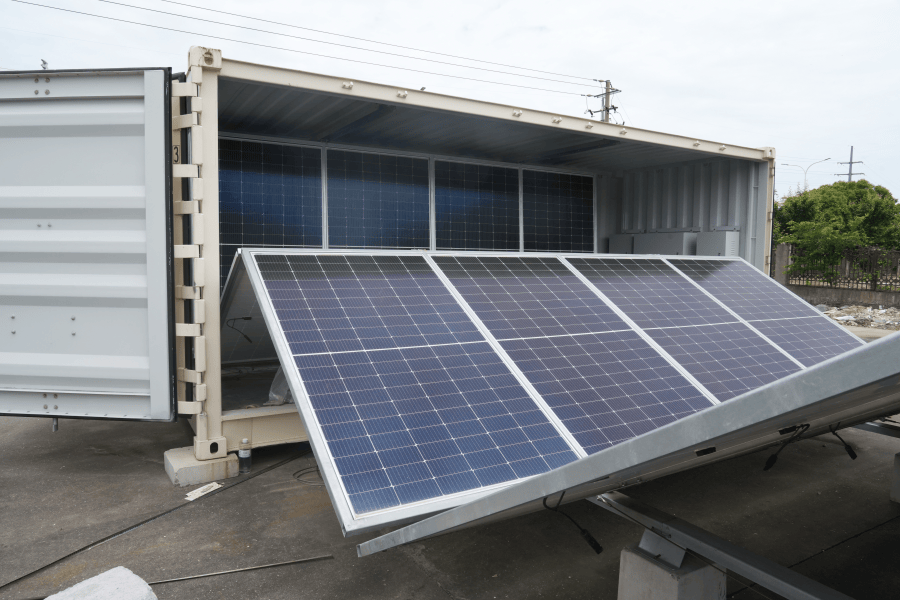
Table of Contents
- The Real Power Problem on Your Construction Site
- Why Diesel Generators Are Failing You (And the Budget)
- LFP Off-grid Solar: The Game Changer We've Been Waiting For
- Beyond the Battery: What Makes a Truly Robust Site Solution
- Real-World Proof: It's Not Just Theory
- Making the Switch: What You Need to Ask
The Real Power Problem on Your Construction Site
Let's be honest. When you're managing a construction site, reliable power is right up there with weather delays and material shortages on the list of major headaches. I've been on sites from Texas to Bavaria, and the story is often the same: you're either dealing with the deafening roar and fume of diesel gensets, paying a fortune for temporary grid connection (if it's even available), or both. The power needs are real - running tools, site offices, lighting, security systems - but the traditional solutions feel like they're from a different century.
Honestly, the biggest pain point I see isn't just the noise or the smell. It's the unpredictable cost. With diesel, you're completely exposed to fuel price volatility. One month your budget is fine, the next, a geopolitical event sends your fuel costs through the roof. And let's not forget the logistics nightmare of fuel delivery, storage, and security on a busy site. It's a massive operational drag.
Why Diesel Generators Are Failing You (And the Budget)
We need to talk about the true cost. It's not just the fuel invoice. A 2023 NREL analysis on distributed energy resources highlighted that when you factor in maintenance, unplanned downtime, and environmental compliance costs, the operational expenses of diesel generators can be 40-60% higher than their upfront price suggests. I've seen firsthand on site how a genset failure at a critical pour or lift operation can cost tens of thousands in delayed labor and penalties.
Then there's the regulatory pressure, especially in Europe and progressive US states like California. Emission standards are tightening, and "green" building certifications are becoming the norm, not the exception. Running a fleet of diesel generators is increasingly a reputational and compliance liability. You're essentially locking in a high-cost, high-carbon power source for the duration of your project.
The Silent Budget Killers: Downtime and Logistics
- Fuel Theft & Pilferage: It happens more than you'd think. Unsecured fuel is a liability.
- Scheduled Maintenance Interruptions: Your project timeline doesn't care about the genset's service interval.
- Noise Ordinance Violations: Leading to work hour restrictions or fines, especially in urban or semi-urban sites.
LFP Off-grid Solar: The Game Changer We've Been Waiting For
This is where the combination of solar PV and Lithium Iron Phosphate (LFP) battery storage becomes a true site-power revolution. It's not just a "green alternative"; it's a more reliable, predictable, and ultimately cheaper primary power system for off-grid and weak-grid sites.
Why LFP specifically? In my two decades working with battery chemistries, LFP has emerged as the undisputed champion for harsh, temporary environments like construction. Its inherent stability is a game-changer for safety. Unlike some other lithium-ion chemistries, LFP is far more resistant to thermal runaway. On a dusty, vibration-filled construction site, that intrinsic safety isn't a nice-to-have; it's a non-negotiable. It aligns perfectly with the rigorous safety standards we follow in the US (UL 9540, UL 1973) and Europe (IEC 62619).

Beyond the Battery: What Makes a Truly Robust Site Solution
An off-grid solar generator is more than just panels and a battery box. It's an integrated power system. Let me break down the key technical aspects in plain terms, the way I'd explain it to a project manager over coffee.
1. The C-Rate & Power Delivery: Think of C-rate as the "throttle response" of your battery. A high C-rate means the battery can deliver a big burst of power instantly - exactly what you need when starting a large saw or crane. A quality LFP system can handle these high-power demands without breaking a sweat, whereas a low C-rate battery would sag or trigger a shutdown.
2. Thermal Management (The Unsung Hero): This is critical. Batteries perform best within a specific temperature range. A system with poor thermal management will lose capacity on a cold morning and risk overheating on a hot afternoon. At Highjoule, we design our containerized BESS units with active liquid cooling, ensuring consistent performance from -20C to 50C. I've seen units in Arizona desert sites and Norwegian winter projects performing identically because of this.
3. The Real Metric: Levelized Cost of Energy (LCOE). This is your ultimate financial compass. LCOE accounts for all costs over the system's life: capital, fuel (sunshine is free!), maintenance, and replacement. While the upfront cost of a solar+LFP system can be higher than a diesel genset, its LCOE over a 2-3 year project is almost always lower. You swap variable fuel costs for a fixed, predictable cost of ownership. According to IRENA's 2023 report, the cost of electricity from solar PV has fallen 90% in the last decade, and when paired with storage, it's now competitive for off-grid applications without subsidies.
Real-World Proof: It's Not Just Theory
Let's talk about a project we did in Northern Germany, a large logistics hub construction. The site had no grid connection for the first 18 months. The initial plan was a bank of diesel generators.
The Challenge: Strict local noise and emission regulations limited genset run hours, project sustainability targets demanded a low-carbon solution, and the budget was tight on fuel contingencies.
The Solution: We deployed a 500kWh LFP-based off-grid solar generator system, integrated with two smaller diesel gensets as backup. The system was designed to UL and IEC standards but certified locally for the German market.
The Outcome: The solar+LFP hybrid system became the primary power source, automatically dispatching power and managing the gensets. Diesel runtime was reduced by over 85%. The project manager told me they not only met their carbon goals but also came in under budget on power costs, as they were largely insulated from the diesel price spikes that hit their competitors that year. The system was containerized, so at project end, it was simply disconnected, shipped, and recommissioned at the next site.

Making the Switch: What You Need to Ask
So, you're considering an LFP off-grid system for your next project. Fantastic. Here are the practical questions I'd be asking if I were in your boots:
- Is it truly plug-and-play for my site? Look for containerized, pre-integrated solutions that arrive on a flatbed, ready for connection. Complexity is your enemy on a busy site.
- How do you handle extreme weather? Demand specifics on the operating temperature range and the thermal management system. Get it in writing.
- What's the real-world cycle life? LFP boasts thousands of cycles. Ask for test data aligned with IEEE or IEC standards, not just marketing specs.
- What happens after deployment? Your provider should offer remote monitoring and have local service partners. You need to know someone can respond if an alert pops up.
At Highjoule, we've built our business on answering these questions before they're even asked. Our design philosophy starts with the harsh reality of the field, not just the lab. That's why our systems are over-engineered for reliability and come with the local support to ensure they're an asset, not another problem to manage.
The shift to LFP off-grid power isn't a future trend - it's a present-day solution delivering real ROI and resilience. What's the one power reliability risk on your next project that keeps you up at night? Maybe it's time we found a quieter, cleaner, and smarter way to tackle it.
Tags: Construction Site Power UL Standard BESS Europe US Market Renewable Energy LFP Battery Off-grid Solar Generator
Author
James Zhang
20+ years agricultural energy storage engineer / Highjoule CTO