
Environmental Impact of All-in-one Mobile Power Containers for Construction Sites
Contents
- The Hidden Cost of "Business as Usual"
- Beyond the Exhaust Pipe: The Full Environmental Picture
- How an All-in-One Mobile Power Container Actually Works
- A Real-World Case: From Noise Complaints to Quiet Power
- Thinking About Your Next Project?
The Hidden Cost of "Business as Usual"
Let's be honest. If you're managing a construction site in the US or Europe right now, temporary power is probably one of those necessary evils. You roll in the diesel gensets, you deal with the noise, the smell, the fuel deliveries, and the ever-present worry about local emissions regulations getting tighter by the minute. It's just part of the job, right? I've been on hundreds of sites over the years, and honestly, the environmental conversation around construction has long focused on the big stuff C materials, waste management C while this chugging, fuming elephant in the room gets a pass because it's "temporary."
But here's the thing I've seen firsthand: "temporary" often adds up to years on large-scale projects. And the impact is anything but minor. The International Energy Agency (IEA) has highlighted that diesel generators are a significant source of localized air pollution, including nitrogen oxides (NOx) and particulate matter (PM). On a practical level, this isn't just about carbon footprints in a report. It's about facing community pushback, dealing with strict local air quality ordinances (think California's CARB rules or EU's Stage V standards), and the growing pressure from project owners who want a greener story. The real problem isn't just the fuel; it's the entire paradigm of temporary power being inherently dirty and disruptive.
Beyond the Exhaust Pipe: The Full Environmental Picture
When we talk about the Environmental Impact of All-in-one Integrated Mobile Power Container for Construction Site Power, we need to look beyond just tailpipe emissions. A modern battery energy storage system (BESS) container tackles the issue from multiple angles:
- Air & Noise Pollution: This is the most obvious win. Zero onsite emissions. The difference in noise levels is staggering C we're talking from a constant 75-90 dBA roar down to a background hum of maybe 50-60 dBA from the cooling systems. This alone can keep you compliant with local noise ordinances and maintain better community relations.
- Spill and Contamination Risk: No diesel means no risk of ground or water contamination from fuel spills. That's one less major environmental hazard and liability you have to manage on-site.
- Energy Efficiency: A traditional diesel genset is terribly inefficient at partial load, which is how it runs most of the time. A BESS, especially when paired with even a small solar canopy, delivers power with dramatically less primary energy waste. This ties directly into a better Levelized Cost of Energy (LCOE) over the project's life, a key metric we always calculate for clients. Simply put, you get more usable power from the energy you put in.
- Thermal Management & Longevity: This is a crucial tech point made simple. A battery's lifespan and safety are tied to its operating temperature. A high-quality container has an integrated thermal management system C think of it as a sophisticated, self-contained climate control system for the battery racks. This prevents overheating, which degrades batteries fast, and ensures optimal performance in both Texas heat and German winter. It's this engineering that makes the solution durable and safe, directly reducing long-term waste from premature battery replacement.
Why Standards Like UL 9540 Aren't Just Paperwork
You'll hear a lot about UL, IEC, and IEEE standards. From my boots-on-the-ground perspective, these aren't bureaucratic hoops. A system certified to UL 9540 (the standard for energy storage systems) has been rigorously tested for safety C electrical, fire, and thermal runaway hazards. For a site manager, this means drastically reduced fire risk compared to fuel storage. It also means local fire marshals and permitting authorities are far more familiar and comfortable with the technology. It smooths the path to approval, which is a huge, often overlooked, environmental and project benefit: getting a cleaner solution deployed faster.
How an All-in-One Mobile Power Container Actually Works
So, what is this thing? Imagine a shipping container that arrives on-site. Inside, it's a pre-fabricated, plug-and-play power plant. It contains the battery racks, the inverter that converts DC to AC power, the thermal management system, and the brain C the energy management system (EMS).
It can be charged from the grid during off-peak, low-cost hours (or when grid carbon intensity is low), or directly from renewable sources like solar panels set up around the site perimeter. Then, it discharges that stored energy to run tools, lighting, and site offices during peak work hours. The C-rate C essentially the speed at which a battery can be charged or discharged safely C is a key design spec. For construction, you need a C-rate that can handle the high surge power of starting large equipment, not just trickle-charging phones. A well-designed container balances high power capability with battery longevity.

At Highjoule, when we design these systems, we're not just selling a box. We're delivering a guaranteed power service. We look at your site's load profile, the local utility rates and green incentives, and the project timeline. The goal is to configure the system C its capacity, power rating, and software controls C to minimize your total energy cost (LCOE) and maximize your environmental benefit, all while ensuring it meets every local safety standard from day one.
A Real-World Case: From Noise Complaints to Quiet Power
Let me give you a concrete example from a project we supported in a dense urban area in Northern Germany. The challenge was a 24-month infrastructure upgrade. The site was surrounded by residential apartments and a hospital. The initial diesel generators led to daily noise complaints and a warning from environmental health officials within the first week.
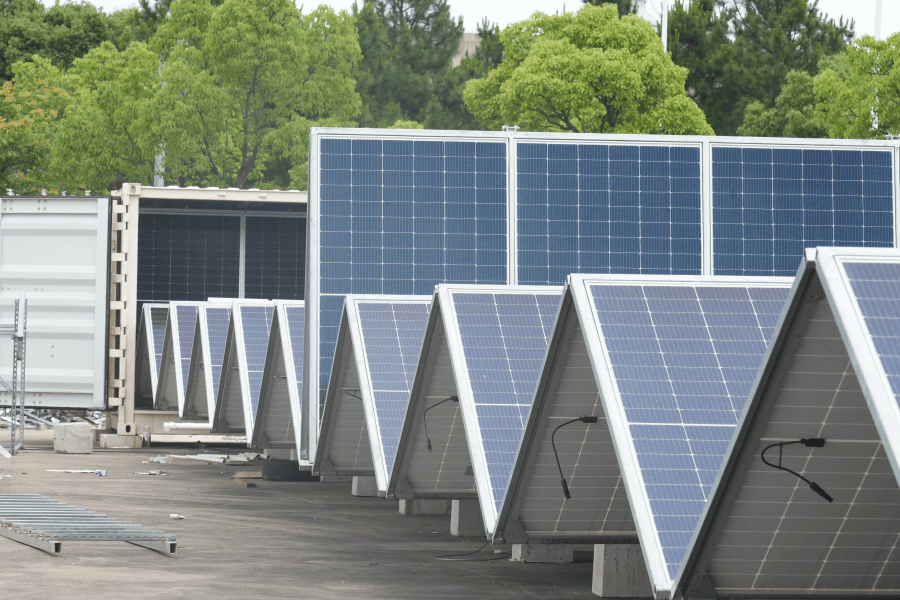
The solution was deploying two of our all-in-one mobile power containers. They were charged overnight from the grid (using Germany's growing share of renewable energy) and paired with a temporary solar array on the site's fencing. The result? Noise complaints stopped immediately. The project manager calculated a 15% reduction in their temporary energy costs by avoiding peak-time grid draw and diesel. But more importantly, they received positive local press for their "green construction site" initiative, which smoothed relations with the community for future phases. The containers were UL and IEC compliant, so German technical inspection (T1V) approval was straightforward. Once the project finished, the containers were simply trucked to the next site, ready to go.
Thinking About Your Next Project?
The shift away from diesel isn't just coming; it's already here in leading markets. The question is no longer if there's a cleaner alternative, but which alternative makes the most financial and operational sense for your specific site conditions. Evaluating the true Environmental Impact of All-in-one Integrated Mobile Power Container for Construction Site Power requires looking at the whole picture C from community relations and regulatory risk to total energy cost and your company's sustainability goals.
What's the single biggest pain point you're facing with temporary power on your current project? Is it fuel cost volatility, noise restrictions, or the complexity of local emissions compliance? The answer to that question is the perfect starting point to explore if a mobile BESS container is the right move for you.
Tags: Construction Site Power UL Standard BESS LCOE Renewable Energy Environmental Impact Mobile Power Container
Author
James Zhang
20+ years agricultural energy storage engineer / Highjoule CTO