
Minimizing Environmental Impact with C5-M Anti-corrosion Off-grid Solar Generators for EV Charging
Contents
- The Silent Killer: When Corrosion Meets Ambitious Green Goals
- The Real Cost Isn't Just on the Sticker
- A Tough Shell for a Tough Job: The C5-M Anti-corrosion Solution
- Case in Point: A Coastal California Microgrid
- The LCOE Advantage: Thinking in Decades, Not Years
- Your Next Step: Asking the Right Questions
The Silent Killer: When Corrosion Meets Ambitious Green Goals
Let's be honest. When we talk about deploying off-grid solar generators for EV charging stations, especially in Europe and North America, the conversation usually starts with power output, battery chemistry, and maybe the inverter efficiency. We get excited about the green credentials, the energy independence. But there's a quiet, relentless factor that I've seen derail projects from the windswept coasts of Scotland to the salty air of Florida: environmental corrosion.
You're not just installing a battery in a controlled warehouse. You're putting a sophisticated, capital-intensive piece of equipment out in the elements - near highways (de-icing salts), industrial parks, or coastal sites. The International Energy Agency (IEA) highlights the rapid expansion of EV infrastructure, but honestly, their reports don't always dwell on the on-the-ground maintenance nightmares. A standard enclosure might look fine for a year or two. Then, you start seeing the telltale signs. A rusty bolt here. A compromised seal there. Before you know it, you're not worrying about cycle life; you're fighting a losing battle against moisture ingress and component failure.

The Real Cost Isn't Just on the Sticker
This is where the real agitation begins. The environmental impact of a system isn't just about the carbon it displaces. It's about the total lifecycle footprint. A unit that fails prematurely due to corrosion has a massive hidden cost:
- Resource Waste: Manufacturing a battery storage system is energy and resource-intensive. Throwing it away after 5 years instead of 15 is an environmental loss, not a gain.
- Maintenance Mayhem: I've been on site for "unscheduled maintenance." It's never simple. It means service crews, special transports, downtime for the charging station, and frustrated EV drivers. The carbon footprint of that service loop adds up.
- Safety Risks: Corrosion doesn't discriminate. It can attack structural supports, electrical connections, and safety venting. Compromising any of these against standards like UL 9540 or IEC 62933 is a non-starter for any responsible operator.
The dream of a clean, off-grid EV oasis quickly fades if it becomes a recurring capital drain and a maintenance sinkhole.
A Tough Shell for a Tough Job: The C5-M Anti-corrosion Solution
So, what's the answer? It starts with specifying the right protection from day one. This is where the C5-M anti-corrosion classification moves from a technical spec sheet line item to your project's best friend.
In simple terms, C5-M is a severe corrosion category defined by ISO 12944. It covers highly aggressive industrial and marine atmospheres. A system built to this standard isn't just painted; it's engineered for survival. We're talking about hot-dip galvanized steel, multi-layer coating systems with epoxy and polyurethane topcoats, and stainless-steel fasteners. It's the difference between a raincoat and a full hazmat suit for your battery storage system.
At Highjoule, we don't see this as an "extra." For off-grid EV charging applications, especially in harsh environments, it's the baseline. Our containerized BESS solutions are designed from the ground up to meet C5-M, alongside the electrical safety standards like UL 9540 and IEEE 1547 that the North American market demands. It's about holistic design - the thermal management system isn't just cooling the batteries; it's maintaining an internal environment that prevents condensation, a key corrosion accelerant.
Case in Point: A Coastal California Microgrid
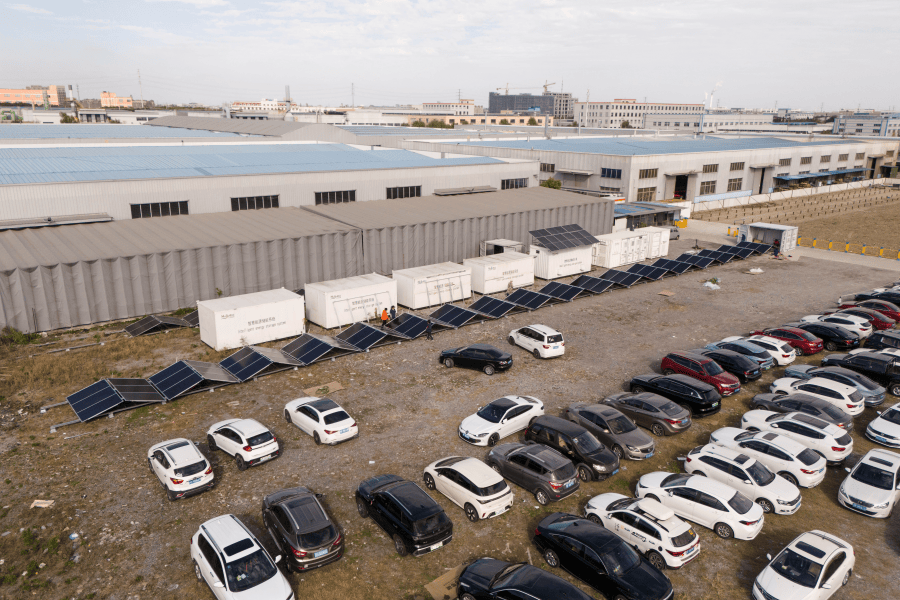
Let me give you a real example. We worked with a developer on a coastal highway EV charging hub in California. The site was perfect for solar - great irradiation, space for a canopy. But the salt spray and fog were constant. Their initial cost analysis favored a standard enclosure.
We walked them through the math. Using NREL's capacity factor and cost data for similar sites, we modeled the Levelized Cost of Energy (LCOE) - the total lifetime cost divided by energy produced - over a 20-year period. The standard unit, with its higher risk of mid-life major repairs and potential early replacement, had a much higher projected LCOE. The C5-M rated system, with its higher upfront cost, promised vastly lower operational risk and a superior LCOE.
They went with the C5-M spec. Three years in, and I was on site last month. While the mounting poles for the solar canopy show some surface wear, the BESS container looks like it was installed yesterday. No corrosion. No unscheduled downtime. The client's comment was, "It's the only piece of equipment out here we don't worry about." That's the goal.
The LCOE Advantage: Thinking in Decades, Not Years
This gets to the heart of minimizing environmental impact. A durable, long-life asset is a sustainable asset. When we talk about LCOE in our industry, we're really talking about efficiency and longevity. A low LCOE means you're squeezing every possible kilowatt-hour out of your initial resource and capital investment.
Think of the C5-M protection as the ultimate enabler of low LCOE for harsh environment sites. It preserves the core system. Your battery's degradation curve is now dictated by chemistry and proper cycling (things we manage with advanced battery management systems), not by a rusty cabinet shorting out a control board. The thermal management works as designed for the full lifecycle because the seals and housings remain intact.
This is our philosophy at Highjoule. True sustainability isn't just about the energy source; it's about building infrastructure that lasts. It's engineering resilience into every weld, coating, and component so that your off-grid EV charging station delivers on its green promise for 15, 20, or more years. That's how you make a real, lasting dent in environmental impact.
Your Next Step: Asking the Right Questions
Next time you're evaluating an off-grid solar generator for an EV site, look beyond the peak power and battery capacity. Pull out the site plan. Is it near the ocean? An industrial area? A region that uses road salt?
Then, ask your provider: "What is your corrosion protection specification for this environment? Can you show me the testing or certification data?" If the answer is vague, you're looking at a potential future problem. The right partner will understand the question immediately and have a robust, standards-based answer ready.
Because in the end, the most environmentally friendly system is the one you only have to build once.
Tags: BESS LCOE UL Standards Renewable Energy C5-M Anti-Corrosion Environmental Impact Off-grid EV Charging
Author
James Zhang
20+ years agricultural energy storage engineer / Highjoule CTO