
Environmental Impact of C5-M Anti-corrosion Off-grid Solar Generator for Military Bases: A Practical Guide
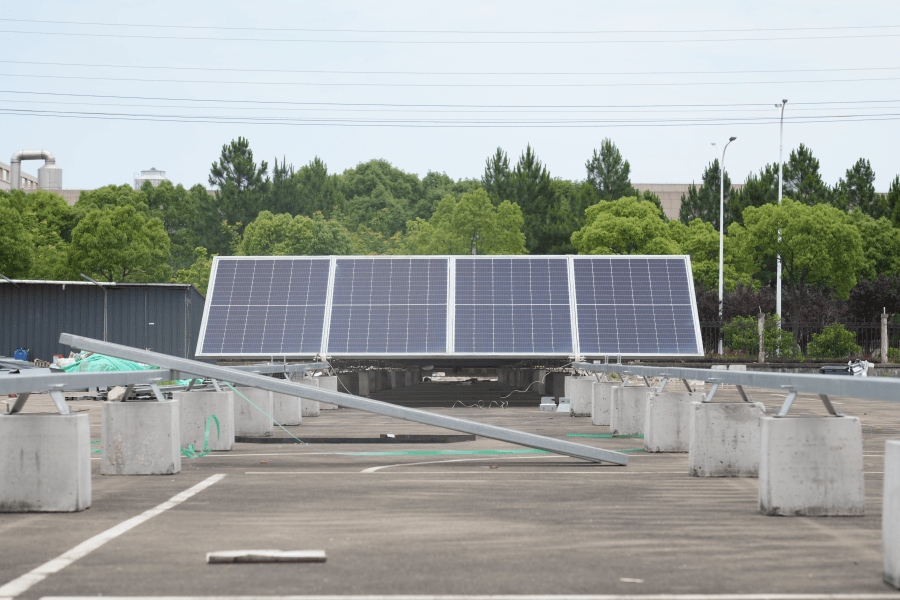
Table of Contents
- The Silent Trade-off: Power vs. Planet in Remote Operations
- Beyond Rust: The Hidden Environmental Cost of "Reliable" Power
- C5-M Anti-corrosion Tech: More Than Just Durability
- Real-World Deployment: A Nordic Forward Operating Base Case Study
- Expert Take: Decoding LCOE and Thermal Management for Sustainable Ops
- Your Next Step Towards Greener, More Resilient Power
The Silent Trade-off: Power vs. Planet in Remote Operations
Honestly, after two decades on sites from the deserts of Nevada to the coasts of Scotland, I've had this conversation a hundred times. A base commander or facilities manager needs utterly reliable, off-grid power for a remote installation. The immediate thought? Diesel gensets. They're familiar, they're "tough." But then comes the quiet part, often said over a coffee after the formal briefing: "What's the real environmental footprint here? We have mandates to meet, but I can't afford a single power hiccup." This is the core dilemma. You're tasked with mission-critical energy resilience while simultaneously being pushed to reduce emissions, noise, and soil contamination. The traditional answer creates a new problem.
Beyond Rust: The Hidden Environmental Cost of "Reliable" Power
Let's agitate that a bit, based on what I've seen firsthand. It's not just about the CO2 from burning diesel, though that's massive. The International Energy Agency (IEA) consistently highlights emissions from decentralized diesel generation as a significant, often overlooked, challenge. We're talking about constant fuel logistics (more trucks, more spill risk), oil changes, and air pollution on-site. Then there's the generator itself. In harsh coastal or high-humidity environments - common for many bases - standard equipment corrodes fast. I've seen control panels fail and enclosures pit in under 18 months in a C4 environment.
What happens then? You're not just fixing a unit; you're scheduling a full replacement, shipping the old hulk out, and installing a new one. That's a huge cycle of manufacturing waste, transportation emissions, and embodied carbon. The financial cost is obvious, but the hidden environmental lifecycle cost is staggering. It's a "brute force" approach to reliability that the planet, and increasingly your ESG reporting, can't sustain.
The C5-M Corrosion Benchmark: Why It Matters for the Environment
You'll hear specs like "C5-M" thrown around. In simple terms, it's a severe corrosion classification (defined in ISO 12944) for marine and industrial atmospheres with high salinity or chemical pollution. Meeting it isn't just about thicker paint. It requires a holistic design philosophy: specialized coatings, stainless-steel fasteners, sealed electronics, and controlled internal environments. For us at Highjoule, designing to this standard from the ground up isn't just about longevity; it's the foundation for reducing environmental impact. A system that lasts 15+ years in a harsh environment instead of 5-7 creates far less physical waste and embodied carbon over its life.
C5-M Anti-corrosion Tech: More Than Just Durability
So, how does specifying a C5-M anti-corrosion off-grid solar generator directly address the environmental impact? It flips the script. The solution integrates three layers:
- The Renewable Core: Solar PV paired with a high-cycle life battery (think LFP chemistry). This immediately slashes runtime emissions to zero. But the key is integration - how the system manages variable solar input to maximize self-consumption, which we optimize through our proprietary algorithms.
- The Durability Envelope: The C5-M rated enclosure isn't a box; it's a controlled micro-environment. It protects the sensitive battery and power electronics from salt, sand, and moisture, ensuring peak efficiency and safety for decades. This directly translates to a lower Levelized Cost of Energy (LCOE) and a much smaller long-term physical footprint.
- The Intelligence Layer: Smart thermal management is non-negotiable. Passive cooling isn't enough in a sealed, corrosive atmosphere. Our systems use precisely controlled, filtered active cooling to maintain the optimal temperature window for the batteries. This prevents degradation, extends lifespan, and again, reduces waste. Everything is built and tested to relevant UL, IEC, and IEEE standards for safety and performance, which is your baseline for risk mitigation.

Real-World Deployment: A Nordic Forward Operating Base Case Study
Let me give you a real example, though I'll keep the client anonymous. A forward operating base in a Nordic coastal region needed to power a new surveillance and comms installation, completely off-grid. The challenges were extreme: salt spray, wind-driven moisture, temperatures from -25C to +30C, and a strict "no visible emissions" mandate.
The old solution was a diesel genset running 12 hours a day. The new solution we deployed was a containerized C5-M rated hybrid system. It combined a 85kW solar canopy on the container itself with a 340kWh LFP battery storage system and, crucially, a very small diesel genset as a last-resort backup.
The outcome? The system runs on solar 92% of the year. The battery handles nights and cloudy days. The genset only kicks in during a prolonged winter storm scenario. Fuel consumption dropped by over 95%. Noise pollution vanished. And because the entire power block is in one C5-M container, site disturbance was minimal - no concrete pads for multiple units, reduced cabling. The environmental impact wasn't just reduced; it was fundamentally transformed. The commander's feedback was telling: "We're meeting our green targets without ever thinking about the power. It just works."
Expert Take: Decoding LCOE and Thermal Management for Sustainable Ops
Here's my insight from the field: when evaluating the Environmental Impact of C5-M Anti-corrosion Off-grid Solar Generator for Military Bases, you must look at total lifecycle impact, not just upfront specs. Two technical concepts are your best friends:
1. LCOE (Levelized Cost of Energy): This is your true cost per kWh over the system's entire life. A cheaper, non-corrosion-rated unit might have a low upfront cost but a high LCOE because it fails early and needs replacing. Its environmental LCOE - the waste and carbon per kWh - is through the roof. A C5-M system has a higher initial cost but a dramatically lower LCOE because it lasts. Over 20 years, you've used one set of resources instead of three. That's sustainable economics.
2. Thermal Management & C-Rate: Batteries are sensitive. A "C-rate" simply means how fast you charge or discharge them relative to their capacity. In off-grid applications, you need high discharge rates (high C-rate) sometimes. But doing that generates heat. Poor thermal management in a hot, sealed container kills battery life. Our approach uses active liquid cooling for high-density cells, keeping them at 25C 3C. This can double or triple the cycle life compared to a passively cooled system in the same harsh environment. More cycles from the same physical battery means less mining, less manufacturing, less waste. That's an environmental win engineered into the daily operation.
Your Next Step Towards Greener, More Resilient Power
The mandate is clear: achieve resilience without the legacy environmental burden. The technology, like our purpose-built C5-M solutions, is proven and available. The question I leave you with is this: When you assess your next remote power project, are you measuring success by the absence of failure alone, or by creating a silent, clean, and durable energy asset that serves the mission and the planet for decades to come? The data, the cases, and frankly, the future, point toward the latter.
We at Highjoule Technologies live in this space, designing systems that meet the world's toughest standards - UL, IEC, and the unspoken standard of standing up to real-world abuse - while making your environmental goals achievable. It's not just about building a box; it's about engineering out the problems I've spent 20 years fixing in the field.
Tags: UL Standard BESS Off-grid Solar C5-M Anti-Corrosion IEC Standard Environmental Impact Military Energy
Author
James Zhang
20+ years agricultural energy storage engineer / Highjoule CTO