
Environmental Impact of C5-M Anti-corrosion Solar Container for Construction Site Power
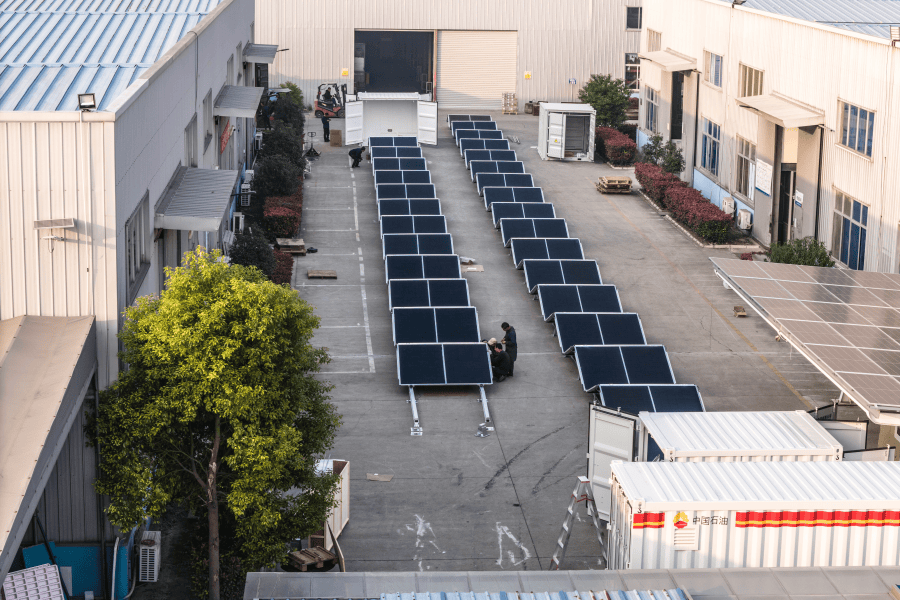
Table of Contents
- The Dirty Secret of Temporary Construction Power
- Beyond Rust: The Real Environmental Cost of Corrosion
- The C5-M Anti-Corrosion Solar Container: A Practical Solution
- From Theory to Mud: A Case Study in Northern Germany
- Expert Insights: Thermal Management, LCOE, and Why Standards Matter
- Making the Switch: What to Look For
The Dirty Secret of Temporary Construction Power
Let's be honest. For decades, the default soundtrack for a construction site has been the relentless hum and sputter of diesel generators. We've all seen them - and smelled them. They're reliable, sure, but talking about environmental impact on site often felt like a secondary concern, something for the head office to worry about. But the game has changed. I've been on sites from Texas to Bavaria, and the pressure is real. It's not just about corporate ESG reports anymore; it's about local emissions regulations, community pushback, and frankly, the sheer economic waste of burning fuel 24/7 for basic site power.
The problem is that traditional "green" alternatives, like standard solar+battery setups, often get chewed up and spit out by the harsh, dirty reality of a live construction zone. That's the core pain point we need to address.
Beyond Rust: The Real Environmental Cost of Corrosion
Here's the thing most people miss. When we talk about the Environmental Impact of C5-M Anti-corrosion Solar Container for Construction Site Power, we're not just talking about preventing a bit of rust. We're talking about system longevity and total lifecycle impact. A standard ISO container plonked on a muddy, chemical-laden site might start corroding in months. Corrosion isn't just cosmetic; it's a system killer.
I've seen this firsthand on site. Once the enclosure integrity fails, you get moisture ingress. That leads to electrical faults, reduced battery efficiency, and catastrophic thermal management issues. Suddenly, your "clean" solar system has a drastically shortened lifespan. According to a NREL analysis, the embodied carbon in manufacturing a Battery Energy Storage System (BESS) is significant. If you have to replace the entire unit twice as often because the housing failed, you've effectively doubled the environmental footprint of your initial manufacturing investment. You're also creating more waste. That's the hidden environmental cost.
The C5-M Anti-Corrosion Solar Container: A Practical Solution
This is where a purpose-built C5-M anti-corrosion container changes the equation. The "C5-M" classification (per ISO 12944) isn't marketing fluff - it's a rigorous standard for environments with high humidity and aggressive chemical atmospheres, like industrial and coastal areas. Think of a construction site: concrete dust (alkaline), potential fuel spills, de-icing salts, and constant moisture. That's a C5-M environment.
A true C5-M rated container uses specialized coatings, often a multi-layer epoxy-zinc system, and sealed cable entries to create a fortress. The goal is to ensure the housing lasts as long as the advanced tech inside - the lithium-ion batteries, inverters, and climate control systems. This durability is the unsung hero of real environmental stewardship. At Highjoule, when we design our site power solutions, this is our baseline. It allows the renewable energy assets inside to operate at peak efficiency for their full 15-20 year design life, maximizing the displacement of diesel and minimizing lifecycle waste.
From Theory to Mud: A Case Study in Northern Germany
Let me give you a real example. We deployed a 250kW/500kWh solar container for a major logistics hub construction in Lower Saxony, Germany. The challenge? The site was a former industrial plot with questionable soil chemistry, and local regulations had strict noise and nitrogen oxide (NOx) limits for the urban-edge location.
The standard container option was a non-starter for the general contractor. They needed a system that could handle the wet, salty winters and the abrasive dust, and look good doing it for the community relations aspect. We provided a C5-M certified, UL 9540 and IEC 62933 compliant integrated power system.
The result? The system provided over 80% of the site's base load (office trailers, lighting, small tools), cutting generator runtime by roughly 70%. Honestly, the biggest win wasn't just the carbon saved - it was the silence. No generator noise at night, and no complaints from the new neighbors. The robust enclosure meant zero weather or contamination-related downtime over the 18-month project. The client now plans to move that same container to their next site, a true testament to the durability.

Expert Insights: Thermal Management, LCOE, and Why Standards Matter
Okay, let's get a bit technical in plain English. When you seal a container against corrosion, you also have to manage the heat inside. Batteries and electronics generate heat. Poor thermal management kills battery life. So, a proper C5-M system isn't just a sealed box; it's an integrated ecosystem with HVAC designed for the duty cycle. We're talking about maintaining an optimal 20-25C ambient inside, regardless of whether it's -10C or 35C outside. This stability is what preserves the battery's health and performance year after year.
This leads directly to LCOE (Levelized Cost of Energy). For a business decision-maker, LCOE is the bottom line: the total cost of owning and operating the asset over its life, divided by the total energy it produces. A cheap, uncertified container that corrodes and causes system failure in 5 years has a terrible LCOE. A robust, C5-M system that operates reliably for 15+ years, with minimal maintenance, delivers a stellar, predictable LCOE. It makes the renewable solution not just an environmental choice, but a superior financial one.
And please, insist on the standards. UL 9540 for system safety is non-negotiable in North America. IEC 62933 series covers international BESS standards. These aren't just stickers; they are your assurance that the system has been tested for electrical, fire, and functional safety. It's what allows firms like ours to offer comprehensive performance warranties and local service support. You're not buying a mystery box; you're buying a certified asset.
Making the Switch: What to Look For
So, if you're a project manager or sustainability lead evaluating temporary power, look beyond the solar panel and battery specs. Ask the hard questions about the box that holds it all.
- Can you provide the corrosion protection certification (e.g., ISO 12944 C5-M)?
- How is thermal management designed for both extreme cold and heat?
- What are the relevant safety standards (UL, IEC, IEEE) this complete system complies with?
- What is the projected lifecycle and what warranty supports it?
The shift to clean construction site power is accelerating. The key is to invest in solutions built for the real world - mud, dust, chemicals, and all. By focusing on durability through standards like C5-M, we ensure that the environmental impact of your decision is positive for the entire lifecycle of the project, not just on day one. What's the single biggest durability concern on your current or upcoming project site?
Tags: Construction Site Power BESS LCOE UL Standards Solar Container Renewable Energy C5-M Anti-Corrosion Environmental Impact US EU Market Temporary Power
Author
James Zhang
20+ years agricultural energy storage engineer / Highjoule CTO