
Grid-forming Hybrid Solar-Diesel Systems: Cutting Data Center Emissions & Costs
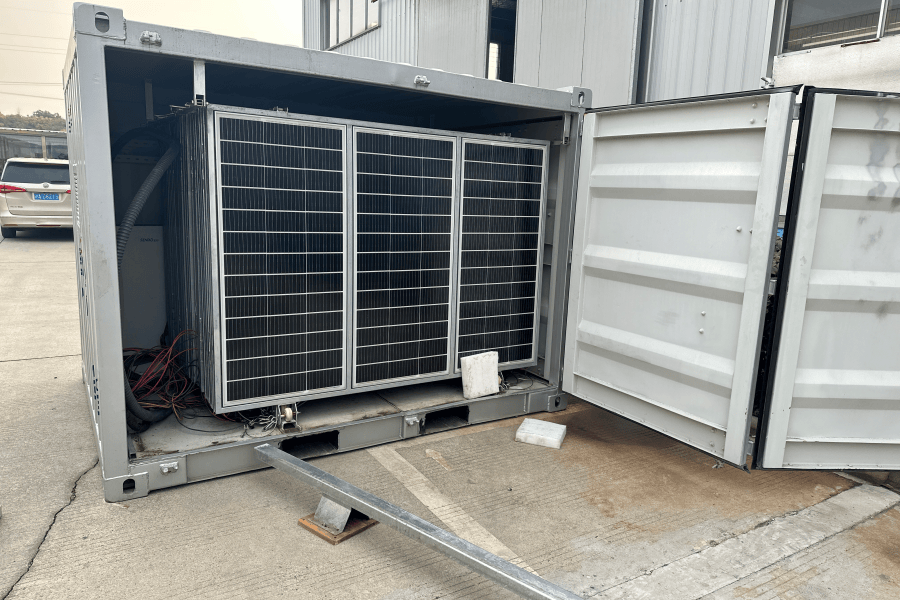
Table of Contents
- The Dirty Secret of "Always-On"
- The Rising Cost of Compliance & Carbon
- Case in Point: A Midwest Data Hub's Transformation
- Beyond Backup: The Grid-Forming Game Changer
- Making It Real: What to Look For in a System
The Dirty Secret of "Always-On"
Let's be honest. For years, when we talked about data center backup power, the conversation started and ended with diesel gensets. They're the reliable, roaring beasts in the parking lot that guarantee 99.999% uptime. But here's the uncomfortable truth every facilities manager knows but rarely discusses over coffee: that reliability comes with a massive environmental and operational hangover.
I've been on site during those mandatory monthly test runs. The smell, the noise, the plumes of smoke - it's a stark reminder. We're talking about NOx, SOx, and particulate matter emissions right in our backyards, often in or near urban areas. And that's just during testing. A real outage, lasting hours? The carbon footprint skyrockets. It's become a glaring conflict between operational necessity and corporate sustainability pledges. I've seen CFOs and CSOs sitting at the same table, with completely different sets of numbers for the same backup system.
The Rising Cost of Compliance & Carbon
The pain isn't just environmental; it's financial and regulatory. Across the U.S. and Europe, air quality regulations (think EPA's NSPS for gensets or the EU's Medium Combustion Plant Directive) are tightening. Non-compliance means fines, or worse, being forced to shut down critical load during maintenance. And let's not forget the diesel fuel itself - a volatile cost that's essentially a locked-in budget risk.
This is where the Environmental Impact of Grid-forming Hybrid Solar-Diesel System for Data Center Backup Power moves from a "nice-to-have" concept to a critical business solution. The traditional approach is a binary switch: grid or diesel. The hybrid system introduces a smarter, cleaner middle layer that fundamentally changes the equation.
The Data Doesn't Lie
According to the National Renewable Energy Laboratory (NREL), integrating solar PV with storage and existing gensets can reduce generator runtime by over 80% in backup applications. That's an 80% cut in fuel consumption, emissions, and maintenance for those expensive diesel engines. The International Energy Agency (IEA) has consistently highlighted hybrid renewable systems as key to decarbonizing off-grid and critical infrastructure.
A Smarter Hybrid: Where Solar Meets Smart Storage
So, what does this system actually look like? Picture this: Your existing diesel generators aren't going away. They remain your final, robust line of defense. But in front of them, you add a solar PV array (rooftop or ground-mounted) coupled with a grid-forming battery energy storage system (BESS).
Here's how it transforms the environmental impact:
- Silent, Emission-Free First Response: On a grid outage, the grid-forming BESS takes the load instantaneously - no lag, no fumes. It creates a stable voltage and frequency "island" for the data center, allowing critical servers to hum along without a blip.
- Solar Becomes a Backup Fuel: If the sun is shining, the PV system directly powers the load or charges the batteries, extending backup duration without burning a drop of diesel.
- Diesel as Last Resort & Lifeline: The gensets only start if the battery reaches a low state of charge. And when they do, they can run at their optimal, efficient load point, potentially even recharging the batteries, rather than cycling inefficiently.

Case in Point: A Midwest Data Hub's Transformation
I want to share a project we did at Highjoule for a colocation data center in Ohio. Their challenge was classic: meet aggressive Scope 1 emission reduction targets without compromising on reliability for their hyperscaler clients.
We deployed a 2 MW/4 MWh grid-forming BESS alongside their existing 2.5 MW diesel capacity and added a 1.5 MW rooftop solar canopy. The system was designed to UL 9540 and IEC 62933 standards - non-negotiable for their insurance and local fire code. The results after the first year?
- Diesel test runs cut from monthly to quarterly. The BESS performs all regular system integrity checks silently.
- Estimated annual fuel use for outages reduced by ~90%. They've had a few short grid sags where the BESS handled the entire event.
- Solar now offsets grid consumption during normal operation, improving their overall PUE and cutting their electricity bill. The financials worked because we focused on the Levelized Cost of Energy (LCOE) for backup, not just the upfront capex. By factoring in avoided fuel costs, maintenance deferral, and demand charge savings, the ROI became compelling.
Beyond Backup: The Grid-Forming Game Changer
This is the crucial tech insight. A standard "grid-following" battery needs the grid (or a genset) to set the voltage and frequency heartbeat it syncs to. A grid-forming inverter inside the BESS does the opposite - it creates that stable heartbeat itself. This is what allows it to black-start the data center island and seamlessly integrate the variable solar output. It's the maestro of the hybrid orchestra.
Thermal management of the BESS is also critical. In a data center environment, you can't have a system that adds more heat stress. Our containers use a closed-loop, liquid-cooling system that maintains optimal cell temperature (crucial for lifespan and safety) with minimal energy overhead, a feature we've refined from deployments in places like Texas and Arizona.
Making It Real: What to Look For in a System
If you're evaluating such a system, don't just look at the kWh rating of the battery. Dig into these details:
- Grid-Forming Certification: Does it have proven interoperability credentials (like UL 1741-SB or IEEE 1547-2018) for islanded operation?
- C-Rate in Context: A higher C-rate means the battery can discharge power faster. For backup, you need enough to handle the brutal instantaneous load of a data center. But balance this with cycle life - a system engineered for the right C-rate lasts longer.
- Local Codes & Service: Is the vendor deeply familiar with your local AHJ (Authority Having Jurisdiction) requirements? Can they provide 24/7 local monitoring and support? At Highjoule, our partnership with regional electrical contractors is as important as our tech specs.
The goal is no longer just backup. It's about creating a resilient, low-carbon power asset that works for you every single day, not just during emergencies. The technology is here, it's proven, and it finally aligns the interests of the CFO, the CSO, and the Chief Engineer.
So, what's the first step? Honestly, it's often just a matter of modeling your load profile against solar irradiation and running the new numbers. The environmental and business case might be clearer than you think.
Tags: UL Standard BESS Data Center Backup Solar-Diesel Hybrid Microgrid Grid-Forming Inverter Carbon Emissions
Author
James Zhang
20+ years agricultural energy storage engineer / Highjoule CTO