
How to Optimize IP54 Outdoor 1MWh Solar Storage for Telecom Base Stations
Contents
- The Silent Power Problem at Remote Telecom Sites
- Why Standard Solutions Fall Short (And Cost You More)
- The Optimization Playbook for Your 1MWh, IP54 Outdoor BESS
- A Case in Point: From Theory to Rugged Reality
- Beyond the Box: Making Optimization Stick for the Long Haul
The Silent Power Problem at Remote Telecom Sites
Let's be honest. When we talk about telecom infrastructure, everyone's mind jumps to 5G speeds, low latency, and network coverage maps. But over two decades of deploying energy systems from the deserts of Arizona to the forests of Scandinavia, I've learned one thing firsthand: the most advanced network is only as reliable as the power that feeds it. Especially for those off-grid or weak-grid base stations that are critical for coverage.
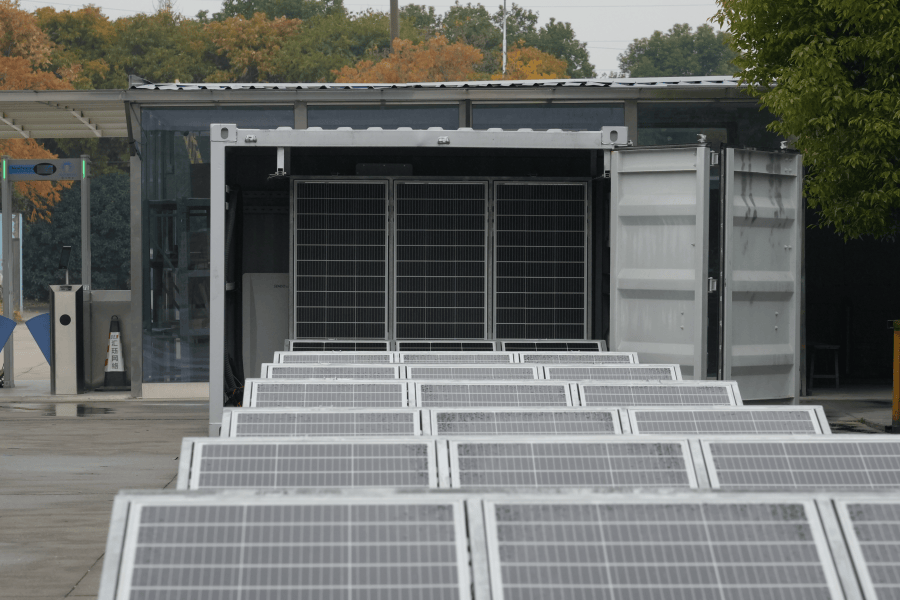
The dream is clean, silent, and reliable solar power paired with a robust battery. The reality I've seen on site? A 1MWh container sitting in a field, battling dust, humidity, and wild temperature swings. Its performance C and your OPEX C silently degrading month by month because the system wasn't optimized for that specific job. It's not just about buying the hardware; it's about engineering it for relentless, 24/7 uptime. That's the real challenge we're tackling.
Why Standard Solutions Fall Short (And Cost You More)
Here's the agitation. Many operators think an "outdoor-rated" container is a checkmark. IP54? Sure, it keeps out dust and water jets. But telecom sites demand more. We're talking about constant, relatively low-power draws (for the BESS size) to run radios, with occasional high-power bursts for cooling. This atypical load profile can wreak havoc on a battery's longevity if the system's C-rate and thermal management aren't tuned for it.
Honestly, the biggest cost isn't the upfront capital. It's the Levelized Cost of Energy Storage (LCOE) C the total cost of ownership over the system's life. A study by the National Renewable Energy Laboratory (NREL) highlights how improper thermal management can accelerate battery degradation, increasing LCOE by 20% or more. Think about that: one-fifth of your investment, eroded by heat because the cooling system was fighting the wrong battle.
Then there's safety and compliance. In the US, UL 9540 is the gold standard for system safety. In Europe, you're looking at IEC 62933. These aren't just stickers; they're rigorous test protocols for fire safety, electrical safety, and system control. A container might be IP54, but if its internal battery rack design or ventilation scheme hasn't been validated against these standards, you're sitting on a compliance C and insurance C nightmare.
The Core Optimization Targets
- Cycling Strategy: Telecom loads don't cycle batteries like a frequency regulation project. Deep, irregular cycles vs. shallow, frequent ones require different battery chemistry and management logic.
- Thermal Runaway Prevention: It's not just about an air conditioner. It's about cell-level monitoring, spacing, and venting design that meets the latest IEEE 2030.2.1 guidelines.
- Grid Interaction (or lack thereof): For truly off-grid sites, the BESS isn't a buffer; it's the primary source. This demands ultra-reliable inverters and a different state-of-charge management algorithm than a grid-tied system.
The Optimization Playbook for Your 1MWh, IP54 Outdoor BESS
So, how do we optimize? It's a holistic approach that starts long before the container reaches the site. At Highjoule, we treat every 1MWh telecom project as a unique integration challenge. Here's what that looks like from an engineer's perspective.
1. Right-Sizing the "Brain" (The BMS & EMS)
The Battery Management System (BMS) needs to be programmed for telecom duty cycles. We're talking about prioritizing cycle life over absolute energy throughput. The Energy Management System (EMS) C the overall controller C must seamlessly blend solar PV input, generator backup (if any), and battery discharge. It should be smart enough to predict cloudy days based on local weather data and conserve energy, a feature we've fine-tuned for sites in places like Scotland and the Pacific Northwest.
2. Mastering the Thermal Environment
IP54 protects from the outside, but inside is a different story. For a 1MWh pack, liquid cooling is often overkill and a single point of failure. We opt for advanced forced-air cooling with independent, redundant zones. The key is airflow design over the cells themselves, not just the container aisle. We use computational fluid dynamics (CFD) modeling to simulate hot spots C something I wish was standard after seeing too many packs with a 10C delta from top to bottom. Consistent temperature is the secret to even degradation.

3. Designing for Serviceability & Safety
This is huge. A remote site means maintenance is expensive. Every component, from the HVAC filters to the DC disconnect, needs to be accessible without moving the battery racks. Our designs include clear service aisles and front-access everything. And for safety, it's non-negotiable: every system we ship to North America is UL 9540 certified, with cell chemistries that have passed the stringent UL 9540A test for thermal runaway fire propagation. In the EU, we build to the same principle, aligning with IEC standards. This isn't just compliance; it's peace of mind for your operations team.
A Case in Point: From Theory to Rugged Reality
Let me give you a real example. We had a project for a major carrier in Northern Germany, in Lower Saxony. The challenge: a solar-plus-storage system for a base station where grid connection was prohibitively expensive. The site was exposed to coastal humidity and winter temperatures dipping below -10C.
The standard container would have struggled. Here's what we optimized:
- Chemistry Choice: We selected LFP (Lithium Iron Phosphate) cells for their superior thermal stability and longer cycle life, perfect for the daily charge/discharge rhythm.
- Hybrid Cooling: We used a sealed thermal management system with an internal air loop and an external dry-cooler. This kept the internal atmosphere dust-free and dry (protecting electronics) while efficiently dumping heat, meeting both IP54 and internal climate control needs.
- EMS Logic: The EMS was programmed with a "winter mode" that maintained the batteries at a minimum temperature using excess solar energy, preventing damage and capacity loss.
The result? Two years in, the system's measured degradation is 15% better than the baseline projection, and they've avoided over 50,000 liters of diesel fuel. The LCOE is tracking well below their alternative. That's the power of optimization.
Beyond the Box: Making Optimization Stick for the Long Haul
Finally, optimization isn't a one-time event at deployment. The real magic is in the data. A well-optimized system provides granular performance data C not just overall state of charge, but individual rack temperatures, cell voltage deviations, and inverter efficiency curves.
Our service team uses this data for predictive maintenance. We might notice a slight uptick in the cooling system's runtime in a particular module, indicating filter clogging or a fan bearing starting to go. We can then schedule a service visit before it causes a temperature excursion that stresses the batteries. This proactive approach, baked into our long-term service agreements, is what truly maximizes the asset's life and minimizes your surprise costs.
So, when you're planning your next telecom energy project, look beyond the spec sheet for the 1MWh, IP54 container. Ask the harder questions: How is the BMS tuned for my load profile? Can you show me the CFD model for thermal management? Is the full system certified to the safety standards my market and insurer require? The answers will lead you to a solution that doesn't just work on day one, but performs optimally for the next fifteen years. What's the one reliability challenge at your remote sites that keeps you up at night?
Tags: UL Standard BESS LCOE Europe US Market Renewable Energy Telecom Power
Author
James Zhang
20+ years agricultural energy storage engineer / Highjoule CTO