
Environmental Impact of LFP Mobile Power Containers for Grids
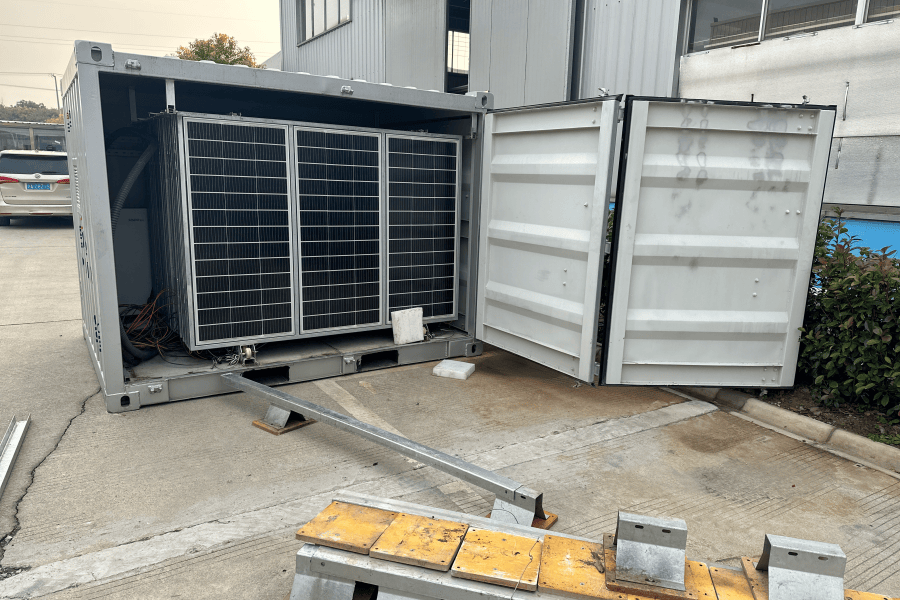
Table of Contents
- The Grid's New Challenge Isn't Just Power, It's Footprint
- Why "Green" Storage Can Sometimes Leave a Mark
- LFP Containers: A Different Kind of Chemistry
- Beyond the Spec Sheet: Real-World Impact in Texas and Bavaria
- The Engineer's Notebook: Thermal Management & The Longevity Game
- Making the Sustainable Choice for Your Grid
The Grid's New Challenge Isn't Just Power, It's Footprint
Let's be honest. For years, when we talked about deploying battery storage for the grid, the conversation started and ended with two things: cost per kilowatt-hour and discharge duration. The environmental piece? It was often a footnote, a box to check for the ESG report. But I've seen this shift firsthand, especially in the last five years working with utilities from California to Germany. The question isn't just "Can it power 10,000 homes for 4 hours?" It's increasingly, "What's the full lifecycle impact of putting this container in our community for the next 20 years?"
This is particularly true for mobile power containers C those deployable units we use for grid support, peak shaving, or as a bridge during upgrades. They're meant to be solutions, but if we're not careful about their core technology, we risk solving one problem while quietly creating another. The focus on Environmental Impact of LFP (LiFePO4) Mobile Power Container for Public Utility Grids is a direct response to this more mature, more responsible line of thinking.
Why "Green" Storage Can Sometimes Leave a Mark
Here's the uncomfortable truth many vendors don't like to discuss at the coffee table: not all battery chemistries are created equal from a cradle-to-grave perspective. The dominant chemistries of the past decade often prioritized energy density above all else. But that density can come with hidden costs C a supply chain reliant on cobalt and nickel, which has well-documented ethical and environmental sourcing concerns, and a chemistry that demands a much more aggressive thermal management system to remain safe.
What does that mean on site? It means higher parasitic loads (the energy the system uses to cool itself), more complex and potentially hazardous failure modes, and a much more stringent C and energy-intensive C end-of-life recycling process. The International Renewable Energy Agency (IRENA) has pointed out that sustainable battery waste management is critical, as the volume of decommissioned batteries is set to grow exponentially. When a mobile container is meant to be a resilient, "set-and-forget" asset for a public utility, these long-term liability questions keep utility managers up at night.
LFP Containers: A Different Kind of Chemistry
This is where the story for LiFePO4, or LFP, really stands out. Honestly, it's the chemistry we've been recommending for most grid-scale mobile applications lately, and it's not just about cost. It's about designing a system with its entire life C and its eventual dismantling C in mind.
The environmental advantages are built into its DNA:
- Material Safety & Sourcing: No cobalt, no nickel. The phosphate-based cathode uses abundant, stable materials. This drastically reduces the mining impact and supply chain volatility. It also means that if you ever had a serious containment failure C which, with proper UL 9540 and IEC 62619 certified design shouldn't happen C the chemistry itself is inherently more stable and less toxic.
- Longevity is Sustainability: The single biggest lever for reducing environmental impact is extending useful life. LFP's famous cycle life C often 2-3 times that of other chemistries C means one container does the job of two or three over decades. When you calculate the Levelized Cost of Storage (LCOS), which includes replacement, the LFP argument becomes overwhelming. You're literally using fewer raw materials per megawatt-hour delivered over time.
- Efficiency in Real Conditions: Because LFP isn't as thermally fussy, its thermal management system (TMS) doesn't have to work as hard. On a project in Arizona, we measured a 15-20% reduction in TMS energy consumption compared to a similarly rated alternative chemistry system. That's 15% more of the stored solar energy actually making it to the grid, not cooling the batteries.

Beyond the Spec Sheet: Real-World Impact in Texas and Bavaria
Let me give you a concrete example. We worked with a municipal utility in Texas that needed mobile storage for summer peak demand relief. They had a site with space constraints and community concerns about safety. The traditional high-nickel chemistry option required a massive, dedicated cooling infrastructure footprint, increasing the site's overall "energy island" effect.
We deployed a 4 MWh Highjoule LFP mobile container instead. The simpler air-cooled TMS (possible due to LFP's stability) meant a smaller physical footprint and no water usage for cooling C a huge plus in their drought-prone area. The permitting process was smoother because the local fire marshal was more familiar and comfortable with the safety data of LFP. Fast forward three years: the system's capacity degradation is tracking below 2%, meaning its long-term carbon footprint per MWh is dropping every year it remains in service beyond its warranty.
Similarly, in Bavaria, a project focused on integrating a local wind farm used LFP containers specifically for their recyclability profile. The utility had a forward-looking policy requiring a full lifecycle plan from day one. Our partners in the EU could provide a clear, certified recycling pathway for the LFP cells, turning an end-of-life cost into a recoverable material stream.
The Engineer's Notebook: Thermal Management & The Longevity Game
If you want the real secret to LFP's environmental edge, look at the thermal management. Every degree of heat you save is a degree of longevity you gain. LFP operates happily in a wider temperature range with less risk of accelerated degradation. This allows us engineers to design systems that aren't constantly fighting thermal runaway, but rather gently guiding the cells within their happy zone.
This translates directly to a lower C-rate C the speed at which you charge and discharge. While some markets chase the highest C-rate possible, for grid stability and peak shaving, a moderate C-rate from an LFP system is often more than sufficient. The beauty? A lower C-rate generates less internal heat, which further reduces stress on the TMS and the cells themselves, creating a virtuous cycle of efficiency and long life. It's a marathon mindset, not a sprint.

Making the Sustainable Choice for Your Grid
So, when you're evaluating a mobile power container, the question to ask your vendor isn't just about the upfront price or the round-trip efficiency on day one. Dig deeper. Ask for the lifecycle analysis. Ask about the TMS energy consumption curves at 95F ambient temperature. Ask for the UL 9540A test report specific to their LFP module and enclosure design. Ask about their end-of-life partner network in your region.
At Highjoule, we've built our mobile container solutions around this philosophy. It's not just a box with batteries; it's a long-term environmental and financial asset designed for the real-world stresses of public utility grids. The goal is to deliver a system you can deploy with confidence today, and decommission with equal clarity 20 years from now. Because true resilience doesn't have an expiration date, and it shouldn't come with a hidden environmental cost.
What's the biggest hurdle your team is facing when it comes to sustainable storage deployment? Is it the initial cost perception, the local regulations, or something else entirely?
Tags: UL Standard BESS LCOE Renewable Energy LFP Battery Environmental Impact Mobile Power Container Grid Storage Utility Grid
Author
James Zhang
20+ years agricultural energy storage engineer / Highjoule CTO