
Smart BMS for BESS: Reducing Environmental Impact in Agricultural Irrigation
Contents
- The Hidden Environmental Cost of "Green" Farming
- Beyond the Battery: Why a Smart BMS is the Real Game-Changer
- Case in Point: A California Vineyard's Water-Energy Nexus
- The Expert Take: Thermal Management, C-Rate, and Real-World LCOE
- Building a Resilient, and Greener, Future
The Hidden Environmental Cost of "Green" Farming
Let's be honest. When we talk about sustainable agriculture in places like California's Central Valley or across the EU's farmlands, the conversation is almost always about water conservation, organic practices, or reducing chemical use. And those are critical. But there's a massive, humming piece of the puzzle we often overlook: the energy required to pump all that water.
I've been on site at enough farms and agri-industrial facilities to see the pattern. To hit irrigation schedules and ensure crop yield, operations rely heavily on the grid, often during peak hours when electricity is dirtiest and most expensive. Or, they run massive diesel generators as a backup, which honestly, just trades one problem for another. The International Energy Agency (IEA) notes that agriculture accounts for about 2% of global final energy consumption, a significant portion of that going to water management. This creates a paradox: the effort to grow food sustainably is being undermined by an unsustainable energy model.
The initial thought is, "Let's add solar!" And that's a fantastic first step. But here's the aggravation C solar generation and peak irrigation needs don't always align. The sun isn't always shining when you need to pump. Without a way to store that midday solar bounty, you're still topping up from the grid at dusk. This mismatch leads to financial waste and, more importantly, a missed opportunity to maximize the environmental benefit of your renewable investment. The system isn't truly optimized.
Beyond the Battery: Why a Smart BMS is the Real Game-Changer
So, the solution seems straightforward: pair solar with a Battery Energy Storage System (BESS). Store the sun, use it on demand. But not all BESS are created equal, and this is where the real conversation about Environmental Impact of Smart BMS Monitored BESS (Battery Energy Storage System) for Agricultural Irrigation begins.
A battery bank without a sophisticated Brain is just a costly bundle of potential. The true environmental and economic optimizer is the Battery Management System (BMS). And I'm not talking about a basic voltage monitor. I mean a Smart BMS with predictive analytics and granular control. This is what we've focused on at Highjoule Technologies for nearly two decades. A Smart BMS does the heavy lifting that directly reduces environmental footprint:
- Maximizing Renewable Utilization: It intelligently decides when to store, when to discharge, and when to potentially sell back, ensuring every possible kilowatt-hour from your solar array displaces grid or diesel power.
- Extending Battery Lifespan: This is huge. The biggest environmental cost of a BESS is often the embodied energy in manufacturing the battery cells. A Smart BMS, through precise thermal management and state-of-charge (SOC) control, can easily extend operational life by 20-30%. Fewer replacements mean less manufacturing, less mining, less waste.
- Ensuring Safe, Compliant Operation: In the U.S. and Europe, standards like UL 9540 and IEC 62619 aren't just red tape. They are blueprints for safety and longevity. A Smart BMS is central to meeting these, preventing catastrophic failures that could cause environmental hazards.
Honestly, deploying a BESS without this level of intelligence is like buying a Formula 1 car but never getting out of first gear.
Case in Point: A California Vineyard's Water-Energy Nexus
Let me give you a real example from last year. We worked with a mid-sized vineyard in Sonoma County. Their challenge was classic: high peak demand charges from running pumps, a desire to be more resilient against PSPS (Public Safety Power Shutoff) events, and a corporate sustainability mandate.
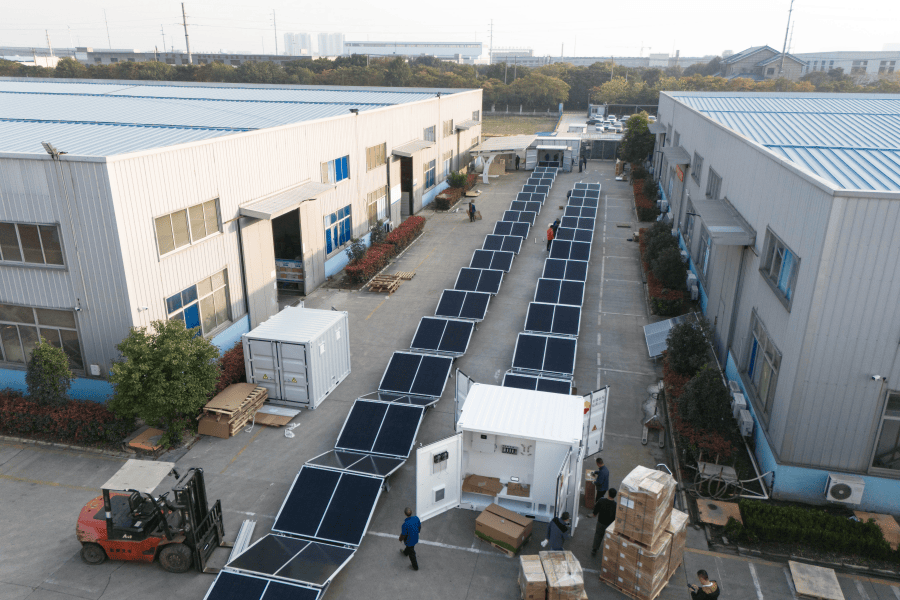
We deployed a 500 kWh containerized BESS, coupled with their existing solar. The hardware was important, sure. But the magic was in our integrated Smart BMS platform. The system doesn't just react; it learns. It analyzes weather forecasts, historical irrigation patterns, and grid tariff schedules. One morning, it predicted a heat spike and pre-chilled the battery container overnight when grid power was cleaner and cheaper. Then, during the peak afternoon irrigation run, it provided flawless power while keeping the battery at an optimal 25C, despite the 38C external heat.

The result? They cut their peak demand charges by over 60%, increased their on-site renewable consumption from ~40% to over 90%, and created a 4-hour backup for critical irrigation during outages. The win wasn't just financial. Their CO2 footprint from energy use for irrigation dropped dramatically. That's the Environmental Impact of Smart BMS Monitored BESS in action C it turns a capital asset into an intelligent, profit-generating, sustainability engine.
The Expert Take: Thermal Management, C-Rate, and Real-World LCOE
Okay, let's get a bit technical, but I promise to keep it practical. When I'm reviewing a site plan, three things from our Smart BMS data tell me everything about the long-term environmental and economic payoff:
- Thermal Management: Heat is the enemy of batteries. A Smart BMS proactively manages cooling systems, not just based on today's temperature, but on tomorrow's forecast and the upcoming workload. This precision slashes ancillary energy use (the power needed to cool the BESS itself) by up to 40% in my experience, which directly improves the system's net efficiency.
- C-Rate Intelligence: The C-Rate is basically how fast you charge or discharge the battery. Pump motors can have huge inrush currents. A dumb system might try to meet that with a high C-Rate discharge, which stresses the battery. Our Smart BMS can blend power from the battery and the grid/solar smoothly to meet the demand without punishing the battery's health. It's like using cruise control on a highway versus constantly flooring the accelerator.
- LCOE (Levelized Cost of Energy): This is the ultimate metric. It's the total lifetime cost of the energy your storage system provides. By extending lifespan (through great thermal and C-rate management) and maximizing free solar harvesting, a Smart BMS actively crushes the LCOE. The National Renewable Energy Lab (NREL) has shown that advanced controls can reduce BESS LCOE by 15-25%. That makes the whole project more viable and environmentally positive from day one.
This isn't theoretical. It's what we bake into every Highjoule system. Our containers are built to UL 9540 from the ground up, but the real compliance and safety backbone is the software C the Smart BMS that's constantly doing tens of thousands of checks per second.
Building a Resilient, and Greener, Future
The push for sustainable agriculture is only getting stronger. Consumers, regulators, and your own board are asking for tangible progress. Decoupling irrigation from the traditional energy model is a massive step forward. But the key is to think systemically.
A battery is a tool. A Smart BMS monitored BESS is a strategic partner. It's what ensures your investment pays off financially for decades, while also delivering the deep, verifiable environmental impact you're aiming for. It turns your energy system from a cost center into a point of resilience and a badge of genuine sustainability.
What's the one energy data point from your irrigation operations that keeps you up at night? Is it the July peak demand charge, the diesel budget, or the carbon report? Let's chat about how intelligent storage can address it.
Tags: UL Standard BESS LCOE Europe US Market Agricultural Irrigation Renewable Energy Smart BMS Environmental Impact
Author
James Zhang
20+ years agricultural energy storage engineer / Highjoule CTO