
215kWh Mobile Power Container Cost for Industrial Parks: The Real Breakdown
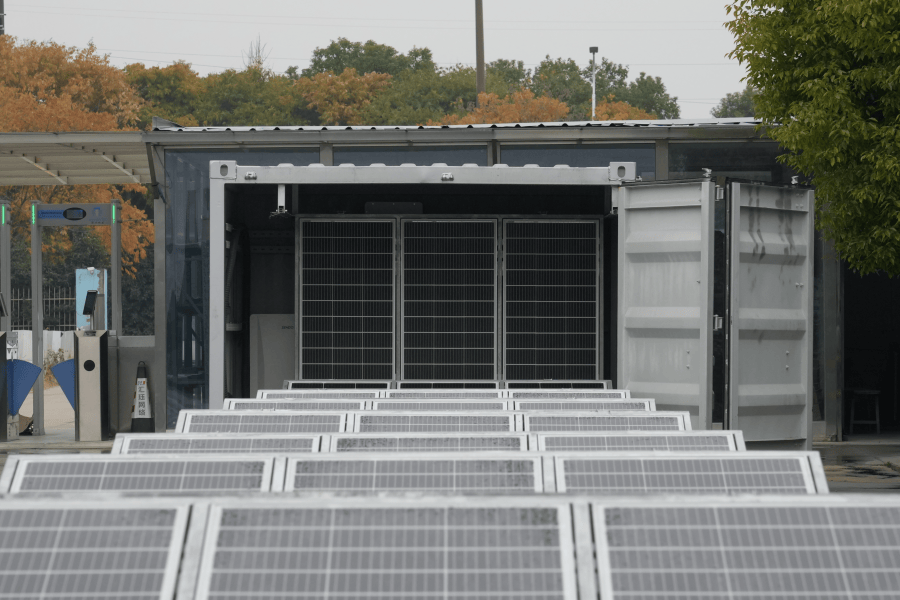
Navigating the Real Cost of Mobile Energy Storage for Industrial Sites
Let's be honest, when you're managing an industrial park or a large facility, the question "How much does it cost?" is always the starting point. Especially when we're talking about something as critical as backup power or peak shaving with a Battery Energy Storage System (BESS). I've sat across the table from countless plant managers in the US Midwest and across Europe, and the initial sticker shock for a "215kWh Cabinet Mobile Power Container" can be real. But here's what I've learned from 20+ years on site: the real conversation isn't about the purchase price. It's about the total cost of ownership, the risks you're mitigating, and the operational flexibility you're buying.
Quick Navigation
- The Real Problem: It's More Than a Price Tag
- The 215kWh Mobile Container: A Transparent Cost Breakdown
- Looking Beyond the Sticker Price: LCOE & Operational Value
- A Real-World Case: Flexibility Under Pressure in Ohio
- Key Factors That Truly Drive Your Cost & ROI
- Making Your Decision: The Right Questions to Ask
The Real Problem: It's More Than a Price Tag
The core issue I see isn't a lack of suppliers. It's a flood of confusing quotes that bundle everything into one lump sum, making it impossible to understand what you're actually paying for. Is the $120,000 or ?150,000 quote covering a unit with UL 9540 and IEC 62619 certification, or a cheaper alternative that might compromise on safety or longevity? The International Energy Agency (IEA) has highlighted that safety standards and grid interoperability are now the top concerns for BESS deployment in advanced economies, not just raw capacity.
Honestly, the pain point amplifies when you consider downtime. An undersized or poorly managed thermal system in a container can lead to rapid degradation. I've seen a system where poor thermal management knocked 30% off the expected cycle life in just 18 months, turning a calculated 5-year payback into a money pit. For an industrial park, a power event isn't just an inconvenience; it's spoiled product, idle labor, and missed deadlines. The cost of not having reliable, mobile power can dwarf the system's price.
The 215kWh Mobile Container: A Transparent Cost Breakdown
So, let's demystify the cost for a robust, industrial-grade 215kWh mobile unit. Think of it in three layers:
- The Core Power Block (~60-70% of Capex): This is the battery cells, the Battery Management System (BMS), and the power conversion system (PCS). For a quality unit meeting UL/IEC standards, you're looking at a significant portion of your investment here. The C-rate - how fast you can charge or discharge the battery - impacts this cost. A higher C-rate (e.g., 1C) for faster response might cost 15-20% more than a 0.5C system.
- The Mobile Enclosure & Safety Systems (~20-25%): This isn't just a shipping container. It's a climate-controlled, thermally managed enclosure with fire suppression (like aerosol or FM-200), seismic bracing, and secure access. This is where companies like Highjoule invest heavily. Our containers are built like fortresses because a thermal runaway event in Texas or a harsh winter in Germany isn't an option.
- Soft Costs & Integration (~10-15%): Engineering, permitting (crucial for local fire codes in the US and EU), commissioning, and basic training. Skipping here is a false economy.
A ballpark figure for a fully certified, turnkey 215kWh mobile system from a reputable provider typically ranges from $140,000 to $220,000. The variance? It's all in the layers above.
Looking Beyond the Sticker Price: LCOE & Operational Value
This is where the coffee chat gets interesting. Savvy operators talk about Levelized Cost of Storage (LCOS) or Levelized Cost of Energy (LCOE). It's the total cost of owning and operating the system per kWh over its lifetime.
Let's say System A costs $160,000 and System B costs $180,000. System A uses a simpler cooling method, leading to higher degradation. Over 10 years, it delivers 600,000 usable kWh. System B, with advanced liquid cooling and a superior BMS, delivers 850,000 kWh. The LCOE tells the real story:
- System A LCOE: $160,000 / 600,000 kWh = ~$0.267 per kWh
- System B LCOE: $180,000 / 850,000 kWh = ~$0.212 per kWh
System B, with a higher upfront cost, actually provides cheaper energy over time. This is the core of our design philosophy at Highjoule - optimizing for lifetime value, not just initial capital expense.
A Real-World Case: Flexibility Under Pressure in Ohio
Let me share a scenario from last year. A manufacturing park in Ohio was facing grid upgrade delays but needed to start operations in a new wing. A traditional fixed BESS would have been tied up in permanent permitting. Instead, they opted for a Highjoule 215kWh mobile container.

The challenge was providing clean, stable power for precision machinery during peak construction and early operation. The mobile unit allowed them to:
- Deploy in under two weeks as a "temporary" solution, bypassing lengthy permanent system approvals.
- Shift to peak shaving once the main grid connection was live, cutting their demand charges by over 18% from day one.
- Relocate the unit to another facility during planned maintenance later in the year.
The cost wasn't just for a battery; it was for operational continuity, demand charge savings, and unparalleled flexibility. The payback period, factoring in these avoided costs and revenue streams, dropped to under 4 years.
Key Factors That Truly Drive Your Cost & ROI
When you evaluate quotes, drill into these specifics:
- Certification & Safety: Non-negotiable. It must have UL 9540 (US) or IEC 62619 (EU) certification. Ask for the test reports. This is your biggest insurance policy.
- Thermal Management: Is it passive air, forced air, or liquid cooling? For an industrial park with variable loads and potentially harsh ambient temps, a robust thermal system is critical for longevity. I've seen forced air systems struggle in dusty environments, leading to clogged filters and overheating.
- Warranty & Degradation Guarantee: A 10-year warranty is standard, but what does it guarantee? Look for a commitment that the system will retain >70% of its original capacity at the end of the term.
- Grid Interconnection Features: Does the PCS have the right grid-forming or grid-following capabilities for your local utility requirements (like IEEE 1547 in the US)? Getting this wrong can add tens of thousands in upgrade costs later.
- Service & Support: Where are the spare parts? What's the response time for a technician? A cheaper system with no local support network can become a very expensive paperweight.
Making Your Decision: The Right Questions to Ask
So, before you fixate on "How much does it cost for a 215kWh Cabinet Mobile Power Container," shift the conversation. Ask your potential providers:
- "Can you show me the UL/IEC certification for this exact model?"
- "What is the projected LCOE/LCOS for my specific load profile over 10 years?"
- "Walk me through your thermal management design for a 95F (35C) day at full load."
- "What does your local commissioning and service support look like?"
The right mobile power container isn't a commodity purchase; it's a strategic asset. It's about buying resilience, operational agility, and long-term cost certainty. The final number on your quote should tell that whole story, not just the price of the hardware sitting on a truck.
What's the one operational constraint in your park that a mobile, flexible power asset could solve tomorrow?
Tags: UL Standard BESS LCOE US Europe Market Industrial Energy Mobile Energy Storage
Author
James Zhang
20+ years agricultural energy storage engineer / Highjoule CTO