
All-in-One Solar Container Cost for Mining in Mauritania: A Real-World Breakdown
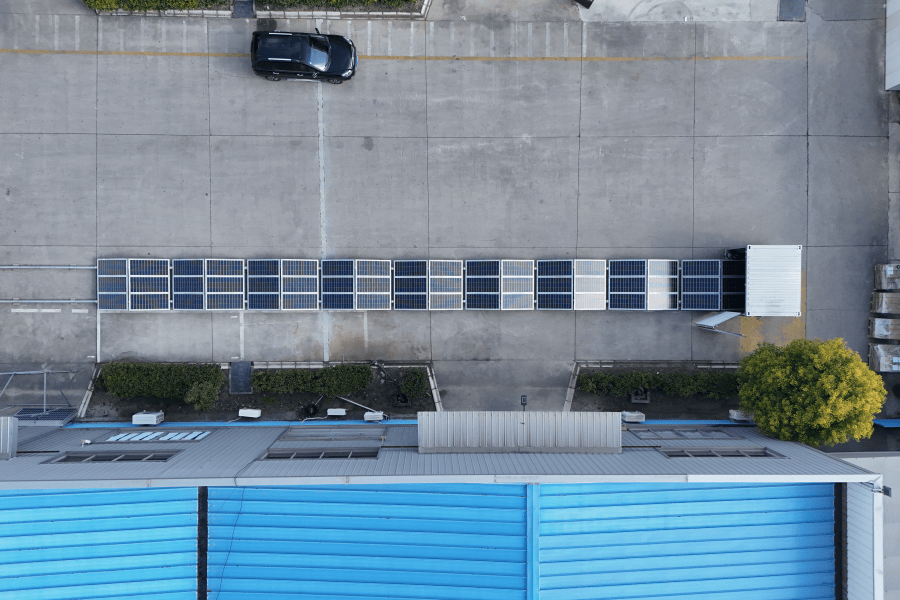
Table of Contents
- The Real Question Isn't Just "How Much?"
- The Hidden Cost Pitfalls in Off-Grid Energy
- Breaking Down the "All-in-One" Container: What You're Actually Paying For
- The Mauritania Factor: Site-Specific Realities
- Looking Beyond the Price Tag: LCOE is Your True Guide
- A Practical Framework for Your Budget
The Real Question Isn't Just "How Much?"
Honestly, when a mining operations manager from Europe or North America asks me "How much does it cost for an all-in-one integrated solar container for mining in Mauritania?", I hear something deeper. What they're really asking is: "How do I get reliable, safe power in the middle of nowhere without getting burned by hidden costs or operational nightmares?" I've been on those sites - the dust, the heat, the absolute reliance on energy to keep drills turning and processing plants running. A simple price per kilowatt-hour quote won't cut it. Let's talk about what that number actually means.
The Hidden Cost Pitfalls in Off-Grid Energy
The traditional approach for remote mining ops often involves piecing together a system: solar panels from one vendor, inverters from another, a BESS from a third, and then a team to integrate it all on-site. I've seen this firsthand. The initial capex might look okay on paper, but that's where the problems start. Incompatibility issues lead to downtime. Different warranty claims become a logistical hell. Most critically, if the battery thermal management isn't designed as a unified system from the ground up for a place like Mauritania, you're looking at accelerated degradation - or worse, a safety incident.
According to the International Renewable Energy Agency (IRENA), system integration and balance-of-plant costs can account for up to 30% of a solar-plus-storage project's total cost. That's the premium you pay for a fragmented, multi-vendor setup. For a mining operation, unplanned downtime isn't just an inconvenience; it's a direct hit to your bottom line, measured in thousands of dollars per hour.
Breaking Down the "All-in-One" Container: What You're Actually Paying For
So, when we talk about an all-in-one integrated container, you're not just buying a box of gear. You're investing in a pre-engineered, pre-tested power plant. The cost structure shifts from simply "components + labor" to "predictable performance + risk mitigation." Here's what your investment covers:
- Pre-Integration & Factory Testing: Every component - from the UL 9540-certified battery racks and IEC 62109-compliant inverters to the climate control system - is wired, tested, and validated under one roof. This eliminates 90% of the on-site integration headaches I used to deal with.
- Robust Thermal Management: This is non-negotiable. In the Sahara's heat, a battery's lifespan and safety hinge on this. A proper system uses liquid cooling or advanced forced-air with precise climate zones to keep cells at their ideal 25-30C. This isn't an add-on; it's core to the design, and it's a significant part of the engineering cost that pays back over a decade of operation.
- Safety & Compliance Built-In: The container itself is a safeguard. It houses fire suppression, gas venting, and physical security. For our clients in Europe and the US, knowing the entire system meets UL/IEC/IEEE standards isn't a nice-to-have; it's a prerequisite for insurance and risk management. This built-in compliance has a cost, but it's far cheaper than liability.

The Mauritania Factor: Site-Specific Realities
Mauritania isn't Germany or Texas. The cost is influenced by factors unique to the location:
- Logistics & Site Prep: Transporting a 40-foot container to a remote site requires planning. Costs include heavy-duty transport, possible road reinforcement, and a prepared, level foundation pad. This can add a variable but significant amount to the total deployed cost.
- Dust & Corrosion Protection: Standard industrial specs aren't enough. We spec IP54 or higher for all internal components and use corrosion-resistant coatings on the exterior. This extra protection is baked into the unit price.
- Grid-Forming Capability: Many mining sites have no grid to fall back on. The inverter system must be capable of "black start" and forming a stable microgrid to power large motors - a more sophisticated and costly feature than simple grid-following inverters.
Looking Beyond the Price Tag: LCOE is Your True Guide
This is where the conversation gets real for financial decision-makers. The upfront capex is one line item. The true measure is the Levelized Cost of Energy (LCOE) - the total lifetime cost of the system divided by the energy it produces.
A cheaper, disaggregated system might have a lower capex but a higher LCOE due to lower efficiency, higher maintenance, and shorter lifespan. A premium, fully integrated container like the ones we design at Highjoule often has a higher capex but a lower LCOE. Why? Because of higher round-trip efficiency (we consistently hit 94%+), longer cycle life from superior thermal management, and near-zero on-site integration cost. Over a 10-15 year project, you save millions.
Let me give you a non-Mauritania example that illustrates the principle: A mining company in Nevada was comparing bids. One was 15% cheaper upfront. Our integrated solution was higher. But our model showed a 22% lower LCOE over 12 years, factoring in projected maintenance, efficiency losses, and downtime. They went with the integrated system. Three years in, their operational data shows we were right on the money - their cost per ton processed for energy has dropped significantly.
A Practical Framework for Your Budget
So, to finally circle back to your question. For a turnkey, all-in-one solar-plus-storage container solution for a mid-sized mining operation in Mauritania, with capacities in the 1-2 MW range and 4-6 hours of storage, you should be thinking in a framework.
Excluding site-specific civil works and ongoing O&M, the all-inclusive delivered and commissioned cost typically ranges from $1.1 million to $2.5 million USD per unit. The wide range depends on:
- Battery Chemistry & C-rate: Do you need high-power (high C-rate) for heavy equipment surges, or high-energy for longer duration? LFP (Lithium Iron Phosphate) is the standard for safety and life, but specs vary.
- Solar PV Capacity: The ratio of solar DC to storage AC power.
- Ancillary Features: Advanced remote monitoring, fuel-saving control algorithms, redundancy levels.
The key is to move the discussion from a commodity price per kWh to a total value conversation. What's the cost of not having power? What's the value of fuel displacement over 10 years? When you look at it that way, the right integrated solution isn't an expense; it's the most reliable and predictable cost-center you can establish in a challenging environment.
Ready to model the LCOE for your specific site conditions? Let's grab a virtual coffee and run the numbers with real-world variables.
Tags: UL Standard BESS LCOE Off-grid Power Solar Container Mining Energy
Author
James Zhang
20+ years agricultural energy storage engineer / Highjoule CTO