
High-voltage DC PV Storage for Eco-Resorts: A Real-World Case Study on Cutting Costs & Complexity
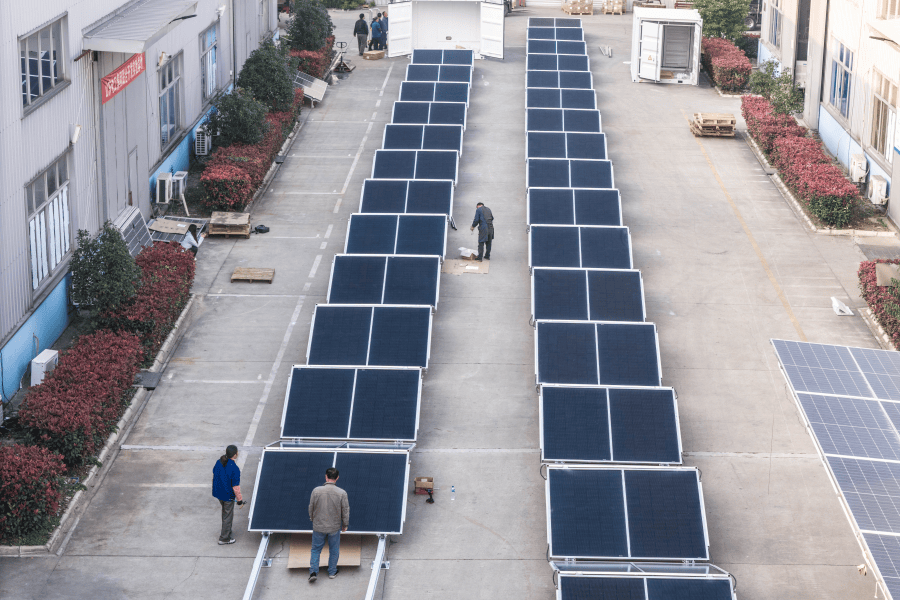
Table of Contents
- The Remote Power Dilemma: More Than Just a Bill
- Why Traditional AC-Coupling Struggles on Site
- A Clearer Path: The High-Voltage DC Photovoltaic Storage System
- Case Study: A California Eco-Lodge's Journey to Energy Independence
- The Tech Behind the Simplicity: C-Rate, Thermal Management & LCOE
- Is This For Your Project? Key Considerations
The Remote Power Dilemma: More Than Just a Bill
Let's be honest. If you're developing or operating an eco-resort, a remote retreat, or an off-grid commercial site, you didn't get into this business to become a full-time power plant manager. Yet, here we are. Your dream location - pristine, secluded, perfect - comes with a massive energy headache. I've sat across the table from dozens of developers in California, the Caribbean, and across Europe, and the story is always similar. You're facing sky-high grid connection fees (if the grid is even there), volatile diesel generator costs, and a sustainability promise to your guests that's hard to keep with fossil fuels.
The data backs this up. The International Energy Agency (IEA) consistently highlights that energy costs and reliability are top barriers for tourism development in isolated areas. It's not just an operational cost; it's a direct threat to your business model and brand value.
Why Traditional AC-Coupling Struggles on Site
So, the obvious answer is solar plus batteries, right? You install a photovoltaic (PV) array and hook it to a battery storage system (BESS). For years, the standard approach has been AC-coupled systems. The PV panels produce DC power, it goes through an inverter to become AC for the resort, and then if you want to store it, that AC power gets converted back to DC to charge the batteries. When the batteries discharge, it's converted back to AC again.
Honestly, I've seen this firsthand on site. Every time you convert energy, you lose some of it - typically 2-3% per conversion. That adds up fast. More importantly, every extra inverter and conversion stage is another piece of hardware that can fail, another source of heat you need to manage, and another layer of complexity for your team to maintain. In a remote location, simplicity and reliability aren't just nice-to-haves; they're everything.
A Clearer Path: The High-Voltage DC Photovoltaic Storage System
This is where the real-world case for a high-voltage DC photovoltaic storage system gets compelling. The core idea is beautifully simple: minimize conversion losses by keeping everything on a common DC bus for as long as possible.
Here's how it works in practice. Your PV strings generate high-voltage DC (often around 600-1500V DC). Instead of immediately inverting to AC, this high-voltage DC is fed directly into a compatible, high-voltage DC battery storage system. The energy is stored natively as DC. When the resort needs power, a single, centralized inverter converts the stored DC (or the direct PV DC) into clean AC power for your loads. You've effectively cut out two unnecessary conversion stages.

Case Study: A California Eco-Lodge's Journey to Energy Independence
Let me walk you through a project we completed last year in the Sierra Nevada foothills. A high-end eco-lodge was entirely dependent on a costly and noisy diesel generator. Grid connection was quoted at over $1.2 million. Their goals were clear: eliminate diesel, achieve 95%+ renewable energy, and ensure absolute reliability for their guests.
The Challenge: A traditional AC-coupled system would have required multiple inverters (for PV and for the battery), leading to significant efficiency losses and a more complex layout. Space for equipment was also limited.
The High-Voltage DC Solution: We deployed a 350 kW PV array with 600V DC strings, directly coupled to a 500 kWh Highjoule DC-ready BESS. The system uses a single, robust central inverter. Because the battery system, from Highjoule Technologies Ltd., is designed from the ground up for high-voltage DC input, the integration was seamless and the wiring simpler.
The Outcome: The system's round-trip efficiency increased by nearly 8% compared to the AC-coupled alternative. That's free energy, every day. The reduced component count meant a smaller equipment footprint and, crucially, a simpler control system. The lodge now runs nearly 100% on solar, with the generator as a rarely-used backup. Their Levelized Cost of Energy (LCOE) plummeted.
The Tech Behind the Simplicity: C-Rate, Thermal Management & LCOE
Now, you might be thinking, "This sounds great, but is it robust?" This is where proper engineering matters. A high-voltage DC system isn't just about connecting wires. It demands components built for the job.
- C-Rate & Longevity: In a DC-coupled system, the battery's charge rate (C-rate) is directly managed by the solar charge controller. Our Highjoule systems are engineered with conservative C-rates to maximize cycle life. We're not chasing the highest instantaneous charge; we're guaranteeing the battery lasts 10+ years, which is what really drives down your LCOE.
- Thermal Management: Higher voltages can mean different thermal profiles. Our containerized and cabinet systems use active liquid cooling that's been tested to UL 9540 and IEC 62933 standards. This isn't an afterthought - it's a core safety and performance feature. I've seen too many systems derate power output on a hot day because their thermal management was inadequate.
- Standards & Safety: For the US and EU market, this is non-negotiable. Every component in the chain - PV combiners, DC disconnects, the BESS itself - must be listed and certified for high-voltage DC applications (think UL 1741, IEC 62477). Our deployment process includes rigorous commissioning checks specifically for the DC arc-fault and rapid shutdown protocols required by the National Electrical Code (NEC) and similar EU standards.

Is This For Your Project? Key Considerations
So, is a high-voltage DC photovoltaic storage system the magic bullet for every eco-resort? It's a fantastic solution, but it's about fit. It shines brightest in new constructions or major retrofits where you're designing the energy system from scratch, especially for sites targeting high renewable penetration (over 70%) or full off-grid operation.
The initial investment can be streamlined compared to a patchwork of AC-coupled equipment, and the long-term operational savings are real. When we at Highjoule Technologies Ltd. consult on a project, we run the numbers both ways - AC-coupled vs. DC-coupled - and present the 10-year financial and operational picture. Often, for remote, energy-intensive sites, the DC path offers a cleaner, more efficient, and ultimately more reliable road to energy independence.
What's the one constraint in your current power design that keeps you up at night? Is it the diesel delivery schedule, the noise, or the sheer complexity of your backup power plan?
Tags: UL Standard BESS LCOE Photovoltaic Storage Microgrid High-voltage DC Eco-Resort
Author
James Zhang
20+ years agricultural energy storage engineer / Highjoule CTO