
Cost of C5-M Anti-Corrosion BESS for Mining in Mauritania: A Real-World Breakdown
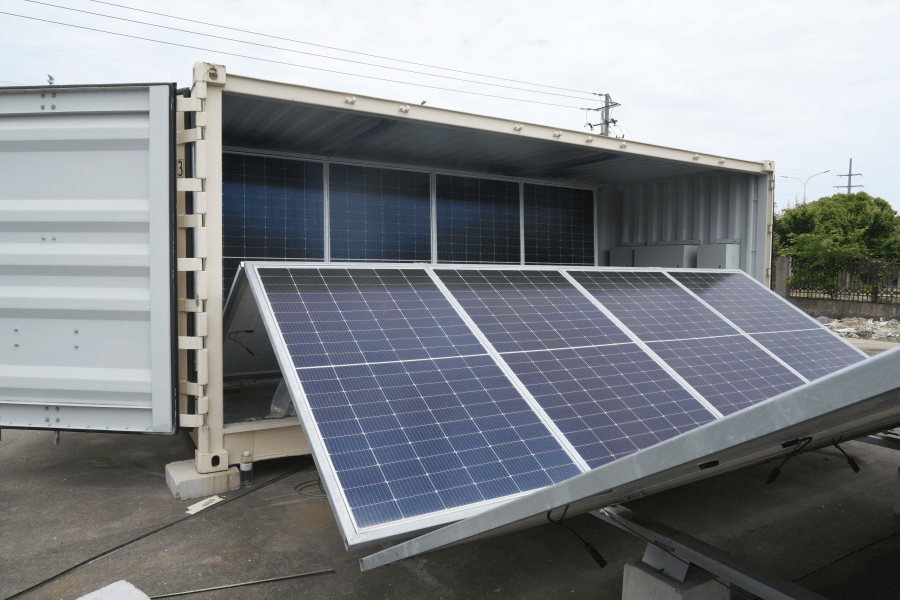
Let's Talk About Powering Mines in the Desert: It's More Than Just a Price Tag
Honestly, when a mining operations manager from Europe or North America calls me asking for a single number C "How much for a C5-M anti-corrosion battery container for Mauritania?" C I get it. Budgets are tight, deadlines are tighter. But having spent over two decades on sites from the Chilean Atacama to the Australian Outback, I need to tell you: that question is like asking "How much does a house cost?" The real cost isn't just the steel box and cells. It's about what keeps that investment running, safely and profitably, for the next 15+ years in one of the most punishing environments on Earth.
Quick Navigation
- The Real Problem: Corrosion is a Silent Budget Killer
- The Cost Breakdown: Unpacking the "All-In" Number
- A Real-World Snapshot: Learning from Nevada
- The Expert Bit: Thermal Management & LCOE - Why They Dictate Cost
- Making It Work in Mauritania: The Highjoule Approach
The Real Problem: Corrosion is a Silent Budget Killer, and Standards Matter
Here's the phenomenon I see too often: a procurement team sources a "low-cost" BESS unit designed for a temperate climate. It gets shipped to a coastal or desert mining site. Within 18 months, salt-laden air or abrasive dust has compromised cabinet seals, attacked busbars, and crept into battery management system (BMS) boards. The result? Unplanned downtime, soaring maintenance costs, and a terrifying safety risk. The NREL's 2023 report on BESS failures points to environmental factors and subpar components as leading contributors to underperformance.
This is where the "C5-M" specification becomes non-negotiable, not a nice-to-have. For my friends in the US and EU, think of it as the marine-grade or heavy-industrial equivalent of your UL 9540 or IEC 62933 standards. A C5-M rating (per ISO 12944) means the unit is engineered for severely corrosive atmospheres - like coastal mines or areas with high chemical pollution. Ignoring this is, frankly, a financial time bomb.
The Cost Breakdown: Unpacking the "All-In" Number for Mauritania
So, let's get to your question. For a turnkey, compliant C5-M anti-corrosion lithium battery storage container suitable for a mid-sized mining operation in Mauritania, you're looking at a capital expenditure (CapEx) range. But this number only makes sense with context.
Think of the cost in layers:
- The Core Container & Battery System: This is your C5-M certified steel structure, with intrinsic corrosion protection (hot-dip galvanizing, specialized coatings), integrated fire suppression (like Novec 1230 or aerosol), and the lithium-ion battery racks (typically LFP chemistry for safety and longevity).
- The "Brain" & Safety System: A robust, dust-sealed thermal management system (liquid cooling is often king in deserts for precise temperature control), a UL 9540-listed power conversion system (PCS), and a cybersecurity-hardened BMS.
- Logistics & Integration: Ocean freight to Nouakchott or Nouadhibou, overland transport to site (often requiring special permits), customs, local civil works (the foundation is critical!), and commissioning by certified engineers. This chunk is volatile and often underestimated.
- Soft Costs & Compliance: Engineering, procurement, and construction (EPC) management, grid interconnection studies, and ensuring the entire system meets not just C5-M, but the relevant electrical standards your company mandates (UL, IEC, IEEE).
A generic "per kWh" quote online misses all this. I've seen firsthand on site where skipping the proper thermal system to save 5% on CapEx led to a 40% reduction in cycle life - a devastating hit to your levelized cost of energy (LCOE).
A Real-World Snapshot: Learning from a Nevada Lithium Mine Project
Let me share a relevant case, though from a different desert. We deployed a 4 MWh BESS for a lithium mine in Nevada, USA. The challenge was similar: extreme diurnal temperature swings (0F to 110F), alkaline dust, and a need for 24/7 reliability to offset expensive diesel genset use.
The client's initial focus was bare-minimum CapEx. We agitated the pain point: "What's the cost of a full shutdown if the BESS fails because a $20,000 cooling system was omitted?" We proposed a C5-M equivalent solution with a redundant, liquid-based thermal management system and a UL 9540A fire safety design. The upfront cost was higher, but the LCOE projection was 25% lower over 10 years.
The result? After 2 years of operation, the system's capacity fade is tracking 15% better than the industry average for such environments. The mine manager now talks about "energy reliability," not just "battery cost."

The Expert Bit: Thermal Management & LCOE - Why They Dictate True Cost
Let's get technical for a minute, but I'll keep it simple. Two concepts decide your real cost: C-rate and Thermal Management.
C-rate is basically how fast you charge or discharge the battery. A mine might need a high C-rate for heavy equipment load surges. But a high C-rate generates more heat. If your thermal system can't whisk that heat away efficiently in 45C Mauritanian heat, the battery degrades fast. You're literally burning capital.
That's where Levelized Cost of Energy (LCOE) comes in - the total lifetime cost divided by energy produced. A cheaper unit with poor cooling will have a high LCOE. A robust, C5-M system with superior thermal control might have a 20-30% higher CapEx but a 40% lower LCOE. As a business decision-maker, which metric would you rather present to the board?
Making It Work in Mauritania: The Highjoule Approach
At Highjoule, we don't sell containers; we sell guaranteed uptime in harsh environments. For a project in Mauritania, our costing exercise starts with a conversation about your specific site: distance from the coast, average particulate levels, max/min temperatures, and your load profiles.
Our C5-M solutions are built from the ground up for this. We use proprietary coating systems and pressurized, filtered air systems to keep corrosive agents out. Our thermal management is over-engineered for the environment, not just the lab. And because we know standards are your license to operate, every system is designed to meet and be certified to UL, IEC, and IEEE benchmarks that your head office requires.
The final number? It's a comprehensive proposal that includes a clear LCOE model, a deployment timeline with our local partners in North/West Africa, and a service plan that ensures someone who speaks the language (both technically and literally) is available for support. Because the cheapest container is the one that doesn't fail when you're 500 km from the nearest major city.
So, let's reframe the question. Instead of "How much does the container cost?", perhaps the more powerful one is: "What's the value of predictable, safe, and corrosion-resistant power for my mining operation over the next decade?" I've got some data and real site stories on that - care to dive deeper?
Tags: UL Standard BESS LCOE Europe US Market Renewable Energy Mining Energy Anti-corrosion Container
Author
James Zhang
20+ years agricultural energy storage engineer / Highjoule CTO