
Novec 1230 Fire Suppression for BESS: The Ultimate Guide for Military & Secure Sites
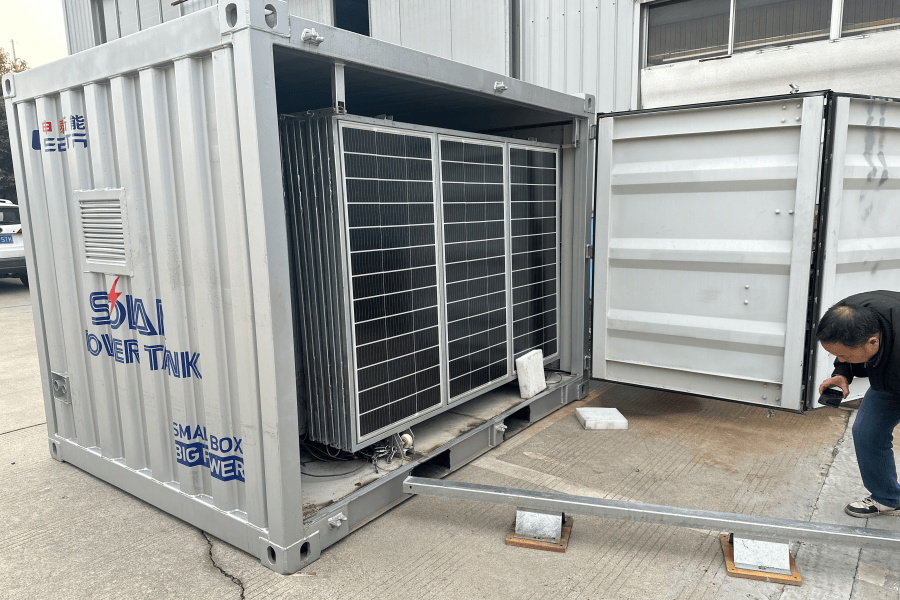
Table of Contents
- The Quiet Problem: Balancing Energy Security with Physical Security
- Why It Keeps Us Up at Night: The True Cost of a BESS Incident
- Entering Novec 1230: Not Just Another Clean Agent
- The Real-World Test: A Case from a European Forward Operating Site
- Beyond the Spec Sheet: What You Really Need to Compare
- Making the Right Call for Your Critical Infrastructure
The Quiet Problem: Balancing Energy Security with Physical Security
Let's be honest. When we talk about deploying Battery Energy Storage Systems (BESS) for military bases, microgrids, or any high-security industrial site, the conversation usually starts with capacity, discharge duration, and Levelized Cost of Energy (LCOE). And rightly so. But having spent over two decades on sites from Texas to Taiwan, I've seen a critical factor often get pushed to the later stages of planning: the fire suppression system. It's the silent guardian, the component you hope never activates, but its choice fundamentally impacts your system's resilience, total cost of ownership, and most importantly, the safety of personnel and mission continuity.
The phenomenon I see too often? A focus on meeting the bare minimum code requirements (like NFPA or local building codes) without fully weighing the operational realities of a secure facility. These sites aren't typical industrial parks. Access for emergency services can be restricted or delayed. The BESS might be integrated into a microgrid powering mission-critical communications or surveillance. A thermal runaway event here isn't just a financial loss; it's a potential national security vulnerability.
Why It Keeps Us Up at Night: The True Cost of a BESS Incident
Let's agitate that problem a bit. The industry standard for a long time has been water-based sprinkler systems. They're effective for controlling fires in many settings, sure. But for a lithium-ion battery fire? I've seen this firsthand. Water can cool, but it doesn't stop the chemical chain reaction inside a failing cell fast enough. You end up using massive amounts of water - thousands of gallons - contaminating the site and creating significant collateral damage to adjacent, non-affected equipment. For a military base, that's a logistical and environmental nightmare.
Then there's downtime. According to a National Renewable Energy Laboratory (NREL) analysis, the indirect costs of a severe BESS failure - including site remediation, extended offline periods, and replacement logistics - can dwarf the initial equipment cost. When your BESS is part of a base's primary or backup power scheme, being offline for weeks or months is simply not an option. The traditional "suppression" approach often feels more like "managed loss" than "asset protection."
The Shift to Clean Agents
This is why the industry has moved towards "clean agent" fire suppression systems. They're designed to extinguish fires by interrupting the chemical combustion process without leaving residue or causing water damage. The most common contenders you'll hear about are Novec 1230 and systems using argon or nitrogen inert gases. On paper, both meet key standards like UL 9540A and NFPA. But in the field, for the unique demands of a secure facility, the comparison becomes much more nuanced.
Entering Novec 1230: Not Just Another Clean Agent
So, what's the solution we're seeing gain serious traction for these high-stakes applications? It's Novec 1230 fluid. Think of it as a precision tool versus a blunt instrument. Here's the breakdown from an engineer's perspective, not just a sales sheet.
How it Works (The Simple Version): Novec 1230 is a fluorinated ketone. When discharged as a vapor, it removes heat from the fire and creates a thermal ballast that disrupts the combustion chain reaction. For a battery pack undergoing thermal runaway, this rapid cooling and chemical interference is crucial to preventing propagation to neighboring cells.
The Practical Advantages for Military & Secure Sites:
- Space & Weight Efficiency: It requires significantly smaller storage cylinders and piping compared to inert gas systems, which need vast amounts of gas to lower oxygen concentration. In a containerized BESS or a space-constrained utility building, this is a major design win.
- Rapid Re-access: After discharge, the agent dissipates quickly, leaving no residue. This allows for faster safety inspection and, if possible, quicker restoration of partial functionality. There's no oxygen-deficient atmosphere to ventilate for hours.
- Environmental & Safety Profile: It has a global warming potential (GWP) of 1 and zero ozone depletion. More critically for indoor or semi-enclosed installations common on bases, its No Observed Adverse Effect Level (NOAEL) is high, meaning it's safer for personnel in the unlikely event of an accidental discharge.
At Highjoule, when we design a BESS for a critical infrastructure client, Novec 1230 integration isn't an add-on; it's part of our core safety architecture from the cell-level thermal management up. We've found it aligns perfectly with the need for a system that is both highly effective and minimally disruptive - a must for operations that can't afford extended stoppages.
The Real-World Test: A Case from a European Forward Operating Site
Let me give you a real example, though specifics are understandably guarded. We deployed a 2.5 MWh containerized BESS for a forward-operating NATO site in Northern Europe. The challenge was extreme: provide black-start capability and daily load-shaving for a remote base with limited grid-tie, but do it within a strict footprint and with a fire suppression system that wouldn't require major site civil works or pose a risk to nearby sensitive structures.
The inert gas system initially proposed would have needed a separate, climate-controlled storage shed for the dozens of large gas cylinders. The Novec 1230 system, with its compact cylinders, fit neatly within the BESS container's own utility section. During commissioning, the base's safety officers were particularly impressed by the clarity of the discharge alarms and the fact that the system's design concentration (the amount of agent needed) was well below the safety threshold for occupied spaces. The peace of mind that came from knowing the system could protect both the asset and their personnel was a decisive factor.

Beyond the Spec Sheet: What You Really Need to Compare
When you're comparing systems, don't just look at the agent's name. Dig into the integration. Here's my checklist from the field:
| Comparison Factor | Novec 1230 System | Inert Gas (Argon/Nitrogen) System |
|---|---|---|
| Footprint | Compact cylinder banks. Ideal for integrated container solutions. | Large cylinder arrays often requiring external storage. |
| Discharge Time | Very fast (typically under 10 seconds). Critical for stopping cell-to-cell propagation. | Slower, as a large volume of gas must flood the space. |
| Post-Discharge Re-access | Minutes to hours. Agent vaporizes, no clean-up. | Hours to ensure safe oxygen levels. Requires ventilation. |
| Piping & Pressure | Smaller diameter pipes, lower pressure. Simplifies design. | Large diameter, high-pressure piping. More complex engineering. |
| Total Cost of Ownership | Higher agent cost, but lower installation/complexity cost. Often lower lifecycle cost. | Lower agent cost, but higher installation/space cost. |
Expert Insight on Thermal Management: Remember, no suppression system is a substitute for good thermal management. A high C-rate discharge generates immense heat. We design our BESS with liquid cooling that maintains cell temperature within a narrow, optimal band. This proactive management drastically reduces the statistical probability of a thermal event even starting. The Novec system is the last line of defense, not the first. A good comparison should always look at the entire safety philosophy: prevention, detection, and suppression.
Making the Right Call for Your Critical Infrastructure
So, what's the takeaway for a decision-maker at a military base, a data center, or a secure manufacturing plant? The comparison between Novec 1230 and other agents isn't just a technical exercise. It's an operational and risk-management decision.
For sites where space is premium, rapid recovery is essential, and personnel safety is paramount, the scale tips heavily towards Novec 1230. It offers a modern, precise, and logistically friendly solution that matches the high-reliability ethos of critical infrastructure.
The question I leave you with isn't just "Which agent meets the code?" It's deeper: "In the event of an incident, which system gives my team the best chance to protect lives, preserve the mission, and get our critical power back online with the least delay?" That's the comparison that truly matters. At Highjoule, we build our systems - from the battery modules to the fire suppression controls - to answer that very question.
What's the biggest hurdle you've faced in securing approval for BESS safety systems on your site?
Tags: UL Standard BESS Energy Security Novec 1230 Fire Suppression Military Bases
Author
James Zhang
20+ years agricultural energy storage engineer / Highjoule CTO