
Top 10 Manufacturers of IP54 Outdoor Mobile Power Container for Telecom Base Stations
Contents
- The Silent Problem: Powering Remote Telecom in a Renewable Era
- Why IP54 and "Mobile" Aren't Just Buzzwords
- Navigating the Manufacturer Landscape: What Really Matters
- Beyond the Spec Sheet: An Engineer's Field Notes
- Making the Right Call for Your Network
The Silent Problem: Powering Remote Telecom in a Renewable Era
Let's be honest. When we talk about the energy transition, we picture vast solar farms and towering wind turbines. But one of the toughest nuts to crack is sitting right there on a remote hilltop or at the edge of a suburban sprawl: the telecom base station. I've been on-site for enough of these deployments to know the headache. You need reliable, 24/7 power for critical comms infrastructure, but the grid is either unstable, prohibitively expensive to connect, or just not there. Diesel gensets? They're a maintenance nightmare, noisy, and let's not even start on the emissions and fuel logistics.
The push for network operators, especially in North America and Europe, is intense. They're under pressure to green their operations, slash OPEX, and expand coverage into areas where grid upgrades would blow the budget. According to the International Energy Agency (IEA), global electricity demand from data centers and telecoms could double by 2026. That's a staggering load to manage, often in locations where power is least reliable.
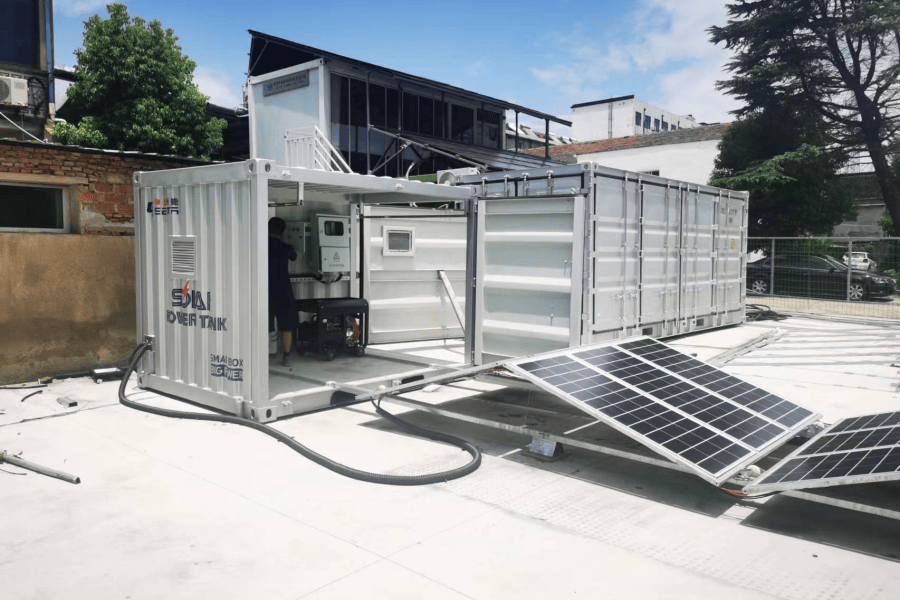
This is where Battery Energy Storage Systems (BESS) come in as a game-changer. But not just any BESS. We're talking about rugged, self-contained units that can be dropped in, connected, and forgotten about for years - through rain, snow, heat, and dust. That's the specific promise of an IP54 Outdoor Mobile Power Container. It's not a luxury; for modern telecom, it's becoming a necessity.
Why IP54 and "Mobile" Aren't Just Buzzwords
You'll see a lot of manufacturers on those "Top 10" lists. But from my two decades in the field, I can tell you that not all containers are created equal. The specs tell part of the story.
IP54 is the baseline, not the pinnacle. It means the unit is protected against dust ingress (not totally dust-tight, but enough to not interfere with operation) and against water splashes from any direction. For a container sitting out in a field, that's the absolute minimum. You need that assurance against driving rain and blowing dust. But the real magic happens inside the container.
"Mobile" means plug-and-play, not just "on wheels." True mobility is about streamlined deployment. I've seen projects in California where a pre-integrated, pre-tested container was delivered, placed on a simple concrete pad, and was providing backup power and solar integration within 48 hours. Compare that to constructing a bespoke battery room on-site - the savings in time and labor are enormous. This mobility is crucial for temporary network boosts during events or for disaster recovery scenarios.
The Core Tech That Makes or Breaks a Deployment
When evaluating these manufacturers, you have to look past the marketing and into the engineering:
- Thermal Management: This is the #1 cause of premature aging in a BESS. A container in the Arizona sun or a Norwegian winter is a harsh environment. Passive cooling often isn't enough. You need an active, liquid-based or precision air-conditioning system that maintains an optimal 20-25C cell temperature uniformly. A 10C rise above this can halve the battery's lifespan.
- C-rate Intelligence: It's not just about max power. A quality system intelligently manages the charge/discharge rate (C-rate) based on cell temperature, state of charge, and age. Aggressive, constant high C-rates generate excess heat and stress. A smart BESS will modulate this to optimize for longevity, not just peak performance.
- Levelized Cost of Energy (LCOE): This is the ultimate metric for your finance team. The cheapest upfront container might have the highest LCOE. Why? Poor thermal management and cell balancing lead to faster degradation, meaning you'll replace batteries sooner. A higher-quality system from a reputable manufacturer, with superior engineering, extends the cycle life and calendar life, driving down your cost per kWh over the 15+ year lifespan.
At Highjoule, we've built our outdoor containers around this philosophy. We don't just meet UL 9540 and IEC 62933 standards; we design to exceed their stress tests. Our thermal system is over-engineered because I've seen firsthand on site what happens when it's not. It's about delivering the lowest possible LCOE, not just the lowest sticker price.
Navigating the Manufacturer Landscape: What Really Matters
So, you're looking at a list of Top 10 Manufacturers of IP54 Outdoor Mobile Power Container for Telecom Base Stations. Here's how to translate that list into a smart decision:
- Certifications are Your Bible: For the US, UL 9540 (system level) and UL 1973 (battery) are non-negotiable for safety and insurance. In Europe, look for IEC 62933 and UN 38.3 for transport. A serious manufacturer will have these readily available, not "in progress."
- Localization of Support: Can the manufacturer provide local spare parts, firmware updates tailored to local grid codes, and technician support? A container is a long-term asset. I remember a project in Northern Germany where a software glitch required a specific grid-code patch. Having a European support team that could deploy it remotely within hours saved thousands in potential downtime.
- Integration Readiness: The best containers are designed to talk seamlessly with your existing or planned power sources - whether it's a new solar canopy, a wind turbine, or the existing grid connection. Ask about the communication protocols (Modbus, DNP3, etc.) and control system openness.

Beyond the Spec Sheet: An Engineer's Field Notes
Let me share a slice of reality from a microgrid project we supported in Texas Hill Country. A telecom provider needed to power a new cell tower. Grid connection quote: $250k, with a 9-month wait. The solution? A 100kW/250kWh IP54 mobile power container coupled with a 120kW solar array.
The challenge wasn't the specs; it was the execution. The container had to handle 40C+ summer days, occasional flooding, and be fully automated. We worked with a top-tier container manufacturer (who focuses on this niche) to ensure the BMS could handle the aggressive solar charge profiles during the day and provide flawless night-time discharge. The thermal system was spec'd for a 35C ambient, not 25C. Two years on, the system's performance is at 98% of its original capacity, and the operator has a predictable, near-zero energy cost for that site.
The lesson? The right manufacturer partners with you on the application, not just the sale. They understand that their container is the heart of a system.
Making the Right Call for Your Network
Evaluating the Top 10 Manufacturers of IP54 Outdoor Mobile Power Container for Telecom Base Stations is a great start. But your final choice shouldn't be a box-ticking exercise. It's about finding a partner whose engineering rigor matches your need for reliability, whose safety standards meet your risk profile, and whose design philosophy aligns with your total cost of ownership goals.
Ask the hard questions about thermal management under peak load. Request LCOE projections based on your specific duty cycle. Demand proof of local compliance. The market for these solutions is maturing fast, and the leaders are those who solve the real-world problems we face in the field every day.
What's the biggest hurdle you're facing in deploying resilient power for your remote sites?
Tags: UL Standard BESS LCOE Energy Storage Europe US Market Renewable Energy IP54 Container Telecom Power
Author
James Zhang
20+ years agricultural energy storage engineer / Highjoule CTO