
Grid-Forming Solar Container Cost for Remote Island Microgrids: A Realistic Breakdown
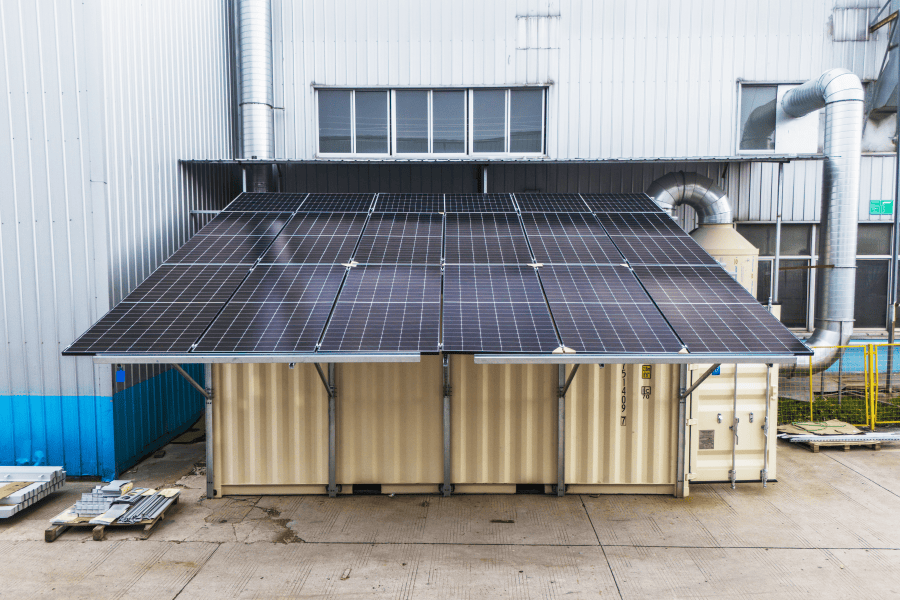
The Real Price Tag of Energy Independence: Grid-Forming Solar Containers for Island Microgrids
Honestly, if I had a dollar for every time a client on a remote island project asked me "What's the final number?" only to get a vague, brochure-style answer, I'd probably be retired by now. The question of cost for a grid-forming solar container solution is the elephant in the room. It's never just about the sticker price of the box. From my 20+ years on sites from the Greek Isles to communities in Alaska, the real cost is a mix of hardware, brains, compliance, and the peace of mind that the lights stay on when the ocean storms roll in. Let's cut through the noise and talk real numbers and real factors.
Table of Contents
- The Real Problem: It's More Than Just "Dollars per kWh"
- The Cost Breakdown: Opening the Black Box
- A Case in Point: Lessons from a Mediterranean Island
- Expert Insight: The Hidden Levers of Lifetime Cost
- Making the Decision: What to Ask Your Provider
The Real Problem: It's More Than Just "Dollars per kWh"
Here's the aggravation I see firsthand. Many procurement teams focus solely on the capital expenditure (CapEx) of the battery container itself. But for a remote island microgrid, the container isn't just storing energy - it's the grid-forming brain that creates a stable electrical frequency without a traditional utility grid. Choosing a cheaper system that lacks robust grid-forming inverters or proper thermal management is like buying a cheap boat engine for a transatlantic crossing. The initial "savings" evaporate with the first major failure, which, in an island context, means crippling downtime and exorbitant airfreight costs for parts.
The pain amplifies when you consider standards. In the US and Europe, compliance isn't optional. A system that isn't designed from the ground up for UL 9540 (US) and IEC 62933 (EU) standards might get blocked at the port or, worse, fail certification, causing months of delays. I've seen projects where the "low-cost" option ended up 40% over budget due to retrofit costs for safety and grid-compliance features.
The Cost Breakdown: Opening the Black Box
So, let's get practical. For a typical, fully integrated grid-forming solar container solution (including PV arrays, balance of plant), you're looking at a total system cost. According to analyses by the National Renewable Energy Laboratory (NREL), while prices are falling, the advanced capabilities needed for island grids command a premium.
Think of the cost in these layers:
- Core Container & Power Electronics: This is the grid-forming BESS itself. A 1 MWh system with true grid-forming inverters, robust thermal management (liquid cooling is becoming the island standard, trust me), and high-cycle life cells. Ballpark: This can range significantly, but for a quality, compliant system, think in the realm of $X00,000 to $X million. The "grid-forming" capability itself adds 15-25% compared to simpler grid-following systems, but it's the non-negotiable core of your microgrid.
- Solar PV Array: The fuel source. Cost depends on island terrain, mounting, and hurricane/wind ratings.
- Soft Costs & Integration: This is where budgets bleed. Engineering, procurement, construction (EPC) management, shipping to a remote port, heavy-lift equipment for installation, civil works, and grid interconnection studies. For an island, these can easily match 50-100% of the hardware cost.
- Long-Term Value Drivers: This is the Highjoule lens. What's the warranty? 10 years? 15? What's the round-trip efficiency? A 4% higher efficiency system might cost 5% more upfront but save 20x that in wasted diesel over 15 years. What's the projected Levelized Cost of Energy (LCOE)? That's your true measure of cost.

A Case in Point: Lessons from a Mediterranean Island
Let me share a project off the coast of Italy. A 2.5 MWh grid-forming solar container was deployed to reduce diesel consumption for a small hotel and community. The initial bids varied wildly. The chosen solution - a system we at Highjoule were involved in supporting - wasn't the cheapest CapEx option.
The Challenge: Salt spray corrosion, limited space, and a requirement for 100% renewable self-sufficiency during tourist season. The grid had to be stable enough for sensitive hotel loads.
Why the "Mid-Range" Bid Won: It specified UL/IEC-compliant fire suppression, C5-M corrosion protection for salt-laden air, and inverters with proven grid-forming software that could handle sudden load shifts (like all the AC units kicking on at once). It also included a remote monitoring package with local technician training. The slightly higher upfront cost was justified by a lower risk profile and a contractual performance guarantee. The system paid for itself in saved diesel and maintenance in under 7 years.
Expert Insight: The Hidden Levers of Lifetime Cost
Okay, technical talk made simple. When you're comparing quotes, ask about these three things:
- C-Rate: This is basically the "athleticism" of the battery. A 1C rate means the battery can be fully charged or discharged in 1 hour. For island grids that need to quickly absorb solar surges or meet a spike in demand, a higher C-rate (like 0.5C or 1C) is crucial. A cheaper, slower battery (0.25C) might struggle, leading to instability or needing an oversized, more expensive system.
- Thermal Management: Islands are hot. Batteries degrade fast when they're hot. Passive air cooling is cheaper upfront but often fails in sustained island heat, killing battery life. Active liquid cooling, which we design into our Highjoule containers, maintains optimal temperature. It costs more initially but can double or triple the battery's operational life. Do the math - that dramatically lowers your LCOE.
- LCOE (Levelized Cost of Energy): This is your ultimate metric. It bundles all costs - CapEx, OpEx, fuel, maintenance - over the system's life and divides it by the total energy produced. A provider should be able to model this for you. Honestly, the goal isn't the cheapest container; it's the cheapest kilowatt-hour over 20 years.
Making the Decision: What to Ask Your Provider
So, when you're evaluating "how much it costs," shift the conversation. Don't just ask for a price. Ask: "What is the projected LCOE for my specific site over 15 years?" Ask for proof of UL 9540 or IEC 62933 certification. Ask for the round-trip efficiency figure at 25C and at 40C. Ask about the shipping and local integration support - do they have partners near your port?
At Highjoule, we've built our containers around this total-lifecycle view. Yes, our units meet every stringent standard out of the box, which adds to the bill of materials. But we've seen them outlast and outperform in places where reliability is the only currency that matters. The cost of a grid-forming solar container for your island isn't an expense; it's the capital investment for your community's or business's energy resilience. The right question isn't "What's the price?" but "What's the value - and the risk - of going cheap?"
What's the one operational headache in your current island power system that keeps you up at night? Is it the fuel cost volatility, or the fear of a blackout during peak season? Let's talk about that.
Tags: UL Standard LCOE Grid-forming BESS Island Microgrid Remote Power Solar Container Cost
Author
James Zhang
20+ years agricultural energy storage engineer / Highjoule CTO