
High-Altitude Energy Independence: The All-in-One Off-Grid BESS Solution
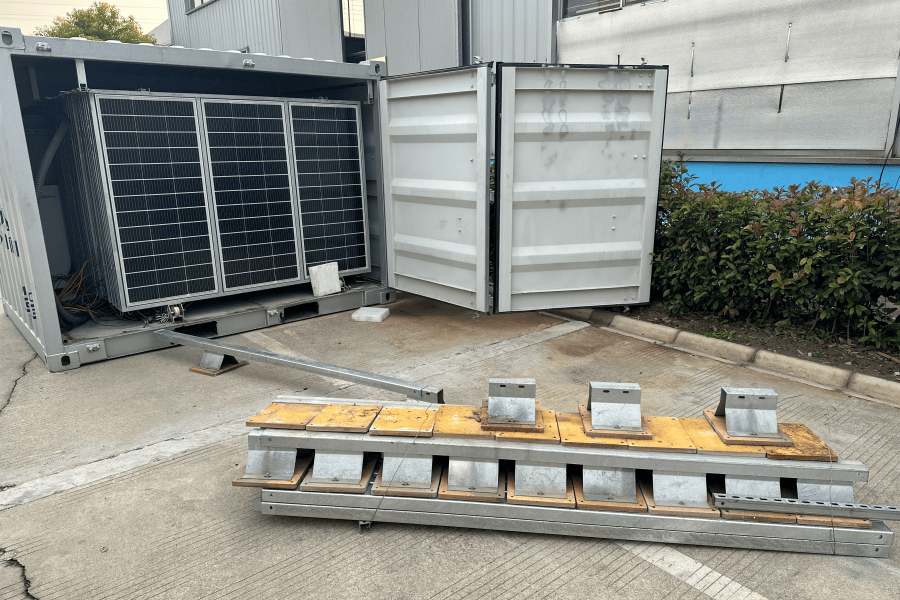
Table of Contents
- The Silent Challenge: Power Where the Air is Thin
- Why It Hurts More: Cost, Risk, and Downtime at Elevation
- The Integrated Answer: Engineering for the Peaks
- Beyond the Spec Sheet: Real Insights from the Field
- Your Next Step: From Concept to Reliable Power
The Silent Challenge: Power Where the Air is Thin
Let's be honest. When you're planning a telecom tower on a Rocky Mountain ridge, a research station in the Alps, or a remote mining operation in the Andes, the last thing you want is a power system that's as temperamental as the weather. I've been on-site in these places. The view is breathtaking, but the operational headaches can be too. The common thread? You're off-grid, and you're high up. Traditional generator setups - a diesel genset here, a random battery bank there - become a patchwork of inefficiency and risk when you're dealing with low oxygen, brutal temperature swings, and logistics that make every component delivery a minor expedition.
This isn't a niche problem. As the International Renewable Energy Agency (IRENA) points out, decentralised renewable solutions are critical for energy access in remote areas, but their report also hints at the high failure rates of systems not built for their environment (IRENA). The industry often talks about "off-grid," but we rarely dig into what "off-grid at 3,000 meters" truly demands from the hardware.
Why It Hurts More: Cost, Risk, and Downtime at Elevation
So, why does altitude amplify every problem? Let me break it down from a project manager's and an engineer's perspective.
First, thermal management goes haywire. At high altitudes, the air is less dense. It simply can't carry away heat from battery cells or power electronics as effectively. I've seen standard, low-land battery systems derate their output by 20% or more just to avoid overheating, which completely blows your capacity planning. Conversely, at night, temperatures can plummet. Lithium-ion batteries hate being charged when cold. Without proper heating systems, you're either not charging or, worse, damaging the cells.
Second, component stress and safety. Lower air pressure affects cooling fans and can even lead to partial discharge in electrical components not rated for it. Combine that with wide thermal expansion and contraction, and you get connections working loose, seals failing, and a higher risk of faults. Frankly, a system that's merely "UL 9540 certified" isn't enough. You need a system where every sub-component - the inverter, the battery management system (BMS), the HVAC - is itself rated and tested for high-altitude operation. This is where IEC 60721-2-1 (environmental conditions) and specific IEEE guides for high-altitude power applications come into play.
Finally, the total cost of ownership (TCO) surprise. That cheap, assembled-from-catalog system might look good on paper. But when you factor in the extra site visits for maintenance (helicopter rides aren't cheap), the premature replacement of stressed components, and the lost revenue from downtime, your Levelized Cost of Energy (LCOE) skyrockets. The initial capital expenditure (CapEx) becomes a tiny part of a very painful story.

The Integrated Answer: Engineering for the Peaks
This is where the philosophy behind a true Technical Specification of All-in-one Integrated Off-grid Solar Generator for High-altitude Regions becomes non-negotiable. It's not about bolting together off-the-shelf parts; it's about designing a single, cohesive power ecosystem from the ground up for a specific, harsh environment.
At Highjoule, when we develop a solution for these scenarios, the spec sheet is born from field failure modes. It dictates things like:
- Altitude-Derated Components: Inverters and transformers specified for operation up to 5,000 meters, not just 2,000.
- Active Liquid Cooling with Redundancy: Moving beyond air-cooling to a closed-loop system that maintains optimal cell temperature between -30C and +45C ambient, regardless of the thin air.
- Low-Temperature Charging Logic: A BMS that intelligently uses system power to warm the battery before accepting a charge, protecting your asset's lifespan.
- Logistics-Optimized Design: A single, ruggedized containerized solution (what we call our "PowerCube") that minimizes on-site assembly. You don't want electricians fumbling with connections in a freezing wind.
This integrated approach is what allows us to meet both UL 9540A (fire safety) and IEC 62933 grid standards, while also baking in the environmental robustness needed to actually deliver on those safety promises at elevation.
Beyond the Spec Sheet: Real Insights from the Field
Let me share a case that shaped our thinking. We deployed a system for a ski resort microgrid in Colorado, USA, sitting at about 2,800 meters. Their old system was a mess of lead-acid batteries and a genset. The challenge was peak shaving during high-demand winter weekends and providing backup for critical lifts. The cold was killing battery capacity, and the genset fuel logistics were a nightmare and an environmental concern for the resort.
We replaced it with an integrated, high-altitude-rated BESS. The key wasn't just the lithium chemistry. It was the C-rate consideration. We sized the battery bank and the inverter relationship so that during peak demand, we weren't pushing a punishing 1C or 2C discharge rate (which creates immense heat). We designed for a smoother, more sustainable 0.5C peak. This, combined with the liquid cooling, meant zero performance derating on the coldest, busiest day. The resort cut its diesel use by over 90% in the first season. The system's "brain" also manages the genset, only using it as a last-resort backup and keeping it in optimal run condition when it does fire up.
My expert takeaway? In high-altitude projects, LCOE is dominated by reliability. You optimize LCOE not by buying the cheapest battery per kWh, but by engineering out the failures. A slightly higher CapEx for a system with integrated heating, cooling, and altitude-rated electronics pays back tenfold in reduced OpEx and zero catastrophic downtime. You're not buying a battery box; you're buying uptime insurance.

Your Next Step: From Concept to Reliable Power
The conversation about high-altitude, off-grid power needs to shift from "can we find a system?" to "does this system's DNA match the mountain?" The technical specification is your blueprint for success - or your recipe for endless trouble.
At Highjoule, our two decades in this field have taught us that success lies in the pre-engineering. It's in asking the hard questions during design: What's the worst-case ambient temperature swing? How will the components behave at 70% atmospheric pressure? What's the one-point-of-failure we can eliminate?
So, if you're evaluating options for a site where the air is thin and the stakes are high, look beyond the basic kWh and kW ratings. Ask your provider about their high-altitude testing protocols, the environmental standards (IEC, IEEE) each subsystem complies with, and for case studies where their systems have lived, not just survived, at elevation. We've built that expertise into our deployment and long-term performance monitoring services, because the job isn't done when the container is unloaded.
What's the single biggest operational risk your current or planned high-altitude power system faces? Let's design the solution that eliminates it.
Tags: UL Standard BESS LCOE Off-grid Power Renewable Energy High-Altitude Energy
Author
James Zhang
20+ years agricultural energy storage engineer / Highjoule CTO