
High-Altitude BESS Deployment: Overcoming Corrosion & Extreme Conditions with C5-M Anti-Corrosion Systems
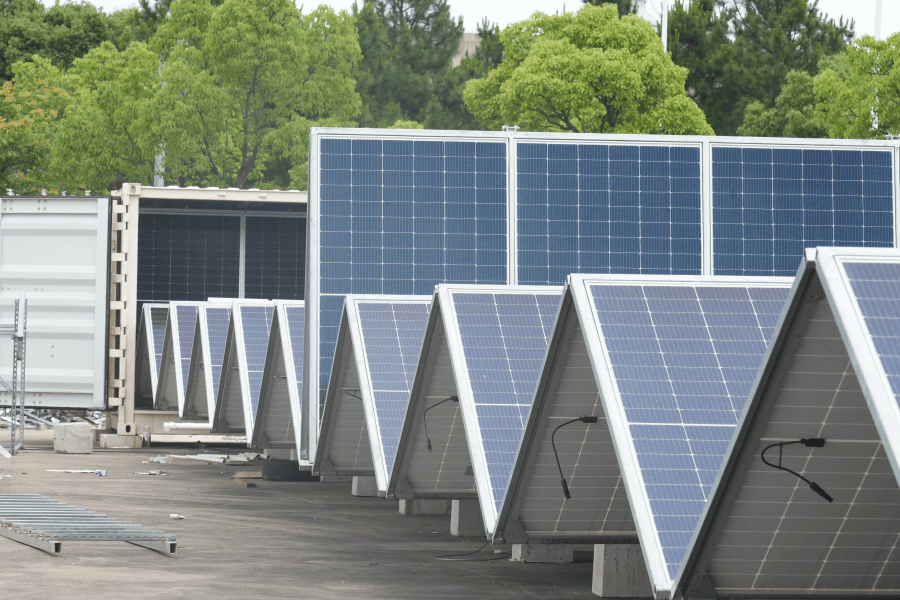
Table of Contents
- The Silent Threat in High-Altitude & Coastal Energy Storage
- Why This Matters: The Real Cost of Corrosion
- The C5-M Approach: More Than Just a Coating
- Case Study: A 20MW/50MWh BESS in the Colorado Rockies
- Expert Insight: Thermal Management & LCOE in Harsh Climates
- Choosing the Right Partner for Rugged Terrain
The Silent Threat in High-Altitude & Coastal Energy Storage
Let's be honest. When we talk about deploying Battery Energy Storage Systems (BESS) in the US or Europe, the conversation usually revolves around capacity (MWh), power (MW), and the all-important Levelized Cost of Storage (LCOS). But there's a silent, slow-moving threat that project developers in specific regions are starting to dread: aggressive corrosion. I've walked sites from the alpine regions of Switzerland to the coastal wind farms in Scotland, and the pattern is unmistakable. We're pushing renewables and storage into more challenging, resource-rich environments C high-altitude solar farms, offshore wind integration points, and mountainous microgrids. These sites offer incredible generation potential, but they come with a harsh reality: extreme temperature swings, high humidity, saline air, and corrosive atmospheric chemicals.
According to a NREL report on renewable plant durability, environmental stressors can accelerate component degradation by up to 300% compared to benign environments. This isn't just about a rusty cabinet; it's about the premature failure of critical safety components, busbar connections, and battery module enclosures, leading to unplanned downtime, massive O&M costs, and serious safety questions.
Why This Matters: The Real Cost of Corrosion
So, why is this suddenly a big deal for commercial and industrial decision-makers? Because the financial math falls apart quickly. A standard industrial-grade BESS, designed for a relatively stable environment, might be rated for ISO 12944 C3 corrosion resistance. That's fine for a temperate inland site. But place that same container in a high-altitude region with heavy snow, de-icing salts, and large daily thermal cycles, or near a coastal site, and you're looking at C5-M levels of corrosivity. The result? I've seen firsthand on site how connector corrosion increases internal resistance, causing localized heating and throwing off the entire battery management system's (BMS) calculations. It leads to accelerated capacity fade. Your 20-year asset might deliver sub-par performance by year 10, or worse, require a major component overhaul.
The safety implications are even more critical. Corrosion on electrical connections is a fire risk. It compromises the integrity of thermal runaway prevention systems and can hinder emergency disconnect functionality. When you're dealing with UL 9540 and IEC 62933 standards, every component's long-term reliability is part of the safety certification. Using an under-specified system in a harsh environment isn't just a bad business decision; it's a liability.
The C5-M Approach: More Than Just a Coating
This is where the specification for a C5-M Anti-corrosion Photovoltaic Storage System for High-altitude Regions moves from a "nice-to-have" to a non-negotiable. Let's demystify this. C5-M, as defined by the ISO 12944 standard, represents the highest level of corrosivity for industrial and offshore/maritime atmospheres. It's designed for environments with persistent condensation and high salinity or chemical pollution.
But here's the key insight from the field: a true C5-M system isn't achieved by just slapping on a thicker coat of paint on a standard container. It's a holistic design philosophy that touches every aspect of the BESS:
- Materials Science: Using hot-dip galvanized steel for structural parts, stainless steel (grade 316 or higher) for critical fasteners and fittings, and aluminum alloys with appropriate anodization.
- Sealing & Environmental Control: This is huge. It's about IP-rated enclosures (think IP65 minimum), pressurized air management systems with corrosion-resistant filters to keep particulate and salty moisture out, and specialized gasket materials that don't degrade under UV and thermal stress.
- Component-Level Protection: Specifying conformal-coated PCBs for the BMS and power conversion system (PCS), using silver-plated or tin-plated copper busbars, and selecting HVAC units built for marine environments.
At Highjoule, when we engineer a solution for a harsh environment, we start with the C5-M framework as a baseline. It influences our supply chain, our factory acceptance testing (which includes salt spray tests per ASTM B117), and our final site commissioning checklist. It's baked in from day one.
Case Study: A 20MW/50MWh BESS in the Colorado Rockies
Let me share a scenario that's becoming common. A developer in Colorado was integrating a large BESS with a solar farm at 8,500 feet elevation. The site experiences heavy snow loads, temperatures from -30C to +35C, and the use of de-icing agents on access roads creates a corrosive, chloride-laden environment in spring. Their initial EPC quote was for a standard C3-rated system.
We were brought in for a secondary review. Our team's site assessment highlighted the corrosion risk as a top-tier concern, alongside the obvious thermal management challenge. We proposed a C5-M engineered system. The core differences?
- We used a proprietary multi-layer coating system on the exterior container, with a zinc-rich primer and a chemical-resistant topcoat.
- All external HVAC units were specified with corrosion-resistant coils and casings.
- Internal electrical panels and busbar enclosures were sealed and included desiccant breathers to manage moisture ingress from daily pressure changes.
- The thermal management system was oversized by 15% to account for the low ambient air density at altitude, ensuring consistent cell temperature control.
The upfront cost was 8-10% higher than the standard system. However, the financial model showed a dramatic improvement in the projected LCOE over 20 years. By virtually eliminating corrosion-related failures and maintaining peak cooling efficiency, we extended the projected battery life and reduced annual O&M costs by an estimated 40%. The project secured financing partly on the strength of this more resilient and bankable asset profile.
Expert Insight: Thermal Management & LCOE in Harsh Climates
This brings me to a crucial point everyone misses: corrosion and thermal management are deeply linked. The efficiency of your liquid or air-cooling system is paramount to battery life and safety. Corrosion on cooling plate fins, filter housings, or pump internals reduces heat exchange efficiency. The system works harder, draws more parasitic load (the energy it uses to run itself), and eventually can't maintain the optimal 20-25C cell temperature window.
When cells run hot, even a few degrees consistently, degradation accelerates. This hits your LCOE directly. Think of LCOE as the total lifetime cost of your storage asset divided by the total energy it dispatches. If corrosion causes your system to degrade faster (reducing total energy output) and requires more expensive maintenance (increasing costs), your LCOE skyrockets.
So, investing in a C5-M system isn't an extra cost; it's a direct investment in preserving your system's C-rate capability, its round-trip efficiency, and ultimately, its financial returns. You're protecting the core value proposition of the asset.
Choosing the Right Partner for Rugged Terrain
The market is full of BESS providers. But when you're deploying in the Scottish Highlands, the Italian Alps, or the California Sierras, you need a partner who thinks beyond the spec sheet. You need someone whose engineering team asks about site-specific wind patterns (which drive moisture and contaminant ingress), who understands the local electrical codes (like the NEC in the US or the EN 50604 in the EU) in the context of harsh environments, and who has a supply chain vetted for the materials that matter.
Our approach at Highjoule has always been hands-on. We don't just sell a container; we deliver a performance guarantee backed by a system designed for its specific environment. That means our C5-M solutions come with extended warranties on the structure and coatings, and our remote monitoring platform is tuned to watch for early signs of environmental stress, like rising internal humidity or cooling efficiency drift.
So, for your next project in a challenging location, the question isn't just "What's the $/kWh?". The real question is, "What's the $/kWh over the full project life, and how do we ensure this asset survives and thrives where we need to put it?" Getting that answer right starts with the right specifications and the right partner from the very first coffee chat.
Tags: UL Standard BESS LCOE Europe US Market Renewable Energy Anti-corrosion C5-M Standard High-altitude Energy Storage
Author
James Zhang
20+ years agricultural energy storage engineer / Highjoule CTO