
Air-Cooled BESS for Data Centers: Solving Backup Power & Thermal Challenges
When the Grid Flickers: Why Your Data Center's Backup Power Specs Need a Rethink
Hey there. Let's be honest, over a coffee chat, most of us in the industry don't lead with technical specs. We talk about what keeps us up at night. For you, running a data center in, say, Frankfurt or Northern Virginia, it's uptime. It's the terrifying, expensive silence when utility power dips and your backup systems need to perform flawlessly. I've been on-site for those tense moments, watching battery cabinets and hoping the thermal management holds. That's where the real conversation about Technical Specification of Air-cooled Photovoltaic Storage System for Data Center Backup Power begins - not on a datasheet, but in the reality of maintaining 99.999% while managing costs.
Quick Navigation
- The Silent Cost of Outdated Backup
- More Than Just a Power Loss: The Ripple Effect
- Air-Cooled BESS: Engineering for Real-World Chaos
- From Blueprint to Reality: A German Case Study
- The Expert's Take: C-Rate, Heat, and Total Cost
The Silent Cost of Outdated Backup
The phenomenon is universal. Data centers are adding renewable power, like solar, to meet ESG goals. But solar is intermittent. The backup battery system, often an afterthought, is now a critical bridge. The old-school approach? Over-provisioning. Throwing massive, expensive, and sometimes poorly integrated battery capacity at the problem, hoping it works. The spec sheets focus on capacity (kWh) but often gloss over the how - how it delivers power instantly (C-rate), how it handles the heat generated during a critical discharge (thermal management), and how it complies with the local fire and safety codes that your insurance company cares deeply about.
More Than Just a Power Loss: The Ripple Effect
Let's agitate that a bit. A poorly specified system isn't just a capital expense. It's an operational risk. I've seen firsthand on site a system in a California colocation facility where the thermal design couldn't handle a prolonged discharge. The batteries throttled power output to avoid overheating during a grid event. They stayed online, but barely - pushing the downstream UPS and generators to their limits. The financial impact? According to the Uptime Institute, the cost of a data center outage now averages over $300,000. And that's just the immediate loss. The long-term hit is your Levelized Cost of Energy (LCOE) - the total lifetime cost of that backup power. An inefficient, high-maintenance system inflates your LCOE for years.

Air-Cooled BESS: Engineering for Real-World Chaos
So what's the solution? It's moving from a commodity battery box to a purpose-engineered, air-cooled Battery Energy Storage System (BESS). The key is in the technical specifications that matter for your specific high-availability environment. We're talking about specs that mandate:
- High, Sustained C-Rate: This isn't just peak power. It's the ability to discharge at a high rate (say, 1C or more) consistently for the entire required backup duration, without voltage sag or thermal throttling.
- Intelligent Air-Based Thermal Management: Forget basic fans. We need specs for segregated air channels, dynamic fan control based on cell-level sensors, and designs that work in a 40C (104F) server hall ambient temperature, not just a lab's 25C.
- Inherent Safety & Compliance: The spec must call for cells and modules certified to UL 1973, and the overall system to UL 9540. For the EU, it's IEC 62619. This isn't paperwork - it's about proven design that limits thermal runaway propagation.
At Highjoule, when we develop a system for a data center client, these are the non-negotiable pillars. Our engineering starts with the thermal and electrical stress scenarios from a real outage, not just the nameplate capacity.
From Blueprint to Reality: A German Case Study
Let me give you a real example. A cloud provider in North Rhine-Westphalia, Germany, had a solar carport and needed seamless backup for a critical server pod. The challenge was space (they couldn't build a separate battery room) and strict local fire codes (VdS guidelines).
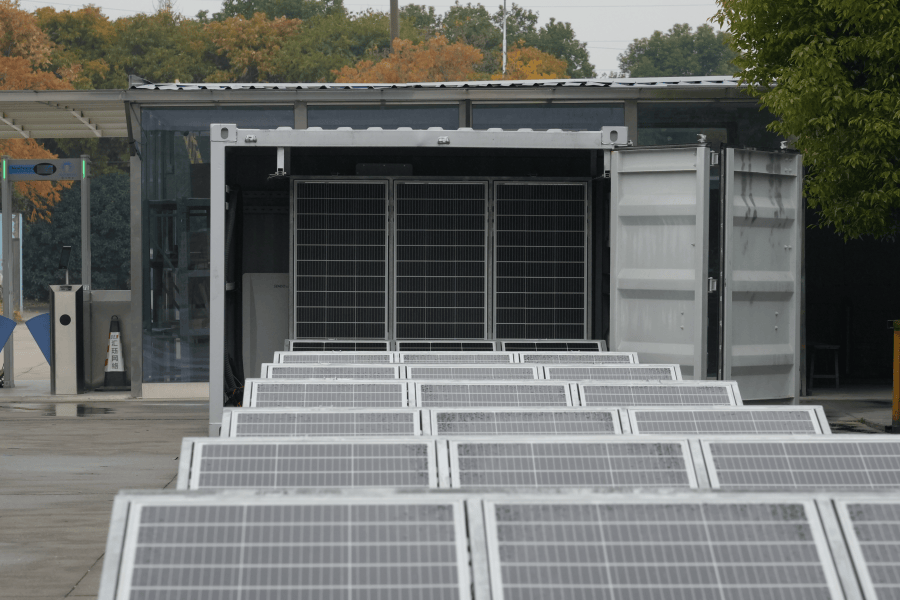
The solution was a containerized, air-cooled BESS with the precise specs we discussed. The system was designed for a 1.5C discharge to cover the 2-minute gap until generators were at full load. The thermal system was over-engineered for the worst-case scenario. The real "aha" moment for the client was during commissioning. We simulated a full load outage. The internal temperature gradient across the 280Ah LiFePO4 cells was less than 3C, thanks to the forced air design. It passed the local authority's inspection on the first try because we built to UL/IEC standards as a baseline, which often exceeds regional requirements. The system is now lowering their LCOE by also participating in grid frequency regulation when not on standby - a bonus revenue stream.
The Expert's Take: C-Rate, Heat, and Total Cost
Here's my insight, straight from the field. Decision-makers get hung up on "kWh per dollar." That's a part of LCOE, but a small one. The bigger levers are longevity and operational reliability.
C-Rate is a Stress Test: A battery discharging at a high C-rate is like an athlete sprinting. It generates immense heat. If the spec doesn't explicitly define the thermal performance at that rated discharge, you're buying a potential problem. Always ask for the temperature rise data at maximum continuous power output.
Thermal Management is Longevity Insurance: Every 10C above the optimal temperature range can halve battery life. A sophisticated air-cooling system, with proper CFD-modelled airflow, doesn't just prevent shutdowns; it protects your capital investment for 15+ years. It's the single biggest factor in a low LCOE.
Compliance is Not a Checklist: UL 9540 testing involves literally forcing a cell into thermal runaway and containing it. I've witnessed these tests. When you choose a system built around that standard from the ground up - like we do at Highjoule, with our cell-to-container safety architecture - you're not just buying a product. You're buying years of R&D and risk mitigation. That's what gives your CFO and CTO peace of mind.

So, the next time you review a technical specification for a data center backup BESS, look beyond the first page. Look for the details on heat, on power quality under stress, and the safety standards woven into the design. Ask your provider: "Show me the data from a real-world discharge test." Because when the lights flicker, that's the only spec that truly matters. What's the one backup power scenario that keeps you up at night?
Tags: UL Standard BESS LCOE Thermal Management US Market Europe Market Data Center Backup Air-cooled ESS
Author
James Zhang
20+ years agricultural energy storage engineer / Highjoule CTO