
LFP Pre-Integrated PV Container Cost for Rural Electrification in the Philippines
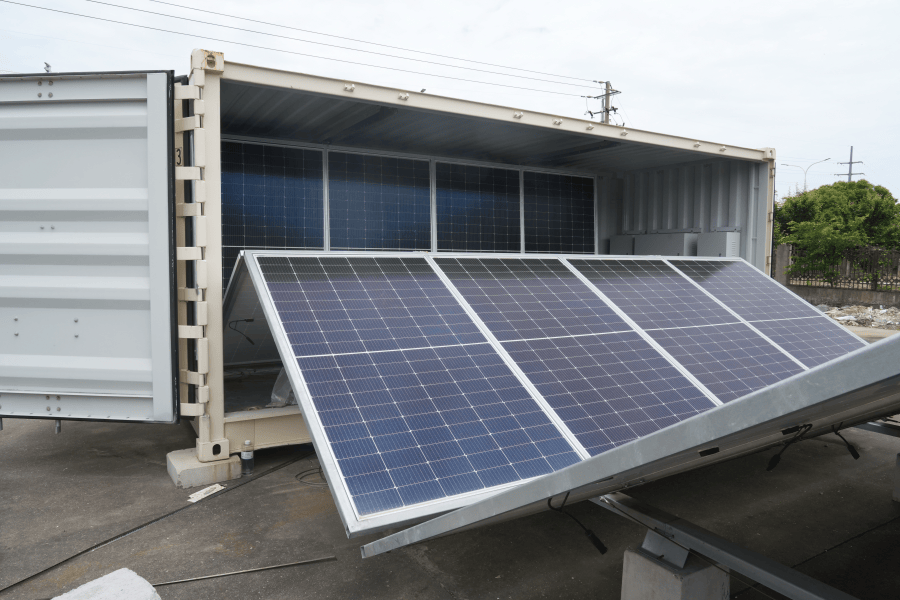
Table of Contents
- The Real Question Behind the Price Tag
- Why "Containerized" is the Smart Choice for Tough Places
- Breaking Down the Cost: More Than Just a Battery Box
- A Case in Point: Learning from a Texas Microgrid
- The Highjoule Approach: Engineering for Reality
- Your Next Step: Asking the Right Questions
The Real Question Behind the Price Tag
Honestly, when a project developer, an NGO, or a government planner asks me "How much does it cost for an LFP pre-integrated PV container for rural electrification in the Philippines?", I know they're asking the wrong question first. Or at least, an incomplete one. What they're really wrestling with isn't just a purchase price. It's the total cost of bringing reliable, safe, and sustainable power to a remote community - and making sure it keeps working for 15+ years in a challenging environment. I've seen this firsthand on site: a system that's cheap upfront but fails in year three due to poor thermal management isn't a solution; it's a very expensive lesson.
The core challenge, especially for decision-makers from Europe and the US looking at projects in regions like Southeast Asia, is bridging the gap between initial CapEx and long-term, real-world performance. You're not just buying a container; you're investing in a decades-long energy security partnership. The "pre-integrated" aspect is crucial here - it means the solar panels, LFP (LiFePO4) batteries, inverters, cooling, and safety systems are all assembled, tested, and certified in a controlled factory environment. This isn't a loose collection of parts shipped for on-site assembly. That distinction is everything for cost, safety, and speed.
Why "Containerized" is the Smart Choice for Tough Places
Let's talk about the environment. Rural Philippines means humidity, salt air (if coastal), high ambient temperatures, and possibly limited local technical expertise. Deploying a system designed for a temperature-controlled German industrial park is a recipe for disaster. According to a report by the International Renewable Energy Agency (IRENA), standardizing and pre-assembling renewable energy systems can reduce total installed costs by up to 20% for off-grid applications, primarily through slashing on-site labor and construction time.
This is where the containerized, pre-integrated model shines. It turns a complex construction project into a logistics and commissioning exercise. The real cost savings - and risk mitigation - come from:
- Reduced On-Site Time: Fewer skilled labor days in a remote location means lower costs and less exposure to weather delays.
- Predictable Performance: Factory testing under simulated loads (we often test at a 1C-rate for peak output validation) ensures the system works as promised before it ever leaves the dock.
- Inherent Safety & Compliance: A proper unit is built to international standards like UL 9540 for energy storage systems and IEC 62485 for stationary battery safety from the ground up. Trying to retrofit these standards in the field is nearly impossible and wildly expensive.

Breaking Down the Cost: More Than Just a Battery Box
So, to the numbers. A ballpark figure for a robust, commercial-grade 500kWh LFP pre-integrated PV container system suitable for a village microgrid might range from $250,000 to $400,000 USD, FOB. But that number is meaningless without the "why" behind the spread. The cost drivers are where your expertise as a buyer matters most.
| Cost Component | What It Covers | Why It Varies |
|---|---|---|
| Core Battery & Power Conversion | LFP cells, Battery Management System (BMS), Inverter/Charger | Cell quality (cycle life), inverter efficiency (e.g., 98% vs. 96%), C-rate capability (affects peak load handling). |
| Thermal Management System | HVAC, liquid cooling, insulation | Critical for Philippine heat. Passive cooling is cheaper but risky; active climate control adds cost but ensures lifespan. |
| Safety & Compliance | UL/IEC certification, fire suppression, gas venting, isolation | Non-negotiable for insurance and safety. "Uncertified" systems are cheaper and infinitely riskier. |
| Container & Integration | Marine-grade container, internal wiring, SCADA, monitoring | Degree of "plug-and-play." A system with remote monitoring saves huge OPEX. |
| Balance of System (BOS) | Mounting, cabling, switchgear | Often underestimated. Quality here prevents efficiency losses and failures. |
The most important metric isn't the upfront price - it's the Levelized Cost of Energy (LCOE). This calculates the total cost of owning and operating the system over its life, divided by the total energy it produces. A higher-quality, properly cooled LFP system with a 6,000+ cycle life will have a far lower LCOE than a cheaper, uncertified system that degrades quickly in the heat. You pay more tomorrow for saving too much today.
A Case in Point: Learning from a Texas Microgrid
While the Philippines is unique, the principles are universal. I recall a project we supported in rural Texas - a remote agricultural processing facility. The challenge was similar: off-grid reliability, high temperatures, and limited maintenance. The client initially looked at a low-cost, non-integrated battery bank. We advocated for a UL 9540-certified, containerized LFP solution with robust cooling.
The result? The higher initial investment was offset by zero unplanned downtime in three years, lower insurance premiums due to the certification, and the ability to handle peak processing loads (high C-rate events) without breaking a sweat. The remote monitoring meant a fault in a battery string was diagnosed and a repair plan dispatched before the local operator even noticed a dip in performance. This is the model you want for a Philippine island community: resilience through smart design, not just more hardware.
The Highjoule Approach: Engineering for Reality
At Highjoule, when we build a pre-integrated solution for a market like the Philippines, we start with the environment and the end-user. Our engineering focus is on adaptability and serviceability. For instance, our standard platform uses a modular LFP battery design within the container. If a module needs service, it can be isolated and replaced without taking the entire community offline. Our thermal management is oversized for tropical climates, because we know a 35C day is the norm, not the exception.
We also build to the highest relevant standards - UL, IEC, IEEE - not because it's a marketing checkbox, but because these standards encapsulate decades of hard-won safety knowledge. This directly impacts long-term cost. A system that meets these benchmarks is easier to finance, insure, and maintain. It gives donors, investors, and community leaders peace of mind that goes beyond a spec sheet.

Your Next Step: Asking the Right Questions
So, instead of just "How much?", start your next vendor conversation with these questions:
- "Can you show me the UL 9540 or IEC 62933 certification for the entire container system, not just the components?"
- "What is the designed cycle life of the LFP batteries at 100% DoD and at an ambient temperature of 35C?"
- "How does the thermal management system maintain optimal cell temperature, and what is its power draw?" (This affects your net energy output).
- "What is the projected LCOE for this system over 15 years in my specific location?"
- "What is the protocol for remote monitoring, diagnostics, and local technician support?"
The right partner won't just give you a quote; they'll help you build the business case for a system that truly electrifies a community for a generation. The goal isn't to buy a container. It's to buy light, cooling, power for a clinic, and opportunity. What's the real cost of getting that wrong?
Tags: UL Standard BESS LCOE Renewable Energy Rural Electrification Lithium Iron Phosphate Philippines Off-Grid
Author
James Zhang
20+ years agricultural energy storage engineer / Highjoule CTO