
Deploying Durable Mobile BESS in Harsh Environments: Lessons from Mauritania Mining
When Your Battery Storage Needs to Survive the Real World: A Field Engineer's Perspective
Honestly, after two decades of deploying battery storage from the deserts of Arizona to the offshore platforms in the North Sea, I've learned one thing: spec sheets are one thing, but on-site reality is another. You can have the most elegant battery chemistry on paper, but if the enclosure can't handle a salt-laden breeze or a month of abrasive dust, your entire project's ROI goes out the window. I've seen this firsthand. Today, I want to chat about a challenge we're seeing more of in both the US and Europe: deploying reliable, safe energy storage in the world's most punishing environments - and what a mining project in Mauritania taught us about getting it right for industrial clients everywhere.
Quick Navigation
- The Real Problem: It's Not Just the Battery, It's the Box
- The Staggering Hidden Cost of Corrosion & Contamination
- The Mobile Power Advantage: Agility Meets Durability
- Lessons from the Field: The Mauritania Mining Benchmark
- Key Specs Decoded for the Non-Engineer
- Applying These Lessons to Your US or European Site
The Real Problem: It's Not Just the Battery, It's the Box
Talk to any project developer in the US Gulf Coast, the Nordic coasts, or heavy industrial zones, and they'll share the same headache. You're under pressure to integrate renewables, manage demand charges, and ensure backup power. A Battery Energy Storage System (BESS) seems the perfect fit. But standard ISO containers or basic enclosures? They aren't built for the long-term assault of chlorides, sulfur compounds, or fine particulate matter. The International Energy Agency (IEA) has highlighted that durability and longevity are critical barriers for energy storage in emerging markets, but let me tell you, it's a huge issue in "mature" markets too when you step off the paved road. Corrosion on electrical busbars, clogged thermal management systems, and sensor failures - these aren't minor nuisances. They lead to unplanned downtime, safety risks, and a levelized cost of energy (LCOE) that spirals out of control.
The Staggering Hidden Cost of Corrosion & Contamination
Let's agitate that pain point a bit. Think about a standard industrial BESS installation. The focus is almost always on the battery cells' cycle life and the inverter's efficiency. But what about the enclosure protecting a multi-million dollar asset? According to a NREL report on BESS reliability, environmental stressors are a leading contributor to performance degradation and safety incidents. A corroded connection can create a hot spot, leading to a thermal runaway event - our absolute worst-case scenario on site. From a pure business standpoint, premature failure of ancillary components can slash your system's operational life from 15 years to maybe 7 or 8. You're not just replacing a cable tray; you're facing a complex, expensive de-energization and re-commissioning process. The financial model completely unravels.

The Mobile Power Advantage: Agility Meets Durability
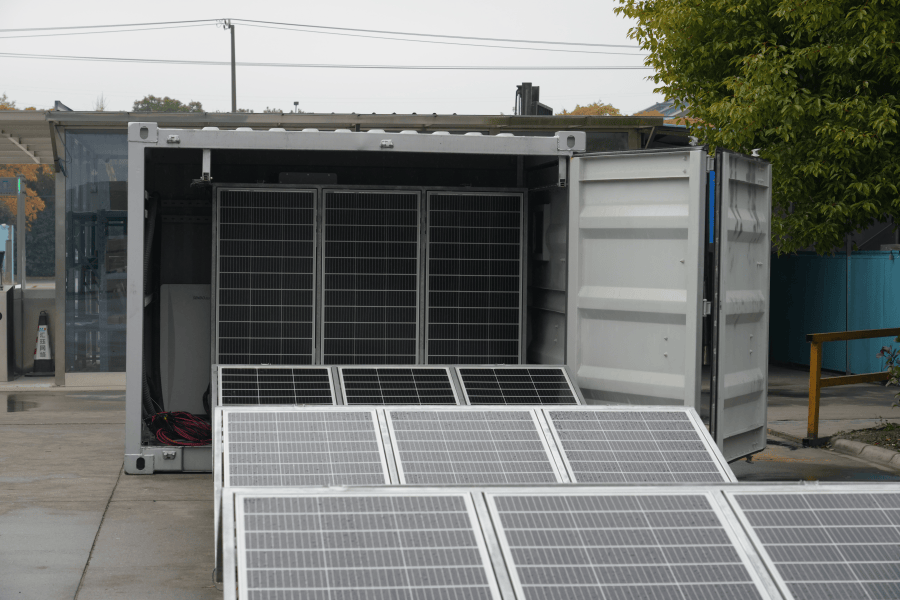
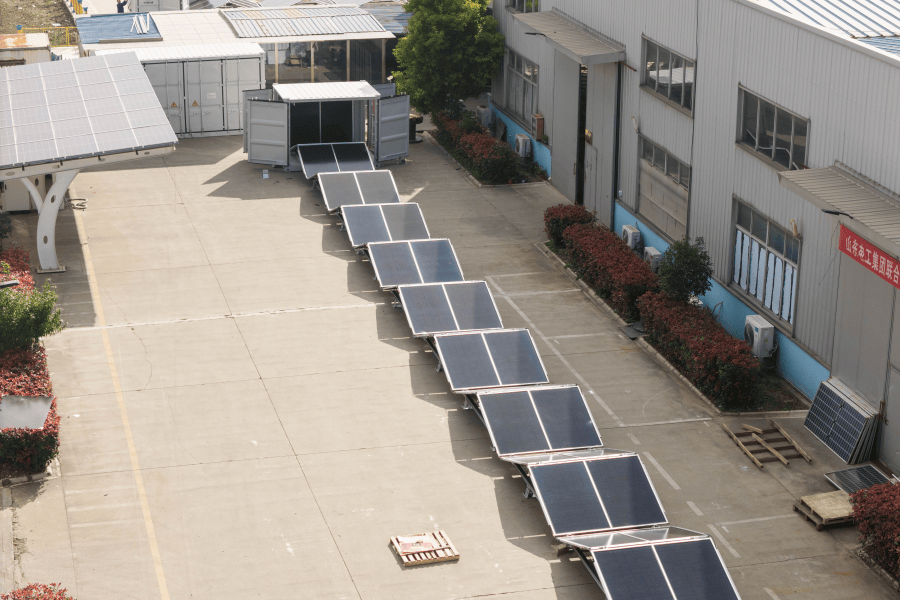
This is where the concept of a purpose-built, mobile power container moves from a "nice-to-have" to a "must-have" for many of our clients. It's not just about being on a trailer. It's about a holistic design philosophy where mobility and extreme durability converge. The goal is a self-contained, plug-and-play power asset that you can deploy at a remote mine site this year, and then relocate to a new chemical processing plant in five years, with its integrity and performance fully intact. This radically improves your asset utilization and protects your capital investment. At Highjoule, we've been iterating on this concept for years, and it was a project in Mauritania that really pushed the specs to the limit.
Lessons from the Field: The Mauritania Mining Benchmark
We were tasked with powering a remote mining operation in Mauritania - an environment with extreme heat, abrasive sandstorms, and pervasive coastal salt spray. The client needed reliable, diesel-offset power for processing, and a standard container was a non-starter. The technical specification for what became our C5-M series mobile power container was born from this fire. Every component was selected and tested for that environment. We're talking C5-M level anti-corrosion coating (a severe industrial marine rating), IP65 sealing throughout, and a multi-stage filtration system for the thermal management that could handle fine sand. The battery modules themselves were specified with a conservative C-rate to reduce heat stress, and the entire system was pre-certified to UL 9540 and IEC 62933 standards, which was crucial for the international investor group.
The result? A system that's been running with over 98% availability in conditions that would cripple a standard unit. The mobile design meant it was commissioned in weeks, not months, and the client now views it as a strategic asset they can move as their mining faces shift.
Key Specs Decoded for the Non-Engineer
When you look at a spec sheet like from the Mauritania project, here's what you, as a decision-maker, should really focus on:
- C5-M Anti-Corrosion: This isn't just a thicker coat of paint. It's a rigorous ISO 12944 standard for environments with high salinity and industrial pollution. It means every bolt, hinge, and panel is protected. This is what gives you the 20+ year lifespan.
- Thermal Management with Filtration: The cooling system is the BESS's lungs. In dusty or salty air, standard systems choke. Look for explicit filtration ratings and redundancy. Ours uses a positive-pressure, filtered air system to keep the battery hall clean and cool, which is non-negotiable for safety and cycle life.
- LCOE Optimization (The Bottom Line): All these specs feed into one number: Levelized Cost of Energy. A more durable system has higher upfront cost but far lower operational and replacement costs over 20 years. By eliminating corrosion failures and maximizing battery life through superior cooling, we drive that LCOE down for the total project lifecycle.
Applying These Lessons to Your US or European Site
So, how does a mining solution in Africa relate to a factory in Ohio or a wind farm in Scotland? The environmental challenges are often more similar than you think. Industrial corridors, coastal sites, and agricultural areas all present unique corrosion and contamination profiles.
The engineering principles validated in Mauritania are directly applicable. For our clients in the EU and US, it means we deliver a mobile power container that isn't over-engineered, but right-engineered. It comes pre-packaged with all the UL and IEC certifications you need for local permitting, which is a huge time-saver. Our local teams handle the grid interconnection studies and commissioning, but the core unit's resilience is battle-tested. Whether you're looking for temporary power during a plant upgrade, a resilient microgrid for a critical facility, or a way to firm up a windy, coastal solar farm, the mindset is the same: start with a platform built to survive, so the sophisticated technology inside can thrive.
What's the most challenging environment you're considering for energy storage? I'd be curious to hear what unique site conditions you're grappling with.
Tags: Mobile BESS LCOE Optimization UL Standards Industrial Energy Storage Anti-corrosion Mining Operations
Author
James Zhang
20+ years agricultural energy storage engineer / Highjoule CTO