
Cost of Rapid Deployment Pre-integrated PV Container for Data Center Backup
In This Article
- The Real Problem Isn't Just the Price Tag
- Breaking Down "The Cost": It's More Than Hardware
- The Power of Pre-Integration: Where the Real Savings Live
- A Tale of Two Sites: Seeing the Difference Firsthand
- Key Considerations Beyond the Quote
- So, What Should You Ask Instead?
The Real Problem Isn't Just the Price Tag
Honestly, when a data center operator asks me "How much does a rapid deployment pre-integrated PV container cost?", I get it. You need a number for the budget. But having spent over two decades on sites from Silicon Valley to Frankfurt, I've learned that focusing solely on the upfront capital expenditure (CAPEX) is the first, and often most expensive, mistake. The real pain point isn't the initial invoice; it's the hidden cost of time, complexity, and uncertainty that comes with traditional, piecemeal backup power builds.
Let me paint a picture I've seen too many times. A data center needs to expand its backup runtime or incorporate renewables to meet ESG goals. The team sources PV panels from one vendor, inverters from another, a battery rack from a third, and then hires a separate EPC (Engineering, Procurement, and Construction) firm to tie it all together on a concrete pad. What happens? Months of design coordination, permitting headaches with local authorities over every individual component, and a spider web of wiring and conduit on site that makes my engineer's heart sink. The system might eventually pass UL 9540 or IEC 62933 standards, but the journey there is fraught with delays, change orders, and finger-pointing between suppliers when something - and something always does - doesn't interface perfectly.
This agitates your core business. Every week of delay is a week your data hall isn't generating revenue or a week you're exposed to grid instability. The NREL has highlighted that data center outages can cost over $9,000 per minute. When your backup system is a complex construction project, the risk of those minutes adding up is real.
Breaking Down "The Cost": It's More Than Hardware
So, let's talk numbers, but the right ones. The cost for a rapid-deployment solution breaks down into visible and invisible buckets.
The Visible (The Quote):
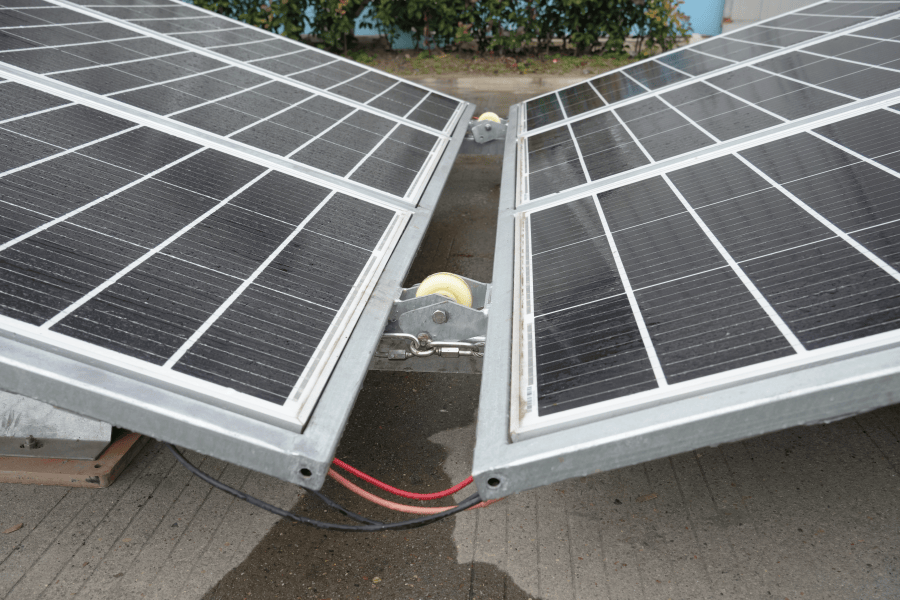
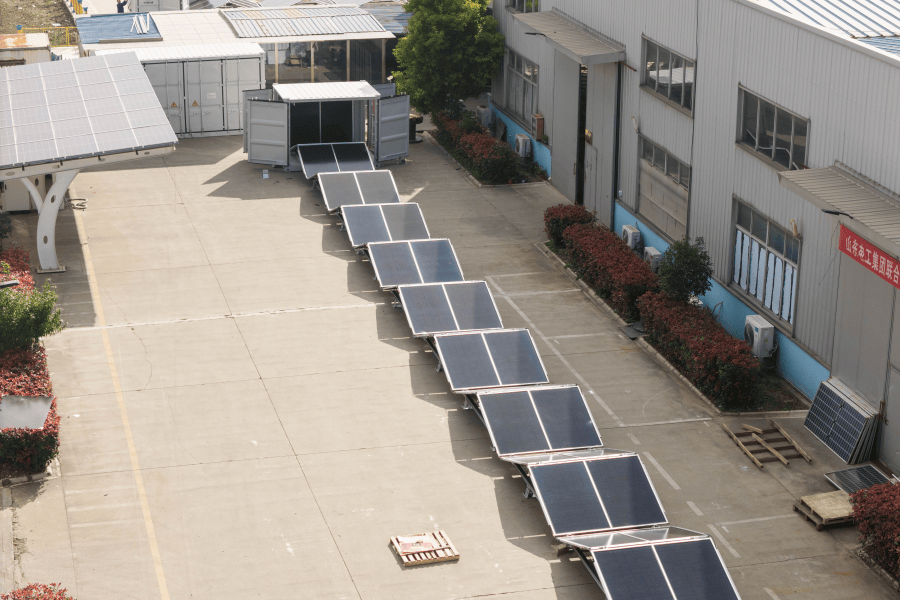
- Containerized Unit: This is the all-in-one box - the PV-ready canopy, the battery racks (typically Lithium Iron Phosphate, LFP, for safety), the power conversion system (PCS), thermal management, and the factory-integrated control brains. Price scales with capacity (kWh) and power output (kW).
- Balance of System (BOS): Site-specific switchgear, transformers, and the final connection to your data center's critical bus.
The Invisible (The Real Cost Drivers):
- Soft Costs: Engineering, permitting, and interconnection studies. A pre-certified, pre-integrated container can slash these by up to 40% because it's treated as a single, approved piece of equipment.
- Time-to-Power: This is huge. A traditional build can take 12-18 months. A rapid-deployment container, like the ones we deploy at Highjoule, can be online in under 6 months. The revenue you protect or generate by being live sooner is a massive negative cost.
- Levelized Cost of Energy (LCOE): This is the metric finance folks care about. It's the total lifetime cost of your backup power per kWh. A cheaper, less efficient system with poor thermal management will have a higher LCOE because it degrades faster. Smart, liquid-cooled systems maintain optimal temperature, extending battery life and lowering your LCOE - even if the initial price is a bit higher.

The Power of Pre-Integration: Where the Real Savings Live
This is where the "rapid deployment pre-integrated" part pays for itself. At Highjoule, we don't just ship you a container and a pile of manuals. We ship a pre-assembled, pre-tested, and pre-certified power plant. Every wire, every busbar, every safety relay is installed and validated in our factory under controlled conditions. This means:
- Predictable Compliance: The entire unit is built to UL 9540 or the relevant IEC standard from the get-go. The local inspector isn't looking at 1000 individual parts; they're verifying one integrated system with a clear certification dossier. It makes the permitting process, honestly, a breeze compared to the alternative.
- Slash On-Site Labor: I've been on sites where we literally drop the container, connect three main cables (power, data, grid), and start commissioning. The 6-12 months of on-site electrical work vanishes. That's less risk, less safety oversight needed, and dramatically lower labor costs.
- Optimized Performance: Because we control the integration, we can match the battery's C-rate (its charge/discharge speed) perfectly to the inverter and the thermal system. No more undersized cooling or overstressed components. This harmony is what delivers that lower, more predictable LCOE over 15-20 years.
A Tale of Two Sites: Seeing the Difference Firsthand
Let me give you a real-world contrast from my notebook. We had two projects with similar power needs: a 2 MW / 4 MWh backup system.
Project A (Traditional Build, Midwest US): The client went the multi-vendor route. They saved maybe 10% on the initial hardware quote. But the project faced 5 months of delays due to incompatible communication protocols between the battery management system and the inverter. The on-site concrete and electrical work went over budget by 25%. They finally got commissioned after 16 months.
Project B (Highjoule Pre-Integrated Container, Germany): The client chose our HPC-DC Series container. The unit arrived at their site near Frankfurt with full IEC 62933 documentation. From site preparation to final grid interconnection approval, it took 5 months. The total installed cost was transparent and within 3% of the original fixed-price contract. They've been live for 18 months now, and our remote monitoring shows the thermal system is keeping the battery cells within a 2C range - optimal for longevity.
The German site's CFO wasn't just looking at the purchase order; he was looking at the total cost of ownership and the avoided risk. That's the mindset shift.
Key Considerations Beyond the Quote
When you're evaluating costs, drill into these specifics with any vendor:
- Thermal Management: Is it air-cooled or liquid-cooled? For data center-grade reliability and lifespan in variable climates, liquid cooling is becoming the de facto standard. It adds to CAPEX but drastically reduces LCOE.
- Grid Compliance & Black Start: Can the system seamlessly island your data center and then black-start it? This isn't a given. The intelligence to do this safely is baked into the pre-integrated controls.
- Service & Warranty: What's the guaranteed response time for service? A low upfront cost means nothing if the vendor can't support you locally. Our model at Highjoule includes embedded remote diagnostics and a network of local tech partners in both Europe and North America.
So, What Should You Ask Instead?
Instead of "How much does the container cost?", start the conversation with:
- "What is the total installed cost for a fully operational system at my specific site location?"
- "What is the projected Levelized Cost of Energy (LCOE) over a 20-year period for your solution?"
- "Can you provide a fixed-price, turnkey proposal that includes all permitting, interconnection, and commissioning?"
- "Show me the certification documents (UL/IEC) for the complete, integrated system, not just the components."
The market is moving fast. The right rapid-deployment solution isn't an expense; it's an insurance policy and a revenue-enabling asset. The cheapest option today could be the most costly one over the life of your data center. What's the cost of not having reliable, swift-to-deploy backup power the next time the grid flickers?
Tags: UL Standard BESS LCOE Renewable Energy Data Center Backup Microgrid Pre-integrated Container
Author
James Zhang
20+ years agricultural energy storage engineer / Highjoule CTO