
Wholesale Price of IP54 Outdoor Mobile Power Container for Construction Site Power | Expert Insight
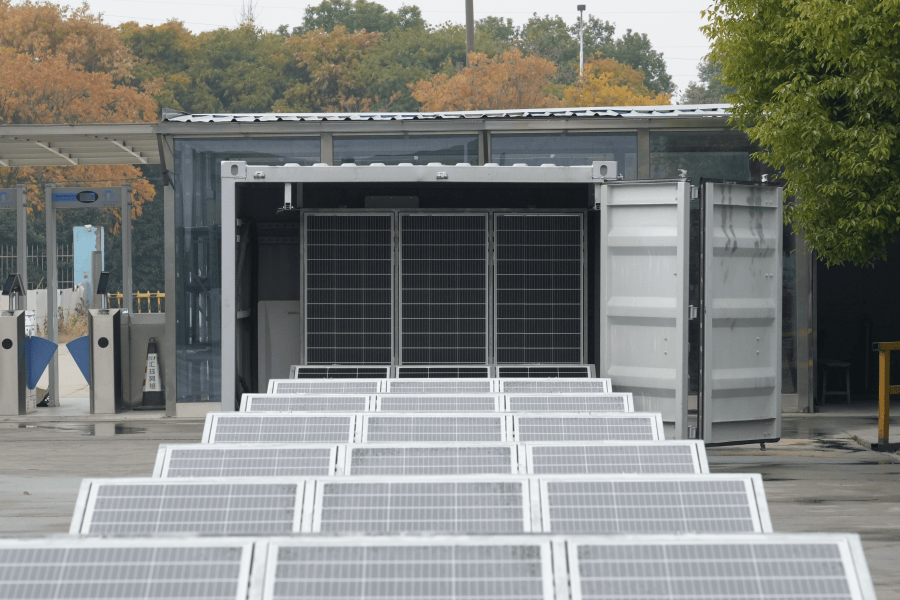
Beyond the Price Tag: What You're Really Buying with a Mobile Power Container
Hey there. Let's be honest, when you're sourcing power for a remote site or a big construction project, that wholesale price of an IP54 outdoor mobile power container is the first number you look at. I've been there, both as the guy signing the purchase orders and the one knee-deep in mud trying to get the system running on a Tuesday morning. That initial quote is just the beginning of the conversation. What we really need to talk about is what that price actually gets you in terms of safety, uptime, and total cost of ownership over the life of your project.
Jump to Section
- The "Hidden Cost" of a Cheap Power Solution
- Safety Isn't Optional: It's a Financial Imperative
- The Math on Mobility and Rapid Deployment
- Thinking in LCOE, Not Just CAPEX
- A Real-World Test: California Meets IP54
- Asking the Right Questions Before You Buy
The "Hidden Cost" of a Cheap Power Solution
Here's a phenomenon I see constantly: a project manager finds a container at a rock-bottom wholesale price. It shows up, and the headaches begin. Maybe the ingress protection (that's what the "IP54" is all about) isn't quite right, and a heavy rainstorm finds its way to the busbars. Or the thermal management system can't keep up during a heatwave, forcing you to derate the output or risk damage. Suddenly, you're paying for diesel genset overtime, work stoppages, and emergency service calls. That "great deal" just evaporated.
According to the National Renewable Energy Laboratory (NREL), unplanned downtime in distributed energy resources can inflate operational costs by 30-40% versus a reliable, well-engineered system. You're not just buying a box of batteries; you're buying predictable power. The true cost is the Wholesale Price plus the risk of it failing.
Safety Isn't Optional: It's a Financial Imperative
This is where my engineer's hat goes on tight. In the US and EU, standards like UL 9540, IEC 62619, and IEEE 1547 aren't just nice-to-haves - they're your shield. A container built to these standards has undergone rigorous testing for electrical safety, fire containment, and grid interaction. I've seen firsthand on site how a properly certified system's internal protection halted a thermal runaway event. It contained it. That's the difference between a manageable incident and a catastrophic loss that shuts down your entire site, triggers insurance nightmares, and brings in regulators.
When you evaluate that Wholesale Price of an IP54 Outdoor Mobile Power Container, you must ask: "Is this price inclusive of full UL/IEC certification, or is it a prototype hoping to pass?" The compliance paperwork isn't bureaucracy; it's proof of a safety-first design philosophy that protects your people and your investment.
Key System Components That Impact Price & Performance
| Component | Cheap Option Risk | Engineered Solution Value |
|---|---|---|
| Battery Cells & C-rate | Low C-rate, slow charge/discharge, inefficient for load shifting. | High-quality cells with optimal C-rate for construction duty cycles (rapid crane movements, tool use). |
| Thermal Management | Basic fans; poor temperature uniformity leads to cell degradation. | Liquid cooling or advanced forced-air systems for even temps, longer lifespan. |
| Enclosure (IP54) | Gaskets degrade, hinges fail, dust ingress damages electronics. | Robust design with tested seals, corrosion-resistant hardware for true outdoor durability. |
| Grid-Forming Inverter | Basic unit; can't "black start" or stabilize a microgrid. | Advanced inverter providing grid stability, allowing pure renewable operation. |
The Math on Mobility and Rapid Deployment
"Mobile" should mean "plug-and-play," not "re-engineer-on-every-site." A well-designed container from a company like Highjoule is literally towed in, connected to your pre-configured hookups, and powered up within a day. I've deployed them from Texas to Bavaria. The savings here are in man-hours and schedule certainty. If your "mobile" unit requires a week of electrical refitting and a custom foundation at each new location, you're bleeding money.
The IP54 rating is crucial here. It means protected against dust and water splashes from any direction. On a construction site, that's not a luxury; it's the baseline environment.
Thinking in LCOE, Not Just CAPEX
Let's get a bit technical in a simple way. The wholesale price is your Capital Expenditure (CAPEX). But the smarter metric is Levelized Cost of Energy (LCOE). LCOE factors in everything: the initial price, installation, fuel (or solar!), maintenance, and the system's lifespan.
A higher-quality container might have a 15% higher upfront cost. But if its superior thermal management and cell chemistry give you twice the cycle life and 20% higher efficiency, your LCOE plummets. You're saving money for years. This is where Highjoule's design focus pays off - we engineer for the lowest possible LCOE, not the lowest sticker price, because that's what saves our clients real money over a 5 or 10-year horizon.

A Real-World Test: California Meets IP54
Let me give you a case from last year. A large-scale solar farm construction in the Central Valley. Challenge: provide reliable, quiet power for the commissioning crew and office trailers without the constant noise, fuel cost, and emissions of diesel gensets. The site was dusty, hot (over 45C/113F), and remote.
We delivered a 500kWh IP54 mobile container paired with a temporary solar array. The system had to be UL 9540 certified for fire safety (a major local concern) and handle the brutal heat. The advanced liquid cooling kept the batteries at optimal temperature, maintaining full output. Over six months, the project saved an estimated 40,000 liters of diesel and avoided countless tons of CO2. The upfront investment was justified in fuel savings alone, not to mention the goodwill from running a cleaner, quieter site. The unit has since been redeployed to a new project in Oregon - true mobility in action.
Asking the Right Questions Before You Buy
So, when you're comparing quotes for the Wholesale Price of IP54 Outdoor Mobile Power Container for Construction Site Power, move beyond the number. Have a coffee with your vendor (or give me a virtual call) and ask:
- "Can I see the full certification reports for UL 9540 / IEC 62619?"
- "What is the expected cycle life at the C-rate my site demands?"
- "What does the thermal management system look like, and what's the warranty on it?"
- "Do you provide local commissioning support and a spare parts guarantee?"
- "Can you model the projected LCOE for my specific duty cycle?"
The right partner will have these answers ready, because they've been on site, they've seen what goes wrong, and they've built the solution to last. That's the real value hidden inside that price. What's the one reliability challenge that's costing you the most on your current site?
Tags: Construction Site Power UL Standard BESS LCOE Europe US Market Renewable Energy Mobile Energy Storage
Author
James Zhang
20+ years agricultural energy storage engineer / Highjoule CTO