
Smart BESS Container Cost for Data Center Backup: A Real-World Breakdown
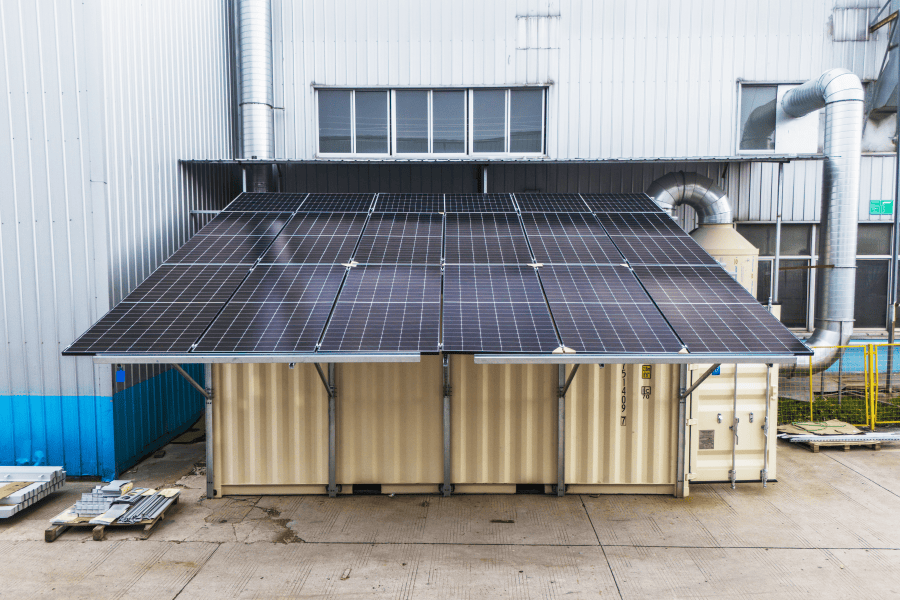
Table of Contents
- The Real Problem: It's Never Just About the Price Tag
- Why "Cheaper" Upfront Can Cost You Millions Later
- Breaking Down the Cost: The Smart, Pre-Integrated Container Solution
- Case in Point: A 20MW Data Center in Frankfurt
- Expert Insight: The Hidden Levers in Your Total Cost
- Making the Decision: What to Ask Your Vendor
The Real Problem: It's Never Just About the Price Tag
Honestly, when a data center operator asks me "How much does it cost for a smart BMS monitored pre-integrated PV container for backup power?", I know they're looking for a number. But after two decades on sites from Texas to Bavaria, I've learned the hard way that giving a simple per-kWh price is almost misleading. The real pain point isn't the initial capital expenditure (CAPEX). It's the terrifying uncertainty around total lifetime cost, system reliability during a critical outage, and navigating the maze of local codes like UL 9540 and IEC 62933.
You're not just buying a box of batteries. You're investing in the insurance policy for your entire digital infrastructure. The core problem is that traditional, piecemeal BESS deployments for data centers often lead to hidden costs: integration nightmares, compliance delays, and thermal management issues that surface only during a stress test - or worse, during an actual grid failure.
Why "Cheaper" Upfront Can Cost You Millions Later
Let me paint a picture from a site visit a few years back. A mid-sized colocation provider in the Midwest opted for a low-bid, non-integrated system. The cells were fine, but the BMS was basic, the thermal management was undersized, and the container wasn't pre-certified. During commissioning, they faced a 12-week delay to get UL fire safety approval. Then, they discovered the "cheap" BMS couldn't provide the granular, real-time cell-level data their facility management system required for uptime SLAs. The integration costs ballooned by over 40%. According to the National Renewable Energy Laboratory (NREL), integration and soft costs can represent 30-50% of total system cost for non-optimized deployments. That's where the pain truly is.
For a data center, a backup power failure isn't an operational hiccup; it's a catastrophic event. A weak link in the BMS or an unexpected shutdown due to thermal runaway can mean breached contracts, lost data, and reputational damage that no amount of "savings" can cover.
Breaking Down the Cost: The Smart, Pre-Integrated Container Solution
So, let's tackle the question head-on. The cost for a smart BMS-monitored, pre-integrated PV container system is typically framed as a Levelized Cost of Storage (LCOS) C the all-in lifetime cost per kWh stored and delivered. For a commercial/industrial-scale system tailored for data center backup (think 1MW/2MWh to 10MW/20MWh+), you're looking at a CAPEX range. But remember, this is for a true solution:
- Pre-Integrated & Pre-Tested Container: Factory-assembled with batteries, HVAC, fire suppression (typically Novec 1230 or similar), power conversion (PCS), and the smart BMS. This eliminates 80% of on-site integration risk and time.
- Smart, UL-Listed BMS: Not just monitoring voltage and temperature. We're talking about predictive analytics, state-of-health (SOH) tracking, and seamless communication with your SCADA via standard protocols.
- Grid & PV-Ready Design: Built-in provisions to connect to solar PV arrays and the local grid, turning your backup asset into a revenue-generating resource during normal operation (through peak shaving, frequency regulation).
The value isn't in the individual components; it's in the certainty. You get a known, fixed cost for a known, performance-guaranteed outcome. At Highjoule, our engineering focus is on designing out these lifetime cost uncertainties from the start - using UL 9540A tested enclosures and BMS software that we've refined across hundreds of deployments.
Case in Point: A 20MW Data Center in Frankfurt
Let's get concrete. We deployed a 4MW/8MWh pre-integrated container system for a hyperscaler's facility in Frankfurt. Their challenge was dual: meet stringent German grid connection standards (BDEW) and provide < 2-minute backup ride-through for critical loads, all while keeping operational overhead near zero.
The "cost" conversation started at the container price but quickly moved to operational savings. Because the system was pre-certified, we cut the permitting and commissioning timeline by 60%. The smart BMS provides such granular data that their team can predict maintenance needs quarters in advance, avoiding unplanned downtime. Furthermore, by participating in the German primary control reserve market during normal times, the system generates significant annual revenue, directly improving its net LCOS. Honestly, I've seen this firsthand on site - the finance team was more excited about the revenue stack than the engineers were about the cycle life.

Expert Insight: The Hidden Levers in Your Total Cost
Here's the insider perspective you won't get from a spec sheet. Three technical factors massively sway your real-world cost:
- C-rate and Thermal Management: A data center backup needs high power (a high C-rate) fast. Pushing batteries hard generates heat. If your thermal management is marginal, you degrade cells quickly, slashing system life and doubling your lifetime cost. An overspecced cooling system wastes CAPEX. The sweet spot is an adaptive system, monitored and controlled by that smart BMS, which our containers utilize.
- LCOE/LCOS is Your North Star: Don't fixate on $/kWh of battery capacity. Focus on the Levelized Cost of Energy/Storage over 15-20 years. A premium smart BMS and robust thermal design might add 10-15% to CAPEX but can reduce LCOS by 30% through longer life, higher efficiency, and revenue opportunities. The International Renewable Energy Agency (IRENA) notes that advancing system integration and software is key to driving down LCOS, more so than cell chemistry alone.
- The "Pre-Integrated" Premium: Yes, you pay more upfront for a plug-and-play container. But you eliminate the "truck roll" tax - the cost of sending separate teams for electrical, civil, and controls work. For a critical facility, the avoided risk of integration errors is worth its weight in gold.
Making the Decision: What to Ask Your Vendor
So, when you're evaluating costs, shift the conversation. Ask your potential supplier:
- "Can you provide a detailed LCOS model, not just a CAPEX quote?"
- "Is the entire container system UL 9540/9540A listed, or just the cells?"
- "Show me the BMS data interface. Can it feed real-time, cell-level diagnostics into my existing building management system?"
- "What is the projected round-trip efficiency at my specific discharge rate, after 10 years?"
Our approach at Highjoule is to co-develop this analysis with you. We'll walk you through real performance data from similar climates and use cases, because the right number depends entirely on your specific site, grid profile, and risk tolerance. The final cost isn't a mystery; it's the outcome of a good design and a partnership built on transparent, field-proven experience.
What's the one operational risk in your current backup strategy that keeps you up at night? Let's start the conversation there.
Tags: UL Standard BESS LCOE Data Center Backup Power US Europe Market Smart BMS Pre-integrated Container
Author
James Zhang
20+ years agricultural energy storage engineer / Highjoule CTO