
Step-by-step Installation of High-voltage DC Mobile Power Container for Military Bases
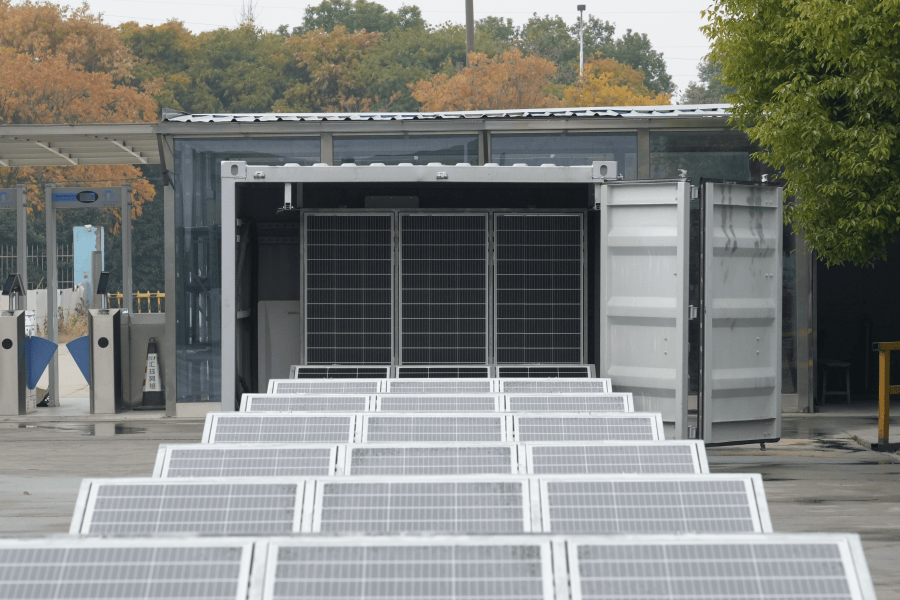
Table of Contents
- The Silent Energy Problem on the Modern Base
- Why Traditional Solutions Fall Short (And It's Not Just About Cost)
- The Mobile Power Container: More Than Just a Box of Batteries
- The Installation Blueprint: A Step-by-Step Walkthrough
- Real-World Deployment: A Case from Europe
- Expert Insights: The Devil is in the Details
- Beyond Installation: The Long Game
The Silent Energy Problem on the Modern Base
Let's be honest. When we talk about military base readiness, we picture advanced hardware, trained personnel, and robust intelligence. We rarely picture the electrical substation or the diesel generators humming in the background. But I've seen firsthand on site how a single point of failure in the power infrastructure can bring critical operations to a standstill. The modern base is a massive energy consumer - data centers, communications arrays, surveillance systems, living quarters - all demanding clean, continuous, and, above all, secure power.
The core problem isn't just having power; it's about energy resilience and tactical flexibility. Grid power is vulnerable. Traditional backup gensets are loud, have a fuel logistics tail, and take precious minutes to spin up. What happens in those minutes? A 2023 report by the U.S. Department of Defense's Office of the Inspector General highlighted energy security as a critical operational vulnerability, noting that aging infrastructure and centralized power systems present significant risks. That's the reality commanders are facing.
Why Traditional Solutions Fall Short (And It's Not Just About Cost)
So, we bring in more diesel generators, right? It's the old playbook. But let's agitate that thought for a second. I've been called to sites where the "solution" became the problem.
- Fuel Dependency & Logistics: A generator is only as good as its fuel supply. That means storage, transport, and security - a massive logistical burden and a glaring tactical vulnerability.
- Acoustic and Thermal Signature: In a contested environment, the roar of a diesel engine and its heat plume are like a beacon saying, "Critical assets here!"
- Ramp Time & Power Quality: Mission-critical electronics don't like dirty power or interruptions. That 30-second to 2-minute switchover during a grid outage? For some systems, that's an eternity.
- Maintenance & Lifespan: Constant maintenance cycles, oil changes, filter replacements - it adds up in total cost of ownership, far beyond the initial purchase price.
The need is clear: a quiet, rapidly deployable, fuel-independent power source that can provide instant, high-quality power and integrate with renewables like solar. That's where the modern high-voltage DC mobile power container enters the chat.
The Mobile Power Container: More Than Just a Box of Batteries
This isn't a glorified RV battery pack. A properly engineered mobile power container is a self-contained, climate-controlled, and highly secure energy asset. At Highjoule, we view it as a tactical platform. The key is that it's built around a high-voltage DC bus. Why DC? Efficiency. When you're integrating large-scale solar PV (which produces DC) and storing energy in batteries (which are DC), keeping the system on a common DC bus eliminates multiple AC/DC conversion steps. This can boost overall system efficiency by 3-5% - which, when you're talking about megawatt-hours, translates directly into extended runtime and lower operational cost (LCOE).
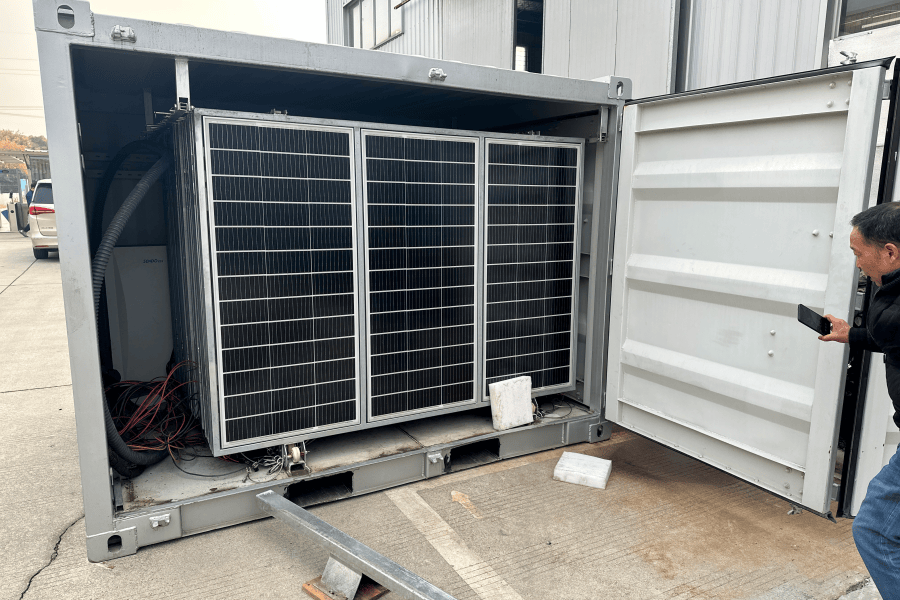
More importantly, from an installation standpoint, a pre-fabricated, pre-tested containerized solution changes the game. It shifts complexity from the stressful, weather-dependent field site to the controlled factory floor. This is where standards like UL 9540 for Energy Storage Systems and IEEE 1547 for grid interconnection come in. Our containers are certified to these and other relevant military standards (MIL-STD) from the get-go, so the installation focus shifts from "will this work?" to "where does it plug in?"
The Installation Blueprint: A Step-by-Step Walkthrough
Based on two decades of deploying these systems from Texas to Tasmania, here's the real-world, step-by-step process that ensures success. Forget the glossy brochure; this is what actually happens.
Phase 1: Pre-Staging & Site Assessment (The Most Critical Phase)
This happens weeks before the container hits the road. Our team conducts a virtual and then physical site survey. We're not just looking for a flat spot of gravel. We're analyzing:
- Soil Bearing Capacity: Can it support a 40+ ton container, especially under dynamic loads?
- Access Routes: Can a heavy transport vehicle safely navigate to the exact location?
- Utility Interconnection Point: Distance to the main switchgear, cable routing paths, and existing protection schemes.
- Environmental Factors: Prevailing wind (for thermal management vents), sun path (if co-locating with solar), and flood risk.
Honestly, 80% of potential issues are identified and solved here. We produce a detailed Site Installation Plan (SIP) that becomes the bible for the actual rollout.
Phase 2: Foundation & Civil Works
The container needs a stable, level, and bonded foundation. Typically, this is a reinforced concrete pad with embedded grounding lugs and often, conduit stubs for power and data cables. Precision here is non-negotiable. A misaligned pad means a misaligned container, which leads to connection headaches and potential safety issues with busbar connections inside.
Phase 3: Delivery & Positioning
The container arrives on a specialized low-boy trailer. Using a combination of truck maneuvering and sometimes remote-controlled hydraulic dollies, it's carefully positioned onto the foundation anchors. This is a ballet of heavy machinery - it's where experience matters. I've seen a crew place a container within a 1cm tolerance in under two hours.

Phase 4: Mechanical & Electrical Lockdown
Once positioned, it's physically secured to the foundation. Then the real work begins:
- Electrical Hookup: High-voltage DC cables from the container are connected to the site's main DC bus or inverter. This involves torquing bolts to exact specifications - a loose connection here means heat, and heat means failure. We use calibrated torque wrenches and thermal imaging scans post-connection.
- Control & Communication Links: Fiber or shielded Ethernet cables are run to the base's Energy Management System (EMS) or SCADA. Cybersecurity protocols are implemented at this stage.
- Final Grounding: The container's chassis is bonded to the site's grounding grid. This is a critical safety step, especially for high-voltage DC systems.
Phase 5: Commissioning & Acceptance Testing
This is the system's final exam. We don't just turn it on. We follow a rigorous script:
- Dielectric Strength Test: Verifies the insulation of all high-voltage components.
- Functional Tests: All breakers, contactors, and safety disconnects are cycled.
- Battery Management System (BMS) Validation: We check every cell voltage and temperature sensor.
- Thermal Management System Run: The HVAC is tested under simulated load to ensure it can maintain the optimal 20-25C operating temperature for the cells.
- Full Power Cycle Test: The system is charged and discharged at its rated power (its C-rate) to validate performance. This is where we confirm it can deliver the promised megawatts when needed.
Only after passing all tests and signing the acceptance protocol is the system handed over to the base operators.
Real-World Deployment: A Case from Europe
Let me give you a concrete example. We recently deployed a system for a NATO-aligned communications station in Northern Europe. The challenge was threefold: provide backup for a 72-hour grid outage, integrate with an existing on-site solar farm, and do it all with a near-zero acoustic signature.
The solution was a 2 MWh high-voltage DC container. The installation was done during a scheduled base exercise. The pre-staging was meticulous - we even rehearsed the delivery route with a dummy load. Because the container was DC-coupled, it connected directly to the DC side of the solar inverters, maximizing efficiency. The commissioning included a simulated black start, where the container seamlessly picked up the critical load before the solar even came online. The base commander's feedback? "We didn't hear it, we didn't smell it, we just saw the lights stay on."
Expert Insights: The Devil is in the Details
Here's what you won't find in the manual:
- Thermal Management is Everything: Battery lifespan is directly tied to temperature. A well-designed system doesn't just cool; it ensures even temperature distribution across all cells. A 10C rise above optimum can halve a battery's life. We design our container's airflow with computational fluid dynamics (CFD) models long before fabrication.
- LCOE is Your True North: Don't just buy on upfront cost. Think Levelized Cost of Energy. A slightly more expensive system with superior thermal management, higher round-trip efficiency, and a robust warranty will cost far less per delivered kWh over 15 years. This is a capital asset, not a consumable.
- The Human Factor: The best system is useless if the operators don't understand it. Our handover includes tailored training - not just "push this button," but understanding the system's status indicators and basic troubleshooting.
Beyond Installation: The Long Game
The installation is just day one. For a military asset, the next 15-20 years matter. That's where Highjoule's service model kicks in. We offer remote monitoring with predictive analytics - flagging a potential cooling issue before it becomes a battery issue. We maintain a stock of critical spares aligned with common military supply chains. And because our design is modular, if technology advances, we can upgrade the battery racks without replacing the entire container - protecting your initial infrastructure investment.
The goal is to make energy resilience a silent, reliable, and enduring foundation for your mission. So, when you're planning your next base infrastructure upgrade, what's the first vulnerability you're going to address?
Tags: UL Standard BESS Energy Security Mobile Power Container Military Energy IEEE Standard DC Power
Author
James Zhang
20+ years agricultural energy storage engineer / Highjoule CTO