
Optimize 20ft High Cube Off-grid Solar Generator for EV Charging Stations
Contents
- The Grid Bottleneck Problem
- The Real Cost of Unreliable Power
- Why 20ft High-Cube Containers Shine
- Keeping Your Cool: Thermal Management
- Real-World Fix: California Highway 99 Success
The Silent Grid Struggle: EV Charging's Hidden Achilles' Heel
Honestly? The biggest headache I see across U.S. and European EV charging projects isn't the chargers themselves C it's the grid. That rural highway exit perfect for a fast-charging hub? Often lacks adequate transmission lines. That urban depot wanting 10 ultra-fast chargers? Local substations choke under the load. I've watched developers wait 18 months just for grid upgrades. And with IEA projecting EVs to represent 30% of global vehicle sales by 2030, this bottleneck will only tighten. Off-grid solar with storage isn't just "nice-to-have" anymore C it's becoming the only viable path forward for many sites.
When the Lights Flicker: Costs Beyond Downtime
Here's what keeps operators awake: That 30-minute EV fast-charging window? If your system trips during peak demand because of voltage sags or thermal throttling, you're not just losing revenue ($45-$75 per interrupted session in California). You're risking reputational damage that sends customers to competitors. Worse, I've seen container units with poor thermal design hit 145F (63C) internal temps in Texas summers C creeping dangerously close to LFP thermal runaway thresholds. Compromised safety isn't a gamble; it's regulatory suicide in markets governed by UL 9540A and IEC 62933 standards. The real cost? Potential site shutdowns and six-figure liability exposures.
The 20ft High-Cube: Your Swiss Army Knife for Off-Grid Charging
So how do we tackle this? From my 15+ years deploying BESS across Germany's Autobahn networks to U.S. fleet depots, the 20ft high-cube container strikes the sweet spot. Why? Three reasons: First, that extra 1ft height? Lets us integrate liquid cooling loops above battery racks without sacrificing pack density C crucial for maintaining 1C continuous discharge needed for 350kW chargers. Second, standardized dimensions slash deployment time. We shipped a pre-certified Highjoule unit from factory to Arizona site in 6 weeks C versus 9 months for custom builds. Third, that steel frame? When properly coated (like our zinc-aluminum hybrid), withstands coastal corrosion better than many site-built shelters I've inspected.

Thermal Management Isn't Boring C It's Your Profit Protector
Let's geek out on thermals for a sec. When we say "optimized," we're talking about delta-T (temperature spread) below 3C across all cells. Why care? Because every 10C above 25C halves cycle life. I witnessed a poorly managed system in Nevada degrade 32% capacity in 18 months C forcing early replacement. Our approach? Dual-path cooling: Direct-contact liquid plates plus air-channeled cabinet ventilation. This combo maintains 77F (25C) average temp even at 113F (45C) ambient. The LCOE win? Stretching your 20ft container's lifespan to 12+ years versus 7-8 with air-only cooling.
Case in Point: Highway 99's 24/7 Charging Oasis
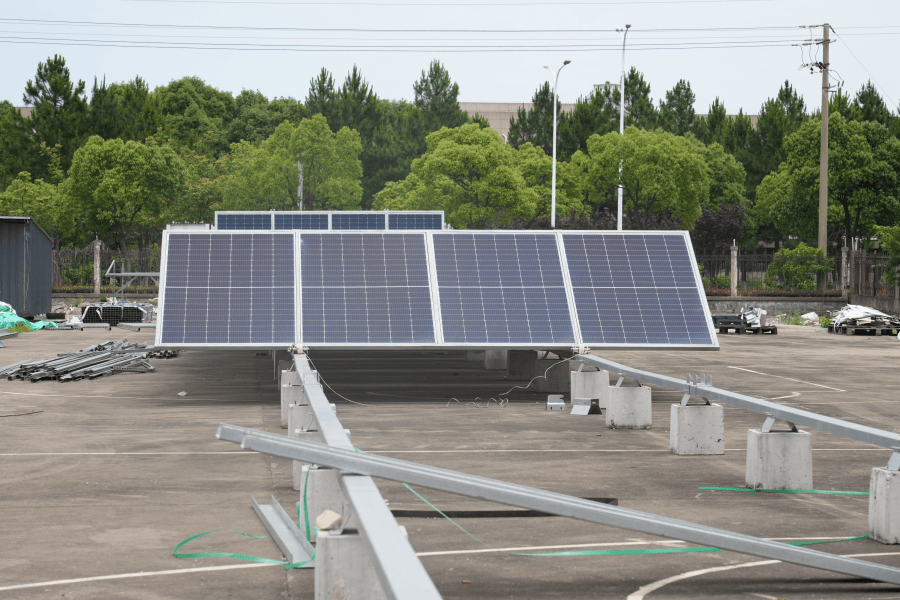
Remember that grid delay pain? A California charging operator faced exactly this on Highway 99 near Fresno. PG&E timelines blew their project deadline. Solution? Two Highjoule 20ft cubes (3.44MWh total) paired with 640kW solar canopies. Key optimizations we implemented:
? C-rate calibration: Configured discharge at 0.8C continuous (not peak-rated 1C) to extend cycle life
? Cyclic charging: Solar tops batteries 6am-4pm; grid-assist (minimal) only after midnight
? N+1 HVAC: Redundant cooling loops with isolated power feeds
Result? 11 months continuous operation with 99.2% uptime through Central Valley heatwaves. The kicker? Their avoided grid upgrade costs topped $840,000.
Your Move: Future-Proof Before Breaking Ground
Look, deploying these containers isn't plug-and-play magic. But get the optimization right C proper C-rate settings, active thermal management, and smart cycling C and that 20ft cube becomes your most reliable grid partner. What's the one site constraint keeping you up tonight C land footprint, permitting timelines, or peak demand charges? Let's brainstorm solutions over coffee.
Tags: Off-grid BESS EV Charging Infrastructure Solar Generator Optimization UL Certified ESS Energy Storage Solutions
Author
James Zhang
20+ years agricultural energy storage engineer / Highjoule CTO