
How to Optimize 215kWh Cabinet Off-grid Solar Generator for Agricultural Irrigation
Contents
- The Water-Energy Crunch on Modern Farms
- Why Generic Solar+Storage Solutions Fall Short for Irrigation
- The Optimized 215kWh Cabinet: More Than Just a Battery Box
- A Real-World Case: From California Drought to Reliable Yield
- Key Optimization Levers: What You Need to Look For
- Making the Right Choice for Your Land
The Water-Energy Crunch on Modern Farms
Let's be honest. If you're managing a farm in California, Spain, or anywhere that irrigation is lifeblood, you've felt the pinch. Grid power is getting pricier and less reliable, and diesel generators? The cost and noise are enough to make anyone look at the sky and wonder. Solar seems like the obvious savior. But here's the rub I've seen firsthand on site: your crops don't care if it's cloudy for three days. Your irrigation pump does. That mismatch between when the sun shines and when you need water is the core problem. You're not just buying solar panels; you're buying water security. And that requires smart, robust storage.
The International Energy Agency (IEA) notes that irrigation can account for a massive share of a farm's energy costs. Pair that with the push for sustainable practices, and the pressure is on to find a solution that's both economically and environmentally sound. That's where a purpose-built off-grid solar generator, centered on a cabinet-style Battery Energy Storage System (BESS), comes in. But not all cabinets are created equal.
Why Generic Solar+Storage Solutions Fall Short for Irrigation
I've been called to enough farms to see the same story. A well-meaning installer puts in a standard solar + storage kit, often repurposed from a residential design. The challenges start almost immediately. Irrigation pumps have a huge surge current when they kick on - much higher than your average home appliance. A battery system not rated for that surge will struggle, trip, or worse, degrade rapidly. Then there's the duty cycle: in peak season, you might be running that pump for 8, 10, 12 hours a day. That's a marathon, not a sprint, for a battery.
Thermal management becomes a nightmare in a metal cabinet sitting in a full-sun field. Overheating batteries lose capacity and live a much shorter life. Honestly, the biggest agitation point for farmers isn't the upfront cost - it's the unpredictable operational cost and the fear of a system failing right when the tomatoes are setting fruit. A generic system turns your "energy independence" into a high-maintenance anxiety.
The Optimized 215kWh Cabinet: More Than Just a Battery Box
So, how do we optimize? It starts by designing the system for the job. A 215kWh cabinet BESS for agricultural irrigation isn't just a container for cells; it's the heart of a resilient water delivery system. The optimization happens on three fronts: Power Delivery (C-rate), Thermal & Safety Design, and Total Lifetime Cost (LCOE).
At Highjoule, when we talk about a cabinet for this application, we're engineering it to handle the specific load profile of large irrigation pumps. That means selecting cells and configuring the battery management system (BMS) to support a higher continuous C-rate - the speed at which energy is pulled out - without stress. It's like having a truck engine in a pickup body, built for the long haul with power to spare for the initial surge.
Safety isn't a checkbox; it's the foundation. Every component, from the cell-level fuses to the cabinet's ventilation system, is chosen and tested to meet UL 9540 and IEC 62619 standards. These aren't just acronyms; they're your insurance policy that the system won't become a liability in your field.

A Real-World Case: From California Drought to Reliable Yield
Let me tell you about a project in California's Central Valley. A 80-acre almond orchard was entirely dependent on a deep-well pump and an aging grid connection that faced frequent Public Safety Power Shutoffs (PSPS) during fire season. The challenge was brutal: keep the trees alive through a 4-day grid outage during a heatwave.
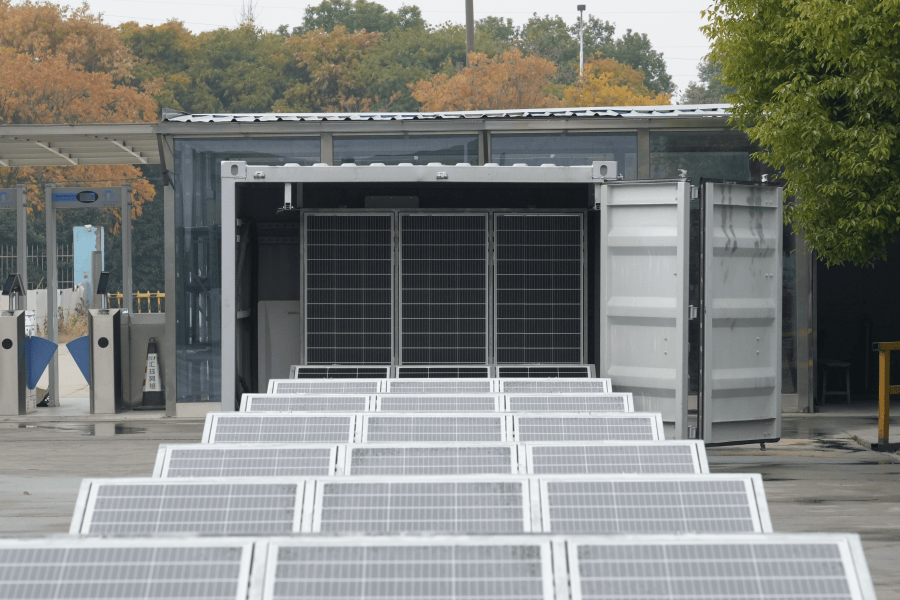
We deployed two of our optimized 215kWh cabinets alongside a 300kW solar array. The key was the system's ability to discharge at a high rate for the 6-hour daily irrigation window and then recharge steadily from solar. The integrated thermal management - using active cooling that adjusts based on ambient temperature - kept the batteries in their ideal zone even when outside temps hit 110F. The result? Zero irrigation interruptions during PSPS events in the following two seasons. The farmer's calculation shifted from "cost of a system" to "value of saved crop." According to the National Renewable Energy Laboratory (NREL), properly sized and managed solar-plus-storage can reduce the levelized cost of energy (LCOE) for off-grid ag by over 40% compared to diesel-only backup.
Key Optimization Levers: What You Need to Look For
When you're evaluating a system, here's the insider checklist, the stuff we debate in engineering meetings:
- C-rate for Pump Surge: Can the BESS deliver 2-3 times its continuous rating for 10-15 seconds to handle motor start-up? If the spec sheet only talks about "rated power," dig deeper.
- Thermal Management Logic: Is it just a fan, or an intelligent climate control system? Ask about the operating temperature range and the derating strategy. A system that throttles power on a hot day might leave your pump stalled.
- Cycling Profile: A good ag BESS is designed for one deep cycle nearly every day during the season. The battery chemistry and BMS software should be optimized for this, not for the occasional backup event of a home system.
- Grid-Forming Capability (for hybrid systems): If you have a weak grid connection, the inverter should be able to "form" a stable voltage and frequency on its own, creating a mini-grid for your farm.
This is where companies like Highjoule focus our R&D. Our cabinet systems are pre-configured with these agricultural load profiles in mind, which simplifies deployment and ensures you get a solution that's fit-for-purpose from day one.
Understanding LCOE for Your Farm
LCOE - Levelized Cost of Energy - sounds complex, but think of it as the "true cost per kWh" over the system's entire life. It includes the purchase price, installation, financing, maintenance, and fuel (sun is free!). An optimized cabinet lowers LCOE by:
- Extending battery life through superior thermal management.
- Maximizing solar self-consumption, minimizing wasted energy.
- Reducing maintenance needs with a robust, sealed design.
A cheaper, non-optimized cabinet might have a much higher LCOE because you'll be replacing batteries sooner.

Making the Right Choice for Your Land
The journey to water and energy resilience isn't about buying the biggest battery you can find. It's about buying the right battery system for the unique, demanding job of agricultural irrigation. It's a capital investment that should pay back in predictable operating costs and peace of mind for a decade or more.
My advice? Look for partners who ask detailed questions about your pump specs, your irrigation schedule, and your local climate. Ask them to walk you through the surge current handling and the thermal management design. Demand the safety certificates (UL, IEC). This isn't a commodity purchase; it's the foundation of your farm's operational resilience.
What's the one question about your current irrigation power setup that keeps you up at night?
Tags: UL Standard BESS LCOE Energy Storage Europe US Market Agricultural Irrigation Renewable Energy Off-grid Solar
Author
James Zhang
20+ years agricultural energy storage engineer / Highjoule CTO