
Optimizing Air-Cooled BESS Containers for Telecom Base Stations: A Field Engineer's Guide
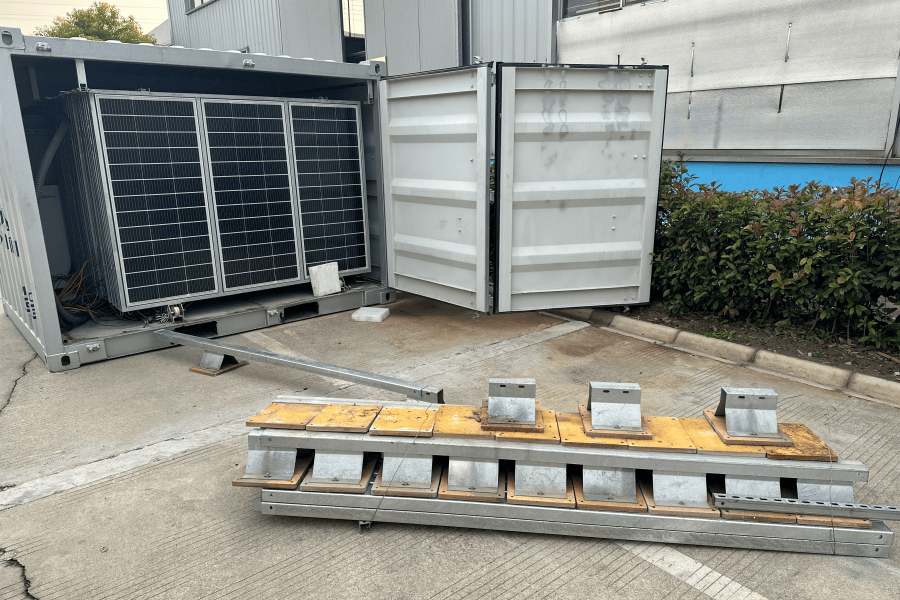
Optimizing Air-Cooled Energy Storage for Telecom Sites: Coffee Chat from the Field
Honestly, if I had a dollar for every time a telecom operator told me their backup power system was "too expensive to run" or "a headache to maintain," I'd probably be retired on a beach somewhere. But here I am, 20 years and countless site visits later, still passionate about cracking this nut. Especially when it comes to air-cooled battery energy storage systems (BESS) for base stations. They're the workhorses of the industry, but so often, they're not working for you, but against your bottom line and reliability goals. Let's talk about how to fix that.
Quick Navigation
- The Real Problem: It's Not Just About Backup
- The Silent Cost Pitfall: Thermal Runaway (of Your Budget)
- The Optimization Playbook: More Than Just a Fan
- Case in Point: A German Netzbetreiber's Wake-Up Call
- Key Considerations for Your Deployment
- A Final, Practical Thought
The Real Problem: It's Not Just About Backup
In the US and Europe, the conversation around telecom energy is shifting. It's no longer just about keeping the site alive during a grid outage for 4-8 hours. With the rise of renewables and volatile energy markets, base stations are now seen as potential grid assets. Can your BESS provide frequency regulation? Can it shave peak demand charges? To do any of that profitably, the system needs to be highly available and have a low Levelized Cost of Storage (LCOS). I've seen firsthand on site that a poorly optimized air-cooled container fails on both fronts. It's either cycling too conservatively (missing revenue) or overheating and degrading (costing you capital).
The Silent Cost Pitfall: Thermal Runaway (of Your Budget)
Let's agitate that pain point a bit. Air-cooling is simple, but "simple" doesn't mean "set and forget." The biggest mistake is treating the container like a dumb metal box. Battery heat generation isn't constant. According to a NREL study, heat dissipation needs can vary by over 300% depending on C-rate (that's the speed of charge/discharge) and ambient temperature.
Imagine a base station in Arizona performing peak shaving on a 45C (113F) afternoon. The batteries are discharging at a high C-rate, generating significant heat. If the cooling system is just running on a fixed schedule, it can't keep up. Cell temperatures soar. For every 10C above 25C, battery degradation rate doubles. That's not my opinion - it's electrochemistry. I've opened containers where the temperature differential from the bottom to the top rack was 15C. That uneven aging is a killer for your ROI and a safety concern that keeps engineers awake at night, especially with strict UL 9540 and IEC 62933 standards to meet.
The Optimization Playbook: More Than Just a Fan
So, how do we optimize? It's a holistic approach, not a single silver bullet.
1. Intelligent, Zonal Climate Control
Ditch the single-thermostat approach. Modern systems use an array of sensors per rack or even per module. The BMS (Battery Management System) should talk directly to the HVAC, triggering variable fan speeds and cooling based on actual cell temperature, not ambient air. This is where companies like ours at Highjoule have spent years refining the logic. Our controllers essentially learn the thermal profile of your specific site, reducing fan runtime by 30-40% in mild climates. That's direct OpEx savings.
2. Airflow Path Engineering
This sounds basic, but you'd be shocked. Optimized ducting and baffles ensure cold air is forced precisely over the cell surfaces, not just circulated in the empty aisle. We design for a specific pressure drop and airflow velocity to maximize heat transfer. Think of it as precision air conditioning, not room cooling.

3. C-Rate and Thermal Co-Optimization
Your energy management software must be thermally aware. If the system predicts a high-ambient-temperature peak shaving event, it might slightly reduce the discharge C-rate to keep temperatures in the sweet spot (20-30C). This trade-off preserves battery life and avoids costly derating or shutdowns. It's about maximizing lifetime value, not just a single cycle's revenue.
4. Proactive Maintenance Integration
Optimization isn't just operational; it's also about maintenance. Filter clogging is the #1 cause of cooling failure. We integrate differential pressure sensors across filters. The system doesn't just alarm when it's blocked; it predicts when it will be blocked based on airflow data, scheduling maintenance before efficiency drops. This predictive approach is what local European and US utilities now demand.
Case in Point: A German Netzbetreiber's Wake-Up Call
Let me give you a real example from North Rhine-Westphalia. A network operator had deployed a dozen air-cooled BESS containers for backup and primary frequency response. Within 18 months, they noticed a >15% capacity divergence between units. The ones in sun-exposed, poorly ventilated locations were degrading rapidly.
The challenge: They couldn't just rebuild the sites. The solution was a retrofit optimization kit. We added:
- External solar shades to reduce radiant heat load.
- Upgraded inlet filters with higher dust-holding capacity.
- A retrofit sensor kit and logic update for the BMS to implement zonal cooling.
The result? They stabilized the degradation curve and extended the projected system life by 4 years, avoiding a multi-million euro capex refresh. The project paid for itself in under 2 years. This hands-on experience is why our new containers now have these features as standard.
Key Considerations for Your Deployment
When you're evaluating an optimized air-cooled BESS, ask these questions:
- Standards Compliance: Is the entire system, including thermal management, certified to UL 9540 (US) and IEC 62933-5 (EU)? Don't just accept a battery cell cert.
- Data Granularity: Can you see temperature data per rack or module? If not, you can't optimize.
- Control Logic: Is the cooling reactive or predictive? Can it integrate with your site's energy management system?
- Serviceability: Can filters and fans be replaced without taking the entire system offline? For telecom uptime, this is critical.
At Highjoule, we bake these considerations into the design phase. Our containers are built with service aisles, hot-swappable fan units, and API-ready BMS data - because we've been the ones called at midnight to fix the systems that didn't have these features.
A Final, Practical Thought
Optimizing an air-cooled container isn't a luxury; it's the cornerstone of making your telecom BESS a profitable asset, not a cost center. The technology exists. The standards are clear. The real question is, does your provider think about these systems with the gritty, practical mindset of an engineer who's spent decades on site, or just as a box to sell? The difference in your total cost of ownership over 15 years will be profound.
What's the one thermal or maintenance issue you're wrestling with at your sites right now?
Tags: UL Standard BESS LCOE Telecom Energy Storage IEEE Standards Air-Cooled Container
Author
James Zhang
20+ years agricultural energy storage engineer / Highjoule CTO