
Rapid 5MWh BESS Deployment for Construction Sites: The Ultimate Guide
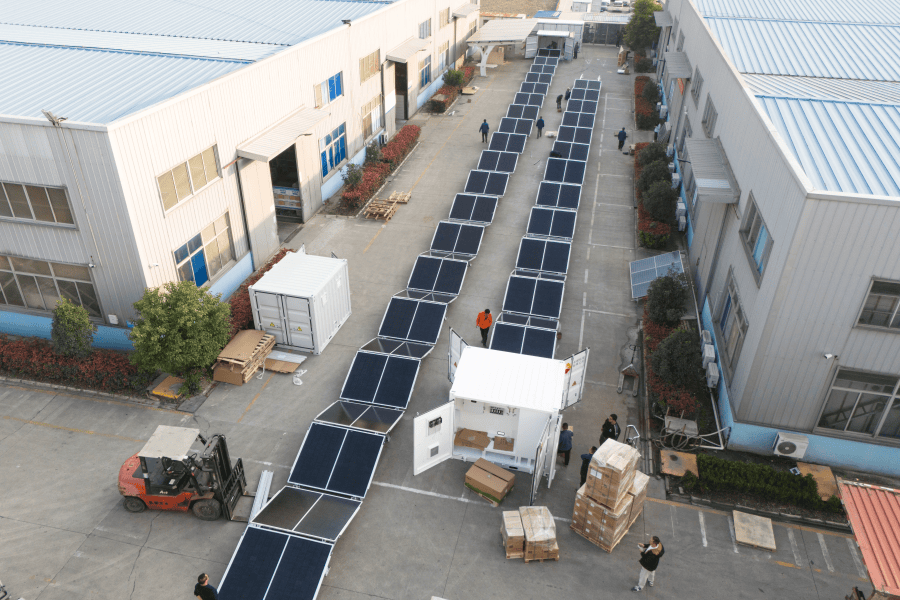
Table of Contents
- The Diesel Dilemma on Modern Construction Sites
- The Real Costs: It's More Than Just Fuel
- The Rapid-Deployment BESS: A Turnkey Power Solution
- Making It Work: Safety, Tech, and Real Numbers
- A Real-World Case: Powering a 24/7 Data Center Build
- Is Your Next Site Ready for a Power Upgrade?
The Diesel Dilemma on Modern Construction Sites
Let's be honest, if you're managing a large-scale construction project in the US or Europe right now, your temporary power setup probably looks something like this: a row of diesel generators, humming away 24/7, guzzling fuel that's never cheap and lately feels like a ransom payment. The noise is a constant headache for your crew and the neighbors, leading to permits, complaints, and sometimes fines. And the emissions? Honestly, they're a compliance nightmare waiting to happen, especially with increasingly strict local air quality regulations and corporate sustainability targets that head office is breathing down your neck about.
I've been on sites from Texas to North Rhine-Westphalia, and the story is frustratingly similar. You're there to build the future, but you're powering it with technology from the past. The diesel gen-set is a necessary evil, or so we've told ourselves for decades. But what if it's not so necessary anymore?
The Real Costs: It's More Than Just Fuel
We all see the direct fuel costs. But the agitation, the real pain, comes from the hidden multipliers. First, logistics: securing fuel deliveries to a remote or congested site is a project in itself. Then there's the maintenance downtime - those generators need regular servicing, and a breakdown can halt hundreds of thousands of dollars worth of critical path work. Noise mitigation measures, like building temporary barriers, add cost and complexity.
Most critically, there's the "soft" cost of reputational risk. In both European and North American markets, communities and investors are demanding cleaner operations. A cloud of diesel smoke over your "green" building project is a terrible look. According to the International Energy Agency (IEA), the construction sector accounts for nearly 40% of global energy-related CO2 emissions when you include building operations and construction. While that's mostly from materials, the on-site energy piece is a visible, controllable part of the puzzle that stakeholders are starting to scrutinize.
The Rapid-Deployment BESS: A Turnkey Power Solution
This is where the concept of a rapid-deployment, utility-scale Battery Energy Storage System (BESS) changes the game. We're not talking about a small battery backup. We're talking about a containerized 5MWh power plant on wheels. The solution is elegantly simple: instead of burning diesel on-demand, you charge a massive battery bank from the grid during off-peak, low-cost hours (or pair it with temporary solar arrays, which we do often). Then, you use that stored energy to power your site whenever you need it.
The "rapid deployment" part is key. At Highjoule, our systems are designed like LEGO blocks for energy. A pre-integrated 5MWh unit arrives on-site - a standard shipping container housing not just the battery racks, but the entire ecosystem: thermal management, fire suppression, power conversion systems (PCS), and controls, all pre-tested and certified. It's literally plug-and-play. You connect it to the medium-voltage grid connection point (or a generator if you must have a hybrid setup), and you have stable, silent, instant power. I've seen this firsthand on site where we went from empty pad to energized system in under 72 hours. It's a different world compared to commissioning multiple large generators.

Making It Work: Safety, Tech, and Real Numbers
Now, I know what some of you are thinking: "Batteries? On my chaotic construction site? What about safety and cost?" Fair questions. Let's break down the expert insights.
First, safety and standards. Any system you deploy must be built to the highest codes. Our units are engineered to comply with UL 9540 for the energy storage system, UL 1973 for the batteries, and the relevant IEC and IEEE standards for grid interconnection and safety. This isn't a hobbyist project; it's industrial-grade equipment with multiple layers of protection. The thermal management system is critical here - it's not just about cooling, but maintaining optimal temperature uniformity across all cells to prevent stress and prolong life. We use a closed-loop liquid cooling system that's far more effective and reliable than air cooling, especially in dusty site conditions.
On the financial side, you need to look beyond capex at the Levelized Cost of Energy (LCOE) for your site. While the upfront cost of a BESS rental or lease is competitive with high-end generator setups, the operational savings are where you win. Your "fuel" becomes cheaper, predictable grid electricity. Maintenance is minimal. There are zero emissions penalties. You gain the ability to participate in grid services like demand response in some regions, creating a potential revenue stream from your temporary power source. The math is becoming undeniable.
Key Technical Advantages at a Glance
| Feature | Traditional Diesel Gensets | Rapid-Deployment 5MWh BESS |
| Deployment Time | Days to weeks for multiple units & synchronization | 48-72 hours for a single, integrated unit |
| Noise Level | >85 dB (requires hearing protection) | < 65 dB (normal conversation level) |
| On-site Emissions | High (NOx, PM, CO2) | Zero |
| Energy Cost Volatility | Tied to volatile diesel prices | Tied to stable, often lower, off-peak grid rates |
| Grid Services Potential | None | Frequency regulation, demand charge management |
A Real-World Case: Powering a 24/7 Data Center Build
Let me give you a concrete example from last year. We worked with a major contractor building a hyperscale data center in the southwestern U.S. Their challenge was immense: 24/7 construction power for cranes, welding, lighting, and temporary offices, but in a region with a strained grid and strict noise ordinances for the nearby community. Diesel was their only initial plan, but the fuel logistics for a 18-month project were a nightmare, and the projected cost of noise mitigation was staggering.
Our solution was a hybrid microgrid: two of our 5MWh rapid-deployment BESS units coupled with a 2MW temporary solar canopy over the material staging area. The BESS units charged from the grid at night and from solar during the day. They provided the bulk of the base load, with a single, smaller diesel generator kept on standby for peak shaving (which it rarely needed to kick in).
The results? They cut diesel consumption by over 90%, eliminated noise complaints entirely, and hit their corporate sustainability metrics for the build phase. The project manager told me the single biggest benefit was the "set-it-and-forget-it" reliability. No more fuel truck coordination at 3 AM, no more generator hiccups. Just clean, quiet power. That's the promise realized.

Is Your Next Site Ready for a Power Upgrade?
The technology isn't coming; it's here, it's proven, and it's financially savvy. The shift from diesel dependence to battery-based temporary power isn't just an environmental decision anymore - it's a hard-nosed operational and financial one. The question for project managers and construction firm leaders isn't "Can we afford to try this?" but increasingly, "Can we afford not to, given the savings, compliance ease, and community goodwill it brings?"
What's the one persistent power-related headache on your current site that a silent, emission-free, plug-and-play power plant could solve? Maybe it's time we talked.
Tags: Construction Site Power UL Standard BESS Rapid Deployment Europe US Market Microgrid IEEE Standards Utility-Scale Energy Storage
Author
James Zhang
20+ years agricultural energy storage engineer / Highjoule CTO