
Safety Regulations for Rapid Deployment Lithium Battery Storage Container for Construction Site Power
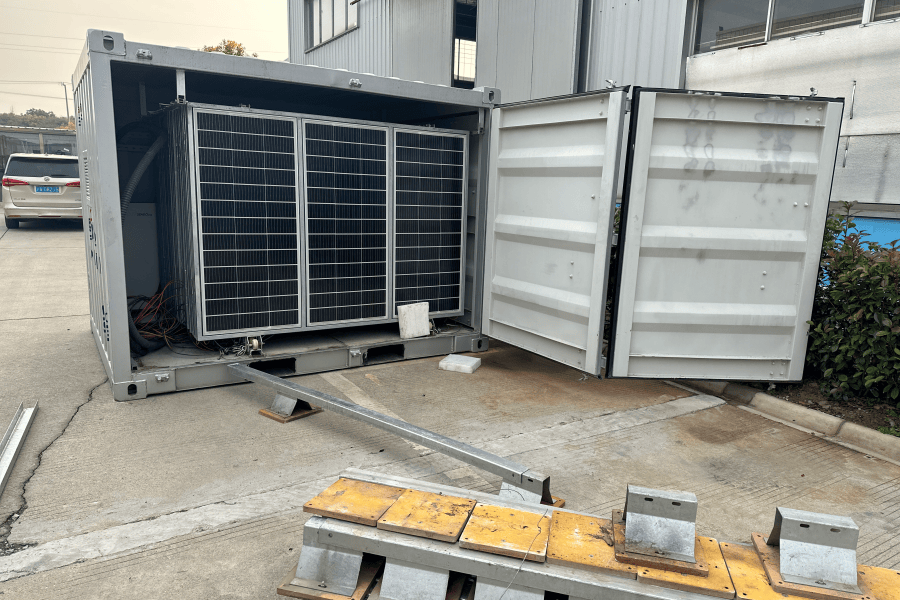
Table of Contents
- The Rush and The Risk: Why We're Talking About This
- Beyond the Checklist: What "Safety" Really Means On-Site
- The Standards That Matter: UL, IEC, and Your Local Fire Marshal
- A Case in Point: Lessons from a German Industrial Park
- Engineering for Real-World Chaos
- The True Cost of Cutting Corners
- What Should You Look For in a Compliant Container?
The Rush and The Risk: Why We're Talking About This
Let's be honest. On a construction site, time is money, and "rapid deployment" isn't just a nice-to-have feature - it's the entire business case. I've been on sites from Texas to Bavaria where the main power hookup is weeks behind, and the diesel generators are burning a hole in the project budget (and the local air quality). Plug-and-play lithium battery containers swoop in as the hero solution. But here's the uncomfortable truth I've seen firsthand: the rush to get power online can sometimes make safety protocols feel like, well, a suggestion.
The core problem isn't the technology. Modern Li-ion batteries are incredibly safe when managed correctly. The problem is the environment. A construction site is arguably the worst place for a sensitive piece of electrical equipment: dust, vibration, temperature swings, unskilled labor, and a general atmosphere of controlled chaos. Deploying a standard grid-tied BESS unit designed for a clean, concrete pad into that environment is asking for trouble. According to a National Renewable Energy Laboratory (NREL) report on system integration, environmental stressors are a leading contributor to premature performance degradation and safety incidents in field-deployed storage.
So, when we talk about Safety Regulations for Rapid Deployment Lithium Battery Storage Container for Construction Site Power, we're not just talking about a sticker on the side. We're talking about a holistic design and operational philosophy that starts with the cell chemistry and ends with the site foreman's daily checklist.
Beyond the Checklist: What "Safety" Really Means On-Site
Safety isn't one thing. On site, it's a stack of interdependent layers. Think of it like this:
- Cell & Module Safety: The inherent stability of the chemistry (like LiFePO4's wider thermal runaway threshold), robust internal BMS at the module level.
- System Safety: The container-level Battery Management System (BMS) that's the true brain, monitoring voltage, current, and most critically, temperature differentials across all cells.
- Physical & Environmental Safety: The container's armor. This is where "rapid deployment" meets brute force. It's impact-resistant siding, IP54+ sealing against dust and water ingress, and internal climate control that works in Arizona heat and Norwegian cold.
- Fire Suppression & Containment: This is the last line of defense. It's not just having a system, but having the right one. Aerosol or clean agent systems designed for Li-ion fires, integrated with the BMS for early warning, and physical venting to manage thermal runaway gasses.
- Operational & Human Safety: Clear, idiot-proof disconnects, emergency stop buttons on the exterior, and signage that meets local (OSHA, EU-WHS) requirements. Honestly, if the crane operator can't see the "HIGH VOLTAGE" warning, you've failed.

The Standards That Matter: UL, IEC, and Your Local Fire Marshal
This is where the rubber meets the road for the US and EU markets. Compliance isn't bureaucratic red tape; it's a pre-validated safety blueprint.
For our North American clients, UL 9540 (Energy Storage Systems and Equipment) is the gold standard. But for a mobile container, you need to look for UL 9540A test data - the fire propagation evaluation. This tells you how a thermal runaway event in one module might propagate. Asking for this report isn't being difficult; it's due diligence. Pair this with UL 1973 for the batteries themselves and NEC (NFPA 855) for installation guidelines, and you have a solid foundation.
In Europe, the IEC 62933 series is your compass. Specifically, parts around safety (IEC 62933-5-2) and installation (IEC 62933-5-1). But here's my on-the-ground insight: the local fire authority and grid connection codes often have the final say. In Germany, for instance, the VdS guidelines for battery storage are practically mandatory. A container certified to the right IEC standards makes that local approval process smoother, but you can't assume it's automatic.
A Case in Point: Lessons from a German Industrial Park
Let me give you a real example. We worked on a project in North Rhine-Westphalia, a massive logistics hub being built. The grid connection was delayed. They needed 500kW of reliable, clean power for cranes, lighting, and site offices for 8 months.
The challenge wasn't just providing a battery. It was providing a system that the local Feuerwehr (fire department) would sign off on. They were concerned about fire load and access for emergency vehicles. Our solution was a Highjoule "SitePower" container, but the key was the pre-engagement:
- We presented the full UL and IEC certification packets.
- We conducted a joint walkthrough with the fire marshal, showing the external emergency disconnects, the gas venting pathways, and the precise location for fire service access (a clear 3-meter perimeter, always maintained).
- We provided a simple, laminated emergency response guide in German, mounted on the container door.
The system was approved and powered the site, saving an estimated ?120,000 in avoided diesel costs. The takeaway? The regulations were the framework, but proactive communication based on those regulations was what got the system turned on.
Engineering for Real-World Chaos
Let's get a bit technical, but I'll keep it simple. Two concepts are critical for safety and performance on a dynamic site: C-rate and Thermal Management.
C-rate is basically how fast you charge or discharge the battery. A 1C rate means discharging the full capacity in one hour. For a construction site, you might have huge crane loads (high power demand) kicking in suddenly. A system designed for a gentle 0.5C grid application will strain and overheat if asked to consistently deliver at 1C. That thermal stress is a safety risk. Our containers are engineered with a higher C-rate capability than nominal, giving that headroom for surge loads without breaking a sweat.
Which brings me to Thermal Management. This is the unsung hero. Passive air cooling? Forget it on a dusty site. You need a closed-loop, liquid-cooled system. It maintains an even temperature across all cells (preventing "hot spots" that degrade cells faster), and it filters the air. I've opened containers after a year in the desert; the internals look brand new because the cooling system sealed out the abrasive dust. This isn't an extra feature; for rapid deployment in harsh environments, it's a non-negotiable core safety system.
The True Cost of Cutting Corners
I've seen the alternative. A contractor buys a cheap, off-brand container with dubious certifications. It saves 20% upfront. Then, the local inspector shuts it down on day one. Now you're paying for emergency diesel rental and storage for a useless container. Or worse, a minor internal fault triggers a full system shutdown because the BMS wasn't robust, halting the entire site.
The real metric here is Levelized Cost of Energy (LCOE) for your site. A safer, compliant system might have a higher capex, but its reliability, longevity, and zero-downtime-from-violations give it a far lower LCOE over the 6-18 month lifespan of a temporary power need. It's the difference between buying a cheap tool that breaks and renting a professional-grade tool that gets the job done without a hiccup.
What Should You Look For in a Compliant Container?
So, when you're evaluating a Rapid Deployment Lithium Battery Storage Container for Construction Site Power, cut through the marketing. Ask these questions:
- "Can I see the full UL 9540/9540A and IEC 62933 certification reports specifically for this container model?"
- "What is the IP rating and how is the cooling system sealed against dust?"
- "What is the C-rate capability, and what surge power can you guarantee for 10 minutes?"
- "Walk me through the fire suppression system. Is it integrated with the BMS? What agent do you use, and what is the cleanup process?"
- "Do you provide a site-specific emergency response plan and local language documentation as part of delivery?"
At Highjoule, we build these answers into every "SitePower" unit from the ground up. Because after 20 years in this field, I know that the safest system is the one that's designed for the real world, not just the data sheet. It's the one that lets the project manager sleep at night, knowing the power - and the safety - is just handled.
What's the one safety or compliance hurdle that's surprised you most on your recent projects?
Tags: Construction Site Power UL Standard BESS Energy Storage Regulations Lithium Battery Safety
Author
James Zhang
20+ years agricultural energy storage engineer / Highjoule CTO