
How to Optimize Grid-forming Hybrid Solar-Diesel Systems for Industrial Parks
Beyond Backup: The Real Game for Industrial Parks is Optimization
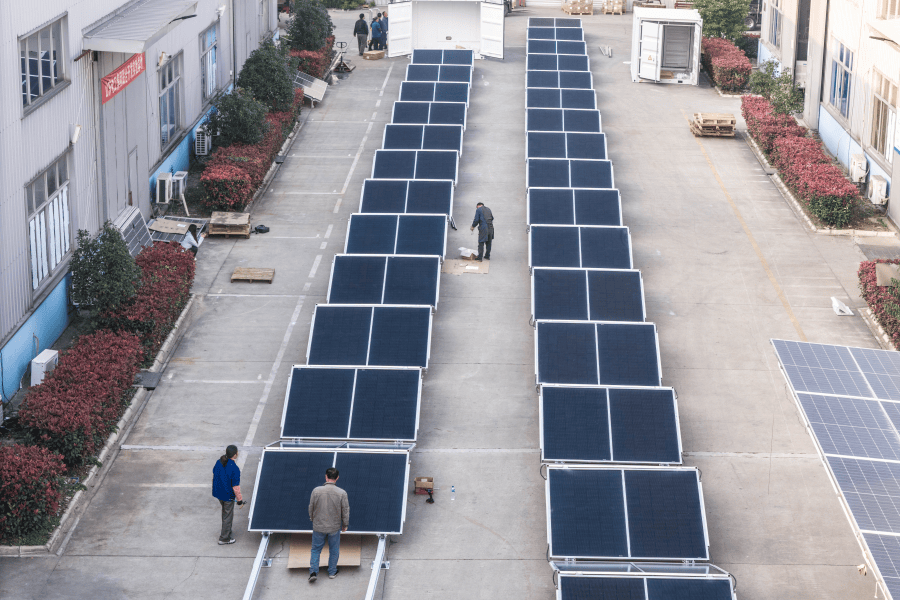
Honestly, if I had a nickel for every time a plant manager told me their new solar-diesel hybrid system was "cutting edge," I'd be retired on a beach. The truth is, installing the hardware is just step one. The real challenge - and where most of the value gets left on the table - is in the optimization. I've seen this firsthand on site, from Texas to North Rhine-Westphalia: a sea of solar panels next to a humming diesel genset and a battery container, all operating in silos. They're not truly talking to each other. That's not a hybrid system; that's just expensive cohabitation.
What We'll Cover
- The Real Problem Isn't Fuel, It's Inefficiency
- Why "Grid-Forming" is the Missing Brain
- The Key Levers for Optimization: More Than Just Software
- A Case in Point: Lessons from a German Automotive Park
- Making It Real: What to Look For in Your Project
The Real Problem Isn't Fuel, It's Inefficiency
Let's cut through the jargon. The core pain point for industrial operators isn't just the price of diesel. It's the total cost of energy certainty. You have production lines that can't flicker, sensitive machinery, and maybe even utility demand charges that punish you for peak draws. A traditional setup with solar feeding in and diesel as a backup? It's reactive. The solar might offset some grid power, but when a cloud passes or you start a large motor, the system scrambles. The diesel kicks in clumsily, burning fuel at low load (terrible for engine life and emissions), or you get hit with a power quality dip.
This inefficiency has a direct bottom-line impact. The International Renewable Energy Agency (IRENA) notes that system integration and control challenges are a major barrier to higher renewable penetration in industrial settings. You're not maximizing your return on that solar asset, you're wearing out your diesel gensets faster, and you're still exposed to grid volatility. It's the worst of all worlds.
Why "Grid-Forming" is the Missing Brain
This is where the magic of a true grid-forming hybrid system comes in. Forget the old "grid-following" batteries that just react to what's already there. A grid-forming Battery Energy Storage System (BESS) is the maestro, the brain of the operation. It can create a stable voltage and frequency waveform from scratch - like a mini, ultra-responsive grid.
In your industrial park, this means the BESS becomes the foundational power source, seamlessly stitching together solar PV, your existing diesel generators, and the main grid. It decides, in milliseconds, the most cost-effective and stable mix. Need a burst of power for a compressor? The BESS delivers it instantly, preventing a diesel start. Solar output drops? The BESS smooths the transition, potentially letting the diesel start and ramp up optimally if needed. This isn't just backup; it's active, predictive energy orchestration.

The Key Levers for Optimization: More Than Just Software
Okay, so grid-forming is the concept. But how do you optimize it? It comes down to three tangible levers, grounded in hardware and physics as much as in smart algorithms.
1. The Battery's Inner Workings: C-Rate and Thermal Management
Any good control system is limited by the physical hardware. Think of C-rate as the battery's "athletic ability." A 1C rate means a 100 kWh battery can deliver 100 kW. For grid-forming and handling industrial transients, you often need a higher C-rate - say, 1.5C or 2C. This allows for faster, more powerful responses without stressing the cells.
But pushing power in and out fast creates heat. Thermal management is where cheap systems fail. I've opened cabinets where the temperature variance from top to bottom was 15C. That degrades cells at wildly different rates, killing your system's lifespan and creating safety risks. Optimized systems use liquid cooling or advanced forced-air designs to keep cells within a tight, happy temperature band. This isn't a nice-to-have; for UL 9540 and IEC 62933 compliance in demanding environments, it's essential.
2. The Economics: Driving Down LCOE (Levelized Cost of Energy)
This is the number your CFO cares about. The goal of optimization is to minimize the LCOE of your entire hybrid microgrid. A well-optimized grid-forming BESS does this by:
- Reducing diesel runtime: By handling short-duration peaks and smoothing transitions.
- Maximizing solar self-consumption: Soaking up every possible kilowatt-hour you generate, even when plant load is low, and storing it for later.
- Extending asset life: Gentle, thermally-managed cycles for the battery, and fewer, more optimal starts for the diesel gensets.
The optimization software constantly runs this cost-benefit analysis in the background, choosing the cheapest watt-hour every second.
3. The Safety & Compliance Foundation
In the US and EU, you can't talk optimization without talking safety. It's the bedrock. An optimized system is a safe, compliant one. This means your BESS core needs to be built from the cell up to standards like UL 9540, with a proper UL 9540A test report for fire safety. The system integration should follow IEEE 1547 for grid interconnection and IEC 62443 for cybersecurity. At Highjoule, we've found that designing for these standards from day one - using, for instance, cell-level fusing and proprietary thermal runaway venting - isn't a constraint. It's what allows the system to perform reliably 24/7, which is the ultimate form of optimization.
A Case in Point: Lessons from a German Automotive Park
Let me give you a real example. We worked with a mid-sized automotive parts supplier in Germany. They had 2 MW of rooftop solar, two 1.5 MW diesel gensets, and volatile grid costs. Their challenge? Use more solar, keep power quality perfect for robotic welding lines, and avoid peak demand charges.
We deployed a 1.5 MWh grid-forming BESS as the system core. The optimization wasn't just in the software logic; it was in:
- Hardware Selection: We specified a high C-rate, liquid-cooled battery stack to handle the rapid load swings from the presses.
- Control Integration: We took direct, digital control of the diesel gensets via their controllers, allowing for "soft" starts and synchronous transfer.
- Localized Strategy: The algorithm was tuned for Germany's specific energy market signals and the park's unique 24/7/365 production schedule.
The result? Solar self-consumption rose by over 40%. Diesel fuel use for grid stabilization dropped by nearly 90%. The power quality is now better than the public grid. The system paid for itself in under 5 years purely on energy cost savings - not counting the avoided downtime.

Making It Real: What to Look For in Your Project
So, you're considering optimizing your hybrid system. Don't just get a quote for a battery container. Have a conversation with your provider that digs into these topics:
- Ask for their thermal management design and how it ensures cell longevity. Ask to see the temperature data from a similar site.
- Request a detailed LCOE simulation based on your actual load profile, solar generation, and local fuel/tariff rates, not just a generic payback period.
- Demand clarity on compliance and standards (UL, IEC, IEEE). Who is responsible for the overall system certification?
- Discuss ongoing optimization. The algorithms can learn and adapt. Is there a service to re-tune them as your operations or energy markets change?
Honestly, the field has moved past just selling hardware. We're selling outcomes: lower LCOE, ultimate reliability, and a clear path to decarbonization. The right grid-forming hybrid system, truly optimized, isn't an expense. It's the most intelligent piece of production infrastructure you'll add.
What's the one energy cost or reliability challenge in your park that keeps you up at night? Maybe we've already seen a way to solve it.
Tags: LCOE Optimization UL Standards Grid-forming BESS Hybrid Solar-Diesel Industrial Park Energy
Author
James Zhang
20+ years agricultural energy storage engineer / Highjoule CTO