
How to Optimize High-voltage DC Lithium Battery Storage Container for Industrial Parks
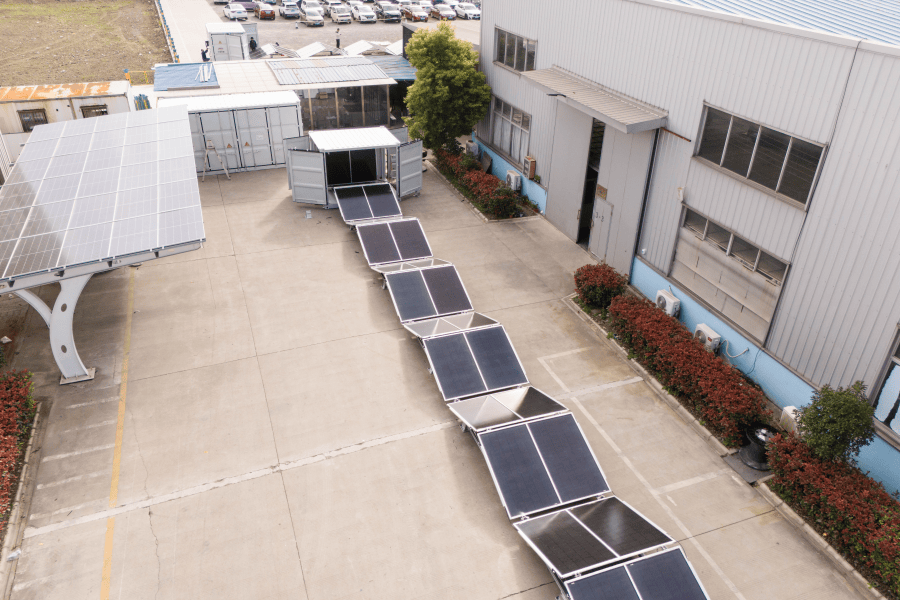
Table of Contents
- The Real Problem: It's Not Just About Buying a Box
- Why It Hurts: The Hidden Costs of a "Set-and-Forget" BESS
- The Optimization Framework: It's a System, Not a Product
- A Case in Point: A German Automotive Supplier's Journey
- Key Levers to Pull for True Optimization
- The Localization Imperative: Standards Are Your Friend
- So, What's Your Container Really Doing?
The Real Problem: It's Not Just About Buying a Box
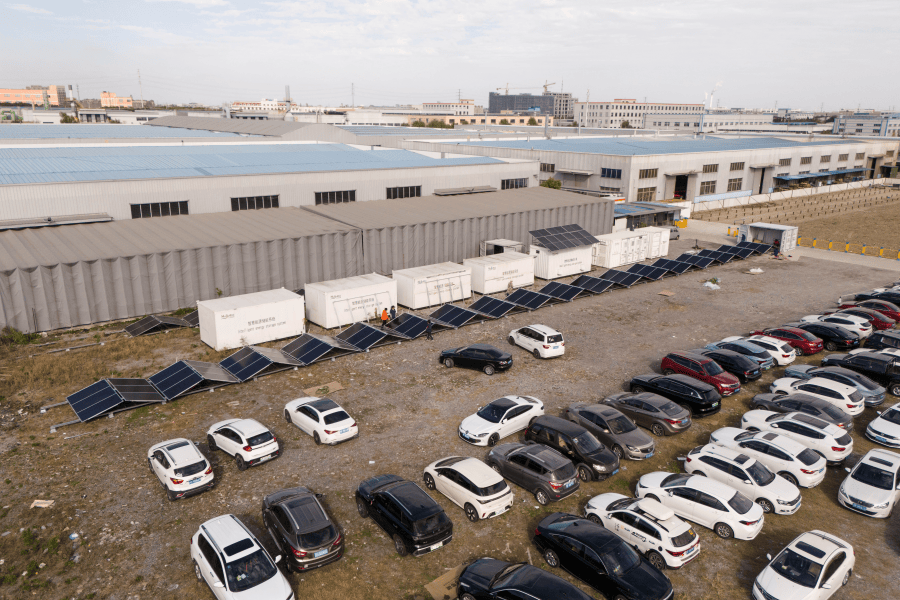
Let's be honest. When most industrial park managers or energy directors think about battery storage, they see a container. A big, shiny, "plug-and-play" solution delivered on a truck. You sign the PO, it gets craned into place, and you check the "energy resilience" box. But here's what I've seen firsthand on site, from California to North Rhine-Westphalia: that's where the real work - and the real risk - begins. The purchase is the easiest part. The multi-million dollar question is: How to Optimize High-voltage DC Lithium Battery Storage Container for Industrial Parks for the next 15-20 years?
The core problem isn't storage capacity; it's value realization. That container is a capital asset. Is it just sitting there as an expensive backup, cycling once a year? Or is it a dynamic, revenue-generating, cost-slashing workhorse? The gap between those two outcomes is massive, and it's filled with technical nuance, operational strategy, and frankly, a lot of missed opportunity.
Why It Hurts: The Hidden Costs of a "Set-and-Forget" BESS
When optimization is an afterthought, the pain points are real and quantifiable. First, there's the financial bleed. A sub-optimized system might have a Levelized Cost of Storage (LCOS) 30-40% higher than it should. You're not maximizing arbitrage during peak price hours, or you're causing unnecessary wear by cycling too aggressively without understanding the battery's true C-rate capabilities.
Then, there's safety and longevity. I've walked into sites where the thermal management system is fighting against itself because the container's placement and internal airflow weren't considered with the local micro-climate in mind. One project in Texas saw a 15% derating in summer because the HVAC was constantly overworking. That's lost capacity when you need it most. According to a 2023 NREL report, proper thermal management can extend battery life by up to 200%, directly impacting your return on investment.
Finally, there's regulatory risk. Grid codes are evolving fast. In the EU, the new EU Regulation 2019/943 sets clear requirements for grid-forming capabilities. In the US, IEEE 1547-2018 is the new bible for interconnection. A container bought as a "black box" might not be software-upgradable to meet these, turning a valuable asset into a stranded one.

The Optimization Framework: It's a System, Not a Product
So, optimization isn't a one-time setting. It's a holistic framework applied from day one. At Highjoule, when we talk about optimizing a high-voltage DC container, we're really talking about optimizing the entire energy ecosystem of your industrial park. It starts with deep data analysis of your load profiles, your on-site generation (solar, wind, cogen), and your utility tariff structure. That data informs the hardware specification (like the right DC bus voltage and C-rate for your duty cycle) and the software brain (the energy management system that makes real-time decisions).
Think of it like tuning a race car. You wouldn't just pour in high-octane fuel and hope for the best. You adjust the suspension for the track, the gear ratios for the straights, and the engine mapping for efficiency. Your BESS container is the same. The battery cells are the engine, but the power conversion system (PCS), the thermal management loops, and the control software are all critical components that need tuning for your specific "track" - your industrial park's unique energy landscape.
A Case in Point: A German Automotive Supplier's Journey
Let me give you a real example. We worked with a mid-sized automotive parts supplier in Bavaria. Their goal: reduce peak demand charges and provide backup for a critical paint shop. They had a 2 MWh high-voltage DC container from another vendor that was...underwhelming. It was triggered by a simple peak-shaving algorithm, but it was often depleted before the actual peak, or it wouldn't respond fast enough to load spikes.
Our optimization process wasn't about replacing the container. It was about integrating it. We deployed our Horizon EMS, which took direct, millisecond-level data from their SCADA and production schedule. Now, the BESS doesn't just see total power draw; it knows when the 500-ton press is about to cycle or when the paint shop oven ramps up. It pre-charges strategically, uses predictive algorithms based on production schedules, and even participates in the German primary control reserve market during low-production nights and weekends.
The result? They cut their demand charges by an additional 22% annually on top of their initial savings, and they created a new, modest but steady, revenue stream. The optimization was in the intelligence and the integration, not the box itself.
Key Levers to Pull for True Optimization
Based on projects like that, here are the concrete levers you should be discussing with your provider:
- Dynamic C-Rate Management: Don't let a single, conservative C-rate limit you. A good system can safely operate at higher C-rates for short, critical discharges (to shave a sharp peak) and lower C-rates for long-duration energy shifting. It's about matching the power profile to the need, maximizing both performance and cycle life.
- Proactive, Climate-Adaptive Thermal Management: This is huge. The cooling system shouldn't just react; it should predict. Using weather forecasts and internal heat generation models, it can pre-cool the container before a hot afternoon of cycling. At Highjoule, our liquid-cooled designs maintain cell temperature variance below 3C, which honestly, is the single biggest factor for preventing premature aging.
- LCOE/LCOS as a Design Metric: From the start, design for the lowest Levelized Cost of Energy/Storage. This might mean opting for a slightly larger battery with a lower C-rate for a long-duration application, or a more robust PCS for frequent cycling. It's a financial calculation baked into engineering.
- Grid Code "Future-Proofing": Ensure your container's PCS and controls are software-upgradable. Can it receive an OTA update to provide voltage support or frequency-watt response when the local utility eventually requires it? If not, you're buying obsolescence.
The Localization Imperative: Standards Are Your Friend
For the US and EU markets, optimization is meaningless without compliance. It's not a checkbox; it's the foundation of safe, reliable, and insurable operation. In the US, UL 9540 and UL 9540A (the infamous "fire test") are non-negotiable for system-level safety. For the PCS, UL 1741 SA (Supplement A) is key for smart inverter functions. In Europe, it's the IEC 62933 series for system safety and performance, and IEC 62477 for power converters.
Why does this matter for optimization? Because a truly optimized system is designed within and for these standards from the cell up. We've seen containers that are "certified" but have had their internal layouts modified for a project, potentially voiding that certification. At Highjoule, our standard container platform is designed to meet UL and IEC from the outset, and our local deployment teams in both regions understand the specific permitting and interconnection nuances. This isn't just about selling you a container; it's about ensuring it gets online, stays online, and performs optimally within the legal and safety framework of your region.
So, What's Your Container Really Doing?
If you're evaluating a BESS for your industrial park, or if you have one sitting there that feels more like a cost center than an asset, start with a different question. Don't just ask "how much does a container cost?" Ask, "How will this system be optimized for my specific site's economics, operations, and future?" Ask for the data model, the control strategy, and the upgrade path.
Honestly, the best projects I've worked on started with that conversation over coffee, long before any specs were written. What's the one energy cost or reliability worry that keeps you up at night? Let's start there.
Tags: UL Standard BESS LCOE Europe US Market Renewable Energy
Author
James Zhang
20+ years agricultural energy storage engineer / Highjoule CTO