
How to Optimize LFP Off-grid Solar Generators for Eco-Resorts
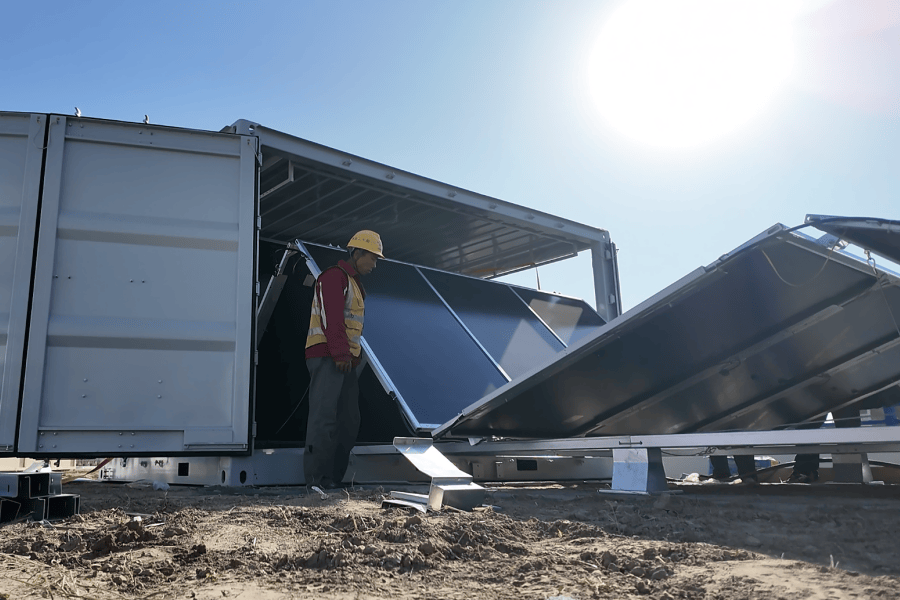
How to Optimize LFP (LiFePO4) Off-grid Solar Generator for Eco-resorts: A Field Engineer's Guide
Hey there. If you're reading this, you're probably knee-deep in planning a sustainable power system for a remote lodge, a glamping site, or a full-scale eco-resort. You've chosen solar, and you're looking at Lithium Iron Phosphate (LFP) batteries for your off-grid generator - smart moves. But honestly, I've been on enough sites from the Scottish Highlands to the California desert to know that the gap between a "working" system and an optimized one is where the real costs - and headaches - live. Let's talk about how to bridge that gap.
Table of Contents
- The Real Problem: It's Not Just About Keeping the Lights On
- Beyond the Spec Sheet: The Three Optimization Pillars
- A Case in Point: Off-grid Lodge in the Rockies
- Our Approach: Engineering for the Real World
The Real Problem: It's Not Just About Keeping the Lights On
Here's the common scene. A beautiful, remote location. A commitment to 100% renewable energy. A solar array and a container of LFP batteries arrive on site. The system turns on. Success? Not so fast. The real challenges for an eco-resort only begin at energization.
The Problem 1: The "Lull and Spike" Dilemma. Guest behavior dictates your load. Everyone's out hiking at noon (solar peak), but at 7 PM, showers, hot tubs, and kitchen equipment all fire up at once. Your battery bank faces a massive, rapid discharge spike. If it's not sized and managed for this, you face voltage drops, premature aging of the battery, or worse - a total shutdown right when guests need power most.
The Problem 2: The Remote Maintenance Tax. According to a NREL report on remote microgrids, operations and maintenance (O&M) costs can be 2-3 times higher than in grid-tied systems. Sending a technician to a mountain resort for a simple firmware update or a thermal sensor check is a massive line-item expense. Your "cheap" battery system gets very expensive, very quickly.
The Problem 3: Safety as a Non-Negotiable. This isn't a garage installation. It's a guest-facing asset. You need systems that don't just meet but exceed local codes (like UL 9540 in the US or IEC 62619 in the EU). Thermal runaway might be less likely with LFP than other chemistries, but poor thermal management will still kill your cycle life. I've seen firsthand how a poorly ventilated battery enclosure in a Mediterranean climate can shave years off the system's lifespan.

Beyond the Spec Sheet: The Three Optimization Pillars
So, how do we move from a basic setup to an optimized, resilient power plant for your resort? It comes down to three things.
1. Intelligent Cycling and C-Rate Management
Everyone talks about cycle life (e.g., 6000 cycles). But that number assumes a perfect, laboratory-controlled discharge rate, or "C-rate." In reality, pulling huge power for those evening spikes (a high C-rate) stresses the battery. Optimization means programming your Battery Management System (BMS) to "cushion" these spikes. We can combine battery power with a brief inverter draw from the solar (if available) or stage the startup of large loads. It's about smoothing the demand curve to keep the battery in its happy place, dramatically extending its practical life.
2. Proactive Thermal Management (It's a Climate Thing)
LFP batteries perform best around 20-25C (68-77F). In a cold Colorado winter, you need heating. In an Arizona summer, you need cooling. An optimized system has climate-controlled enclosures with active thermal management, not just passive vents. This isn't an extra; it's core to hitting your ROI. A battery operating at a consistent 25C versus 35C can have a 20-30% longer lifespan. That directly lowers your Levelized Cost of Energy (LCOE) - the true metric of your system's economic performance.
3. Designing for Remote Observability and Service
Your system must be your eyes and ears. A truly optimized LFP generator has granular, cloud-based monitoring. You should be able to see the voltage of every cell group, the temperature at three points in the enclosure, and the state of health trend from your laptop in Miami. At Highjoule, we build systems where 90% of diagnostic issues can be identified - and often resolved - remotely. This slashes that "Remote Maintenance Tax" I mentioned earlier.
A Case in Point: Off-grid Lodge in the Rockies
Let me give you a real example. We worked with a 40-cabin resort in Montana, USA. Their old lead-acid system was failing, and they needed a reliable LFP solution.
The Challenge: Extreme temperature swings (-20F to 90F), a 2-hour drive from the nearest specialist technician, and a critical need for 99.9% uptime during the short, lucrative summer season.
The Optimization: We didn't just drop in batteries. We sized the bank for a lower average daily depth-of-discharge, giving us a "cushion" for peak days. The containerized system included a integrated HVAC unit with a redundant heating system. Most importantly, we implemented a smart load management controller that interfaces with the resort's property management system, slightly delaying non-critical loads (like pool heating) during the evening peak if needed.
The Result: Two years in, the system's state of health is at 98.5%. They've had zero unexpected outages. And they've avoided over a dozen costly service visits through remote diagnostics. The resort manager sleeps soundly, even in a snowstorm.
Our Approach: Engineering for the Real World
At Highjoule, this philosophy of optimization is baked into our DNA. It's why our LFP-based off-grid solutions start with compliance (UL 9540, IEC 62619 are table stakes) but are built for the field.
We focus on the total LCOE. That means our engineering choices - from the cell selection to the BMS communication protocol - are made to maximize energy throughput and minimize lifetime cost. Our systems come with a unified monitoring platform that gives you the same data view our support engineers have, enabling true partnership in maintenance.
For an eco-resort, your energy system is more than infrastructure; it's a core part of your guest promise and your operational viability. Getting it right requires thinking beyond the kilowatt-hour rating on the side of the container.
What's the one operational worry about your off-grid power system that keeps you up at night? Let's have a virtual coffee and talk it through.
Tags: UL Standard BESS LCOE Europe US Market Renewable Energy LFP Battery Off-grid Solar Eco-Resort
Author
James Zhang
20+ years agricultural energy storage engineer / Highjoule CTO