
Optimizing Scalable Modular Pre-integrated PV Containers for Military Base Energy Resilience

Table of Contents
- The Real Problem on the Ground: More Than Just Backup Power
- The Hidden Cost of Complexity and Slow Deployment
- The Modular, Pre-Integrated Answer: Agility as a Strategic Asset
- Optimization is Everything: Looking Beyond the Box
- A Case in Point: Silent Sentinel Project (Southwestern U.S.)
- Making It Real for Your Base: Key Questions to Ask
The Real Problem on the Ground: More Than Just Backup Power
Let's be honest. When we talk about energy for military installations, most folks immediately think of diesel generators - the roaring, fume-belching backup for when the grid goes down. But having spent over two decades deploying energy systems from the deserts of the Middle East to remote bases in Alaska, I can tell you the challenge has evolved. It's no longer just about backup. It's about energy resilience, security, and strategic independence.
The modern military base is a micro-city with a constant, mission-critical demand for power: command and control centers, surveillance systems, communications hubs, and barracks. A grid outage isn't just an inconvenience; it's a direct threat to operational readiness. According to a National Renewable Energy Laboratory (NREL) analysis, defense facilities are prioritizing energy security to mitigate what they call "single points of failure" in their energy supply. The old model - relying solely on the commercial grid and a bank of generators - creates massive vulnerabilities. Fuel supply lines can be cut, and generators, well, they need constant maintenance and that fuel, which is a huge logistical and cost burden. I've seen the bills firsthand.
The Hidden Cost of Complexity and Slow Deployment
So, the logical step is to integrate solar PV and battery storage, right? Create your own microgrid. That's where the traditional approach hits a wall. The classic "stick-built" method - where you bring in separate teams to pour concrete foundations, install racking, wire inverters, and commission a bespoke BESS - is a nightmare for timeline and budget.
Imagine this: You've got 18 months to harden a base's energy infrastructure. With a conventional setup, you might spend the first 6-9 months just in design, permitting, and civil work. You're dealing with multiple vendors, a spaghetti bowl of interconnection drawings, and a site that looks like a permanent construction zone. The aggravation is real. Every day of delay is a day the base lacks that resilient energy layer. And the total cost of ownership? It balloons with all that custom engineering and extended labor.
What you need isn't just energy storage; you need speed, scalability, and predictable performance. That's the real pain point we're solving for.
The Modular, Pre-Integrated Answer: Agility as a Strategic Asset
This is where the concept of the scalable, modular, pre-integrated PV container shifts from a "nice-to-have" to a "must-have." Think of it as a tactical energy unit. Instead of a construction project, you're deploying a capability.
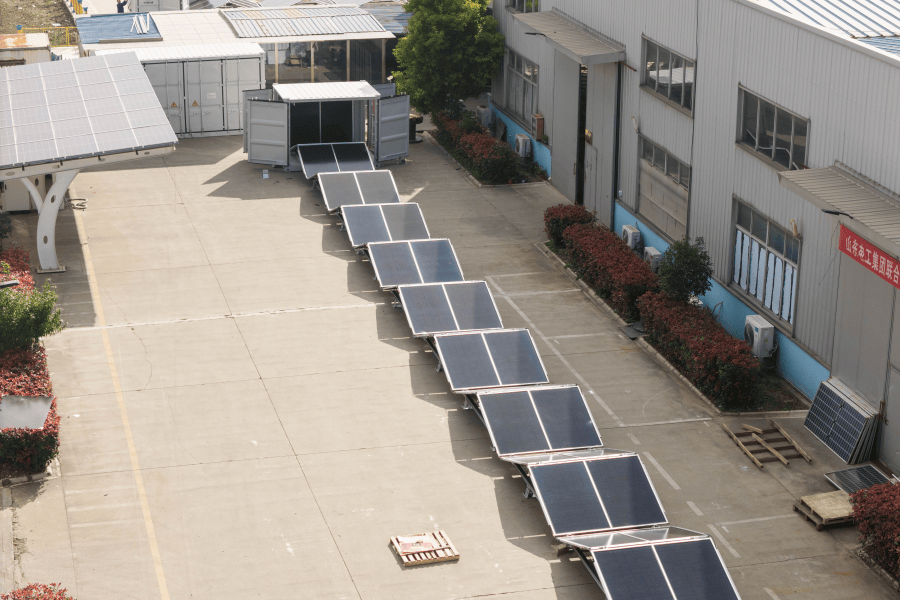
A truly optimized system arrives on site in standardized, shipping-container-sized modules. Inside, the magic is already done: the battery racks, thermal management system, power conversion systems (PCS), fire suppression, and controls are all pre-wired, pre-tested, and integrated at the factory. My team and I have commissioned these, and the difference is night and day. We're talking about connection and commissioning in weeks, not months. Need more capacity next year? You don't redesign the whole system; you drop another identical module alongside it and connect it. That's scalability that matches your evolving mission needs.
For military planners, this modularity is a strategic asset. It means you can deploy a resilient microgrid to a forward operating location rapidly, or you can discretely enhance the energy security of a main installation with minimal site disruption. The "pre-integrated" part is crucial - it ensures every component is designed to work together seamlessly from the start, which is something we at Highjoule have built our reputation on. It eliminates the finger-pointing between vendors when something doesn't work.
Optimization is Everything: Looking Beyond the Box
Okay, so the box is modular. But how do you optimize it? This is where the engineering depth matters. It's not just a container; it's a finely tuned electrochemical system. Let me break down two critical concepts in plain English:
1. Thermal Management & C-Rate: The heart of the system is the battery. Batteries generate heat when they charge and discharge rapidly (that's the C-rate). In a desert environment or during a critical, high-power discharge event, managing that heat is everything. Poor thermal management kills battery life and, honestly, can be a safety risk. An optimized container has an industrial-grade, liquid-cooling or advanced air-convection system that maintains a precise temperature range. This lets you safely use a higher C-rate when you need to pull a lot of power fast - for example, to start a large load or respond to a grid event - without cooking the cells. It's about performance and longevity.
2. The Real Metric: Levelized Cost of Energy (LCOE): Commanders and budget officers care about cost. The right metric here isn't just the upfront price tag; it's the LCOE - the total cost of owning and operating the system over its 20-year life, divided by the energy it produces. An optimized modular system crushes the LCOE. How? Faster deployment cuts soft costs. Superior thermal management extends battery life. Pre-integration reduces maintenance complexity. And smart controls, which we design to meet UL 9540 and IEC 62443 standards for safety and cybersecurity, ensure it's operating at peak efficiency every day, automatically. You're buying predictable, low-cost energy for decades.
A Case in Point: Silent Sentinel Project (Southwestern U.S.)
Let me give you a real example from a project we supported (details are sanitized for security, but the tech specs are real). A base in the Southwestern U.S. needed to secure its communications infrastructure against both grid instability and physical threats. The challenge was a tight, secure area with no room for a sprawling solar farm and a requirement for zero visual signature from certain angles.
The solution was a cluster of four pre-integrated, modular containers. Two were dedicated PV units with integrated, low-profile solar arrays on the roof, and two were dedicated battery storage units. They were positioned to maximize solar gain while meeting the stealth requirements. Because they were pre-integrated and pre-certified to UL 9540, the on-site work was basically just setting the modules on simple pads, connecting the inter-module power and data cables, and commissioning the system. From delivery to full operation was under 8 weeks.
The result? The communications hub now runs on a self-sustaining microgrid for over 72 hours without sun or grid. The thermal management system handles 115F+ ambient temperatures without derating. And the base facility managers have real-time visibility and control through a secure, N-Tiered interface. They didn't build a power plant; they deployed a mission-assured energy capability.
Making It Real for Your Base: Key Questions to Ask
So, if you're evaluating how to optimize a scalable solution for your installation, cut through the sales brochures. Sit down with your team and your potential vendor and ask the gritty questions:
- "Is the entire ESS unit UL 9540 certified, or just the cells?" (The whole system certification is non-negotiable for safety and insurance.)
- "Walk me through the thermal management design. How does it perform at peak C-rate in our specific climate?"
- "What's the deployment timeline from contract signature to commissioning, and what site prep is truly needed?"
- "How does the system's control software integrate with our existing base energy management and cybersecurity protocols?"
The goal is a partnership, not just a purchase. You need a provider who understands that for a military base, energy isn't a utility - it's a core component of operational readiness. The right modular, pre-integrated system isn't just an asset on the balance sheet. It's a silent, reliable guardian of the mission.
What's the one critical load on your base that you wish had absolute, uninterruptible power? Let's start the conversation there.
Tags: UL Standard BESS LCOE PV Container Modular Energy Storage US Europe Market Energy Resilience Military Energy
Author
James Zhang
20+ years agricultural energy storage engineer / Highjoule CTO