
Essential Maintenance Checklist for 20ft BESS Containers on Construction Sites
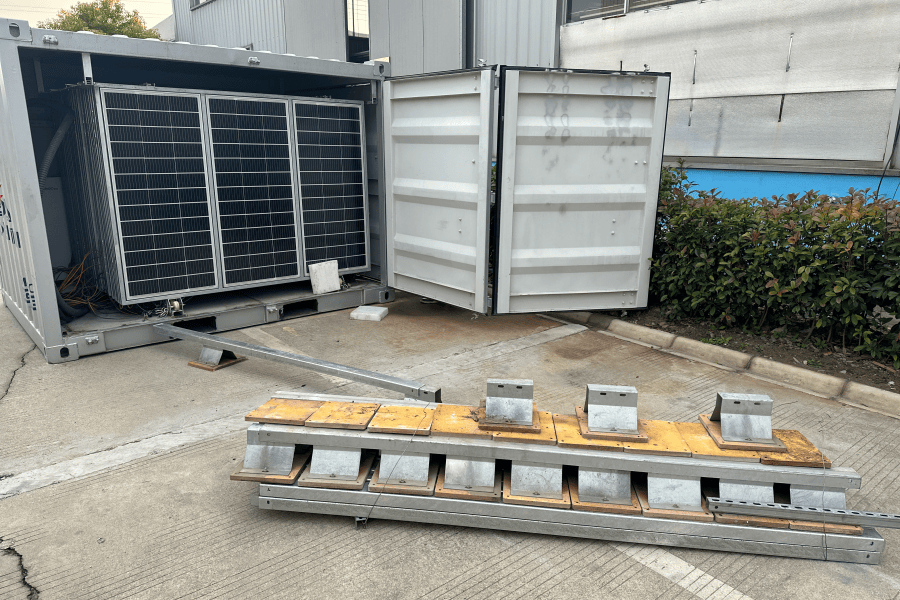
That 20ft Powerhouse on Your Job Site: It's Not "Set and Forget"
Hey there. Let's talk about the big metal box that's become the heartbeat of so many modern construction sites C the 20-foot High Cube Industrial Energy Storage System (ESS) container. Honestly, over the last two decades, I've seen these units go from rare novelties to absolute mission-critical assets. They're there to smooth out peak demand charges, back up unreliable grids, or integrate with temporary solar arrays. The promise is huge: reliable power, lower costs, and greener operations.
But here's the raw truth I've seen firsthand on site after site, from Texas to Bavaria: the moment that container is commissioned and humming, it becomes invisible. It's treated like a diesel generator C a piece of equipment you only think about when it fails. And in our world, failure isn't just an outage; it's a massive safety risk and a six-figure daily cost in stalled labor.
That's why we're not just talking about maintenance today. We're talking about a disciplined, standards-driven operational protocol. This article is the coffee-chat version of that crucial handbook you need.
Quick Navigation
- The Hidden Cost of "Invisible" Infrastructure
- Beyond the Checklist: The Engineer's Perspective
- A Framework, Not Just a List
- Making It Stick on Your Site
The Hidden Cost of "Invisible" Infrastructure
The problem starts with perception. A sleek, containerized BESS looks solid and permanent. Unlike a noisy, fume-belching generator demanding daily fuel, it sits there quietly. The temptation is to let it run autonomously. I get it.
But let me agitate that thought with some hard numbers. The National Renewable Energy Lab (NREL) has highlighted that unplanned downtime for critical power infrastructure in temporary deployments can lead to costs exceeding $10,000 per hour on large projects. That's not just fuel; it's idle cranes, halted concrete pours, and demobilized crews.
More critically, we're dealing with immense energy density. A single 20ft High Cube container can hold several megawatt-hours of energy. Inadequate maintenance isn't about a worn belt or a dirty filter; it's about subtle thermal imbalances, cell-level voltage drift, or communication errors that can cascade. The safety standards C UL 9540 for the system, UL 1973 for the batteries, IEC 62933 for overall performance C aren't just for the factory. They define the operational envelope you must maintain.
I recall a project in Northern Germany, an industrial park construction where the ESS was crucial for peak shaving. The team had fantastic electrical engineers but treated the BESS like a black box. They missed the gradual clogging of an air filter on a cooling unit (a simple, 5-minute weekly check). The system didn't fail outright; it just began derating itself to prevent overheating. By the time they realized why their available power had dropped 30% during a critical lift operation, they'd already lost a day and incurred rush fees for a mobile diesel unit. The root cause? A ?15 filter and a missing line item on a checklist.
Beyond the Checklist: The Engineer's Perspective
So, what should you really be watching? Let's move past generic "inspect battery" lines. Here's my take, as someone who's been inside hundreds of these containers with a multimeter and a thermal camera.
Thermal Management is Everything: Think of it as the circulatory system. You're not just checking if the HVAC is "on." You're listening for unusual fan harmonics, feeling for consistent airflow from all vents, and monitoring the delta-T (temperature difference) between the intake and exhaust aisles. A widening delta-T often tells a story long before the BMS throws an alarm. At Highjoule, our site-readiness audits always include a thermal scan baseline C it gives your team a reference point for what "normal" looks like for your specific container in your specific climate.
Decoding the BMS Logs: Your Battery Management System is a chatterbox. Most people just check for red alarms. The real insight is in the trends. Are the cell voltage deviations (the "balance" of the pack) slowly increasing week over week? What's the historical trend for internal resistance? This is where you spot a weak module before it takes down a whole string. Explaining this to a non-technical site manager, I say: "It's like a blood test for your engine. We're not waiting for the engine to seize; we're watching the cholesterol level creep up."
The C-Rate Conundrum on Site: Construction is all about bursts of power (big welders, crane movements) followed by lulls. That's a high C-rate demand. Consistently pulling high power stresses the cells and generates more heat. A good maintenance protocol correlates thermal and electrical data. If you know you have a scheduled 48-hour concrete pour requiring max power, you schedule a pre-event inspection of the cooling system and connections. This proactive mindset is what optimizes your true Levelized Cost of Energy (LCOE) from the asset.

A Framework, Not Just a List
Here's a distilled, actionable framework based on UL/IEC/IEEE best practices and what we implement for our own clients at Highjoule. This is the skeleton you can flesh out with your OEM's specific manuals.
Daily/Weekly "Operator Eye" Checks
- Visual & Auditory Sweep: Walk around the container. Any new corrosion, physical damage, or pest intrusion? Listen for consistent fan noise; silence from one unit is a problem.
- HMI Health Check: Glance at the main Human-Machine Interface screen. No active alarms. Note the overall State of Charge (SOC) and system temperature. It should be in the expected range for the ambient conditions.
- Peripheral Check: Ensure the area is clear of debris and access panels are secure.
Monthly "Technician Deep Dive"
| System Component | Key Action | Standard Reference |
|---|---|---|
| Thermal Management | Inspect/clean air filters. Verify coolant levels (if liquid-cooled). Check condenser coils for debris. | IEC 62933-5-2 |
| Electrical Integrity | Torque check on DC busbar connections (per manufacturer spec). Infrared scan of major connections for hot spots. | IEEE 3007.2 |
| BMS & Safety | Download and review trend logs. Verify communication integrity between BMS, PCS, and fire suppression system. Test audible/visual alarms. | UL 9540A |
| Fire Suppression | Check pressure gauges and inspection tags. Verify no obstructions to nozzle outlets. | NFPA 855 (Local Adoption) |
Quarterly/Annual "Engineer & OEM" Review
- Full capacity test (if site power allows) to validate rated output and duration.
- Comprehensive software update review and application, if stable and recommended.
- Detailed insulation resistance testing (Megger test) on battery strings.
- Calibration check of critical sensors (voltage, current, temperature).
Making It Stick on Your Site
The best checklist in the world is useless if it's a PDF buried on a shared drive. The key is integration. Tie the daily check to the site foreman's morning rounds. Make the monthly review a calendar invite for the site electrician and the remote monitoring team from your provider.
This is where choosing a partner with strong local service matters. For example, when we deploy a system from Highjoule, it's not just about the hardware meeting UL and IEC standards. It's about providing a clear, laminated quick-guide for the site crew, a digital logbook that's easy to update from a phone, and, crucially, remote monitoring access for our engineers. We can often see a trend developing and call the site manager to suggest a check before it becomes a problem. That's the modern maintenance paradigm: data-driven, collaborative, and preventative.
So, look at that 20ft container on your lot again. Is it a silent, mysterious cost center? Or is it a finely tuned asset with a clear, actionable health plan? The difference between those two views is what separates projects that run smoothly from those that face costly, preventable surprises. What's the first data point you're going to check on yours today?
Tags: Construction Site Power UL Standard BESS Renewable Energy IEC Standard Energy Storage System ESS Maintenance
Author
James Zhang
20+ years agricultural energy storage engineer / Highjoule CTO