
Essential Maintenance Checklist for Outdoor Hybrid Solar-Diesel Systems in Eco-Resorts
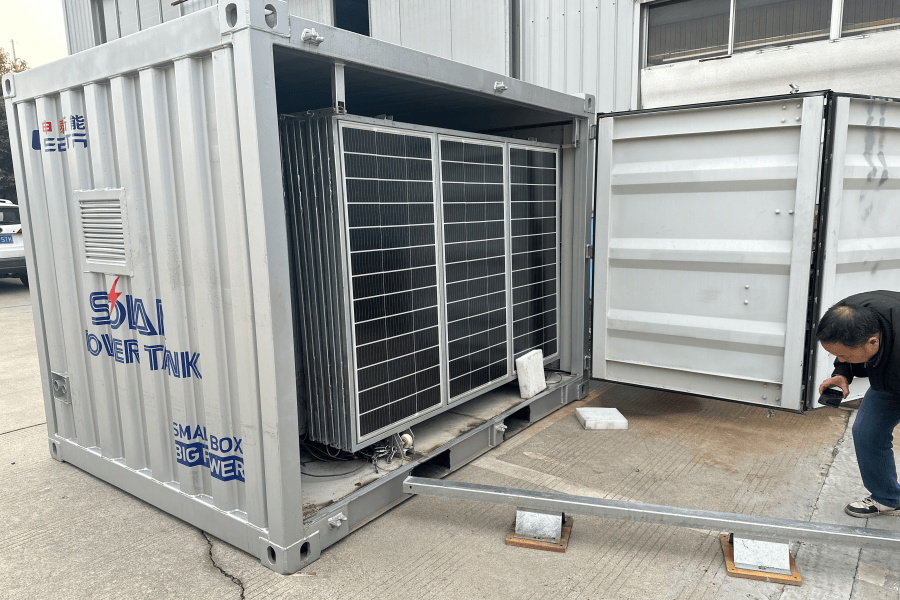
Table of Contents
- The Silent Problem: When "Set and Forget" Fails
- The Real Cost of Inaction
- Your Systematic Solution: A Proactive Checklist
- Beyond the Checklist: Real-World Insights
- Making It Work for Your Business
The Silent Problem: When "Set and Forget" Fails
Honestly, over a coffee, I'd tell you this: the biggest mistake I see with off-grid and hybrid systems, especially in beautiful, remote locations like eco-resorts, is thinking the work is done once the containers are on the pad and the lights turn on. We deploy these incredible, resilient IP54-rated outdoor hybrid solar-diesel systems - designed to withstand weather and deliver clean, reliable power - and then... they're often forgotten. Until they aren't.
The phenomenon is universal. A system is installed to meet sustainability goals and hedge against fuel costs. It runs beautifully for 12-18 months. Then, slowly, the diesel genset starts cycling on more often. The battery's state of health (SOH) dips a little faster than the financial model projected. Maybe there's a slight voltage imbalance no one catches. These aren't failures; they're efficiency leaks. And for a business model where energy is both a major cost and a core part of the guest experience, these leaks directly impact your bottom line and reputation.
The Real Cost of Inaction
Let's agitate that pain point a bit with some hard numbers. The National Renewable Energy Lab (NREL) has shown that poor thermal management in battery systems can accelerate degradation by up to 200% in harsh climates. Think about your Levelized Cost of Energy (LCOE) - that all-in metric of what each kilowatt-hour truly costs you over the system's life. A battery that degrades twice as fast can blow your LCOE calculations out of the water.
From my own boots-on-the-ground experience, I've seen this firsthand on site. A resort in the Caribbean had a fantastic hybrid setup. But their quarterly "maintenance" was just a visual check. No one was logging the battery management system (BMS) data, no one checked the torque on the DC busbars after thermal cycles. In year three, a connection had loosened, resistance went up, heat went up, and they lost a whole battery string. The emergency CAPEX to fly in a new module and a specialist team? That single event wiped out the energy savings from two previous years. It's never just about the repair bill; it's the operational disruption, the potential safety risk, and the shattered confidence in the technology.

Your Systematic Solution: A Proactive Checklist
So, what's the answer? It's not more complexity; it's more consistency. The solution is a disciplined, practical maintenance checklist tailored for the specific demands of an IP54 Outdoor Hybrid Solar-Diesel System. This isn't a generic document. It's a living protocol that aligns with key standards like UL 9540 for energy storage and IEEE 1547 for grid interconnection, which many of these systems still interface with for backup.
Here's a distilled version of what such a checklist must cover, broken into core areas:
1. Enclosure & Environmental (The IP54 "Shield")
- Seal Integrity: Monthly visual inspection of door gaskets, conduit entries, and cooling vent filters. A compromised seal lets in moisture and dust, defeating the IP54 rating.
- Corrosion Check: Bi-annual check for salt spray or humidity-induced corrosion on brackets, housings, and external terminals.
- Clearance & Ventilation: Ensure no vegetation or stored items are blocking air intakes/exhausts or access panels.
2. Battery & Power Conversion Core
- BMS Data Logging & Analysis: Weekly review of key parameters: cell voltage deviations, temperature differentials, and charge/discharge (C-rate) history. A high C-rate is like hard acceleration for your car engine - necessary sometimes, but stressful if constant.
- Thermal Management System: Quarterly functional test of cooling/heating systems. Listen for unusual fan noises. Check coolant levels (if liquid-cooled). Thermal management is the single biggest influencer of battery lifespan.
- DC & AC Connections: Annual infrared thermography scan under load to spot hot connections. Annual torque check on critical power connections - metal expands and contracts with temperature cycles.
3. Hybrid System Integration
- Genset Exercise & Sync Check: Monthly automated test run of the diesel generator under load. Verify the smooth, automatic transfer and synchronization between solar, battery, and generator sources.
- PV Array Input: Biannual check of DC isolators, combiner boxes, and cleaning of panels (soiling losses directly increase your diesel burn).
- Control System & Alarms: Weekly verification that remote monitoring is active and all alarm notifications (email/SMS) are functional. Test one alarm point monthly.
| Checkpoint | Frequency | Key Standard Reference |
|---|---|---|
| Seal & Enclosure Integrity | Monthly | IEC 60529 (IP Code) |
| BMS Data Health Analysis | Weekly | UL 1973 (Batteries) |
| Connection Thermography | Annual | NFPA 70B (Electrical Maintenance) |
| Genset Integration Test | Monthly | IEEE 1547.1 (Interconnection Test) |
Beyond the Checklist: Real-World Insights
A checklist is a tool, but wisdom is in its application. Let me share a case from a project we supported in Northern California. A high-end glamping resort used a hybrid system for their central amenities building. Their challenge was predictable: high guest load in evenings (battery discharge), winter fog reducing solar yield, and a need for absolute reliability.
The checklist was implemented not just by their groundskeeper, but with quarterly remote reviews by our Highjoule team. We spotted from the data that their battery was consistently hitting a 95% depth of discharge (DOD) every night. Technically within spec, but pushing it hard. By cross-referencing with their generator runtime logs, we suggested a simple control strategy tweak: trigger the genset to start and share the load when the battery hit 70% DOD on low-solar days. This reduced the C-rate stress on the battery. The result? The projected battery lifespan increased by an estimated 3 years, dramatically improving the system's LCOE. The diesel fuel increase was marginal because the genset now ran at a more efficient, steady load. It was a win-win, found not by a major overhaul, but by disciplined data review embedded in the maintenance routine.

Making It Work for Your Business
Here's my final, personal insight. The goal isn't to turn your facilities manager into a PhD in electrochemistry. The goal is to give them the right, clear tools - like this checklist - to catch 95% of issues early. The other 5%? That's where partnering with a provider that designs for maintainability from the start pays off.
For example, at Highjoule, when we engineer a containerized BESS for an outdoor, hybrid application, we think about maintenance on day one. We place critical connection points for easy access. We design our thermal systems with redundant fans and clear filter access. Our BMS software is built to generate the exact reports this checklist requires, compliant with the data structures UL and IEC standards expect. And most importantly, we see the checklist not as your burden, but as the bridge between our remote performance monitoring and your on-site team.
So, ask yourself: Is your hybrid system's maintenance a documented, proactive protocol, or a reactive afterthought? The difference between the two is measured in dollars, downtime, and decades of reliable, clean power for your guests.
What's the one maintenance item you think is most often overlooked in your current operation?
Tags: UL Standard BESS LCOE Europe US Market Renewable Energy Hybrid Systems Energy Management Solar Energy
Author
James Zhang
20+ years agricultural energy storage engineer / Highjoule CTO