
High-Altitude Energy Systems: The Critical Maintenance Checklist You're Missing
The Silent Killer of Your High-Altitude Energy Investment (And How to Stop It)
Honestly, over two decades of deploying battery storage from the Alps to the Rockies, I've seen a pattern. A project gets commissioned, the ribbon is cut, and everyone moves on. The system hums along... until it doesn't. The call we get is never about a single, catastrophic failure. It's about a slow, painful bleed in performance and a nasty surprise on the balance sheet. I've seen this firsthand on site, and it almost always traces back to one thing: a maintenance plan built for sea level, trying to survive at 10,000 feet.
What You'll Find in This Guide
- The Problem: Why Your Standard Maintenance Plan is Failing
- The Non-Negotiable High-Altitude Maintenance Checklist
- A Real-World Case: The Colorado Microgrid Story
- Expert Insights: Thermal Runaway & LCOE at Elevation
- Making It Work for Your Business
The Problem: Why Your Standard Maintenance Plan is Failing
Let's talk plainly. The commercial and industrial energy storage market is booming, driven by resilience and cost savings. The International Energy Agency (IEA) notes global battery storage capacity is set to multiply sixfold by 2030. But here's the rub: a significant portion of new renewable and microgrid projects are going into challenging environments - mountainous regions, remote mines, high-altitude data centers. These aren't your average suburban installations.
The core issue is that altitude isn't just a location; it's a different physical reality. Lower atmospheric pressure directly impacts cooling efficiency. UV radiation is more intense. Temperature swings are wilder. A maintenance protocol designed for a mild, low-altitude climate will miss critical failure points. I've walked into sites where the only "maintenance" was a visual check of the container exterior. Meanwhile, inside, thermal gradients were stressing battery cells, leading to premature capacity fade and, in the worst cases, elevating safety risks. The financial impact? A poorly maintained system can see its Levelized Cost of Energy (LCOE) spike by 20% or more due to lost cycles, early replacement, and downtime.
The Non-Negotiable High-Altitude Maintenance Checklist
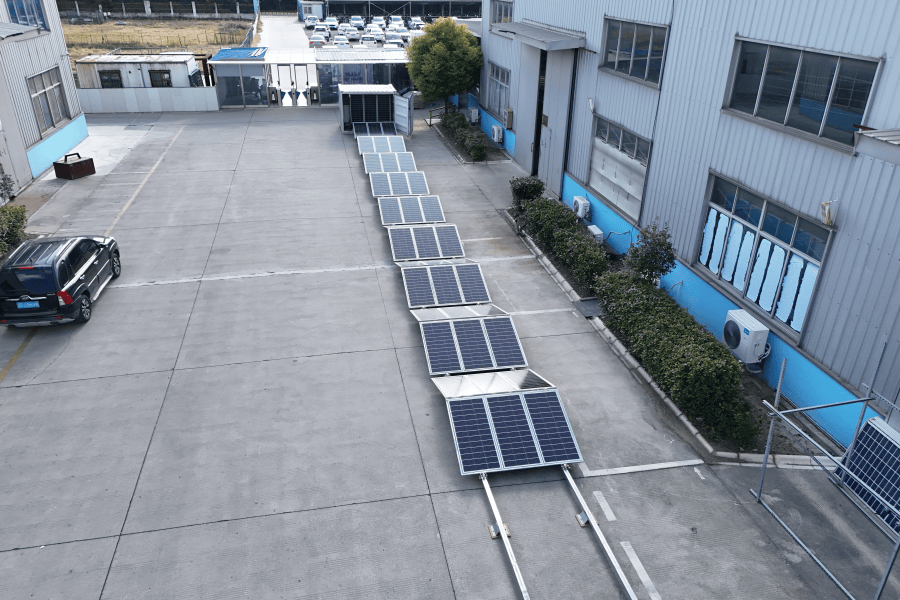
So, what do you actually need to check? This isn't about reinventing the wheel, but about sharpening its focus for the thin air. Here's a distilled, actionable framework based on the core needs of a Scalable Modular Hybrid Solar-Diesel System for High-altitude Regions.
1. Thermal & Environmental Management (The #1 Priority)
- Air Density & Cooling System Calibration: Verify HVAC and liquid cooling systems are calibrated for reduced air density. A fan rated for sea level moves less mass at altitude. Check airflow sensors and compressor performance quarterly.
- Sealing & Pressurization: Inspect door seals, cable glands, and filter housings for integrity. Dust ingress is a major insulator and can clog thermal management paths. A slightly positive pressure inside the BESS container can help.
- UV Degradation: Quarterly inspection of all external polymer components - cable jackets, sensor housings, signage. They become brittle much faster.
2. Electrical & Battery-Specific Checks
- Partial Discharge Testing: Lower air pressure reduces dielectric strength. Annual partial discharge testing on medium-voltage connections (if applicable) is critical for early fault detection.
- Battery Management System (BMS) Log Review: Don't just check for alarms. Actively analyze the variance in cell temperatures and voltages. High-altitude thermal stress shows up as widening delta-T and delta-V trends long before a fault occurs.
- DC & AC Connector Torque: Thermal cycling causes expansion and contraction. Bi-annual thermal imaging and torque checks on all high-current connections are a must to prevent hot spots.
3. Hybrid System Integration & Control
- Diesel Generator (Genset) Derating Verification: Confirm the genset controller is properly derated for altitude (power output drops roughly 3.5% per 1000 ft). An overloaded genset failing during a grid outage defeats the purpose of your hybrid system.
- Controller Setpoint Audit: Seasonally review the logic that switches between solar, battery, and diesel. Is it optimized for the changing solar irradiance and temperature profiles of your specific altitude and season?
- Communication Link Redundancy: Test primary and secondary data links (often cellular and satellite) between modular units and the central controller. Redundancy is cheap insurance in remote locations.

A Real-World Case: The Colorado Microgrid Story
Let me give you a concrete example. We worked with a ski resort and utility in Colorado, USA, on a modular hybrid system at around 9,800 ft. The challenge was peak shaving during winter loads and providing backup during storms. The initial maintenance plan was generic.
During the first deep winter, we noticed the battery racks closest to the container walls were consistently 4-5C colder than the core racks, despite the HVAC running. The cold walls created a micro-climate. The BMS compensated, but uneven aging had started. Our revised checklist added intra-rack temperature mapping and adjusted the HVAC airflow baffles to eliminate dead zones. We also implemented a low-temperature pre-conditioning cycle for the batteries ahead of predicted discharge events, a practice now common in our high-altitude deployments. This small change, born from a site-specific observation, optimized performance and safeguarded the asset's lifespan, directly protecting the project's LCOE.
Expert Insights: Thermal Runaway & LCOE at Elevation
People throw around terms like "thermal runaway" and "LCOE." At altitude, you need to understand their intimate link. Thermal management isn't just about keeping batteries cool in summer. It's about maintaining uniformity. A 10C increase in average operating temperature can halve cycle life. At high altitude, with less efficient cooling, hotspots are more likely. If one module degrades faster than others, your entire scalable system is limited by its weakest link. You're not just replacing a module early; you're losing the synergistic value of the whole system, which drives your true cost of energy (LCOE) up.
This is why at Highjoule, our designs for these environments start with UL 9540A and IEC 62933 compliance as a baseline, but we go further. We overspec cooling capacity, use fire-resistant materials rated for wider temperature swings, and build in more granular sensor networks. It might add a small upfront cost, but the data shows it dramatically flattens the LCOE curve over 15 years. You're buying predictability.

Making It Work for Your Business
The checklist isn't a piece of paper. It's a living process. The goal is to move from reactive, time-based maintenance ("inspect every 6 months") to predictive, condition-based care. This requires a partner that understands both the physics of altitude and the economics of your project.
Our approach has been to embed these high-altitude protocols into our remote monitoring platform from day one. We can track the leading indicators - like those cell voltage variances - and flag them for our local EU or US-based service crews before they become a site visit. It turns a potential two-day outage into a scheduled two-hour adjustment.
So, the real question isn't just "Do you have a checklist?" It's "Does your checklist understand the mountain air, and does your team have the boots-on-the-ground experience to act on what it tells you?" That's the difference between an energy asset that is a cost center and one that is a resilient, profitable investment for decades.
What's the one environmental factor at your site that keeps you up at night?
Tags: UL Standard BESS LCOE Europe US Market Renewable Energy High-Altitude Energy Solar-Diesel Maintenance Checklist Hybrid Systems
Author
James Zhang
20+ years agricultural energy storage engineer / Highjoule CTO